 Save to Pinterest
 My kitchen counter was dusted white with flour, and I was convinced I'd bitten off more than I could chew. Making ravioli from scratch sounded romantic until I was elbow-deep in dough, wondering if store-bought would've been smarter. But then the first batch floated to the top of the pot, plump and golden, and I knew I'd stumbled onto something worth the mess. The smell of garlic and marinara filled every corner of the apartment, and suddenly it felt less like cooking and more like creating something that mattered. That evening, with flour still under my fingernails, I served those wobbly little parcels to friends who didn't care they weren't perfect.
I made this for my sister's birthday one year, and she cried a little when she took the first bite. Not because it was perfect, but because it reminded her of the tiny trattoria we'd visited in Rome years before. We'd sat outside under string lights, sharing a plate of ravioli that tasted like someone's nonna had made it with love and no hurry. This version brought that night back, and I realized food has a way of collapsing time. She still asks for it every year now, and I still say yes, even though my back aches from all that rolling.
Ingredients
- All-purpose flour: The backbone of your dough, and it needs to be fresh because stale flour makes for tough pasta that fights you every step of the way.
- Eggs: They bind everything together and give the dough that rich, golden color, so use the best ones you can find.
- Ricotta cheese: Go for whole milk ricotta if possible, the low-fat kind can be grainy and won't give you that luscious, creamy filling.
- Fresh spinach: You'll think one cup isn't much, but it wilts down fast, and squeezing out the water is crucial or your filling will be soggy.
- Parmesan cheese: Freshly grated is the only way, the pre-shredded stuff has anti-caking agents that mess with the texture.
- Egg yolk: This enriches the filling and helps it hold together without making it too wet.
- Nutmeg: Just a whisper of it transforms the filling from flat to complex, but don't overdo it or it'll taste like dessert.
- Marinara sauce: Homemade is lovely, but a good jarred sauce works too, just taste it first and doctor it up if needed.
- Garlic: Fresh cloves sautéed in olive oil make the sauce come alive, and your kitchen will smell like an Italian grandmother's house.
- Basil leaves: Torn at the last second, they add a pop of color and a sweet, peppery note that ties everything together.
Tired of Takeout? 🥡
Get 10 meals you can make faster than delivery arrives. Seriously.
One email. No spam. Unsubscribe anytime.
Instructions
- Make the Pasta Dough:
- Mound your flour on the counter and carve out a well in the center like a little volcano. Crack the eggs into the well, add salt, and use a fork to slowly pull flour into the eggs, stirring in a gentle spiral until it starts to clump together. Once it's shaggy, get your hands in there and knead for 8 to 10 minutes until the dough is smooth, elastic, and springs back when you poke it, then wrap it tightly and let it rest for 30 minutes so the gluten can relax.
- Prepare the Filling:
- Steam or sauté your spinach until it wilts down to almost nothing, then let it cool before squeezing out every last drop of water, this step is not optional. Mix the spinach with ricotta, Parmesan, egg yolk, nutmeg, salt, and pepper until it's smooth and tastes like something you'd eat straight from the bowl.
- Roll the Pasta:
- Cut your rested dough in half and keep one piece covered so it doesn't dry out. Roll the other piece through a pasta machine, starting at the widest setting and working your way down to the thinnest, or use a rolling pin and some elbow grease until it's thin enough to see your hand through. The sheets should be delicate but not tearing.
- Shape the Ravioli:
- Lay one pasta sheet flat and drop teaspoons of filling about 2 inches apart, then brush the edges and spaces between the mounds with water. Lay the second sheet over the top and press gently around each mound to seal, making sure no air pockets are trapped, then cut into squares with a knife or ravioli cutter and crimp the edges with a fork.
- Cook the Ravioli:
- Bring a big pot of salted water to a gentle boil, not a rolling one or they'll break apart. Drop the ravioli in batches and cook for 3 to 4 minutes until they float and look puffy, then lift them out with a slotted spoon and set them aside gently.
- Make the Marinara Sauce:
- Heat olive oil in a saucepan over medium heat and toss in minced garlic, stirring constantly for about a minute until it smells incredible but hasn't browned. Pour in your marinara, season with salt and pepper, and let it simmer for 5 minutes so the flavors meld together.
- Serve:
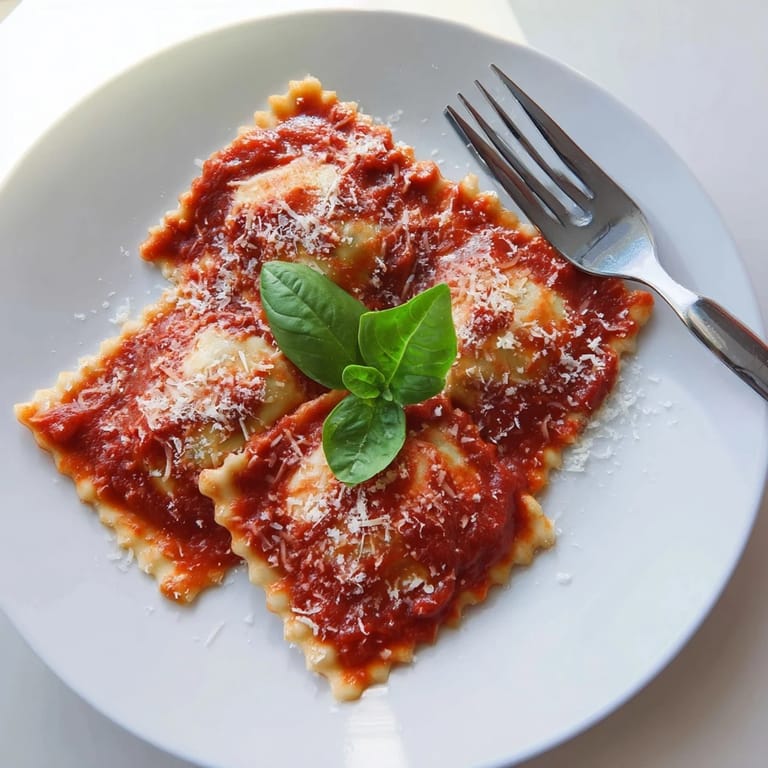
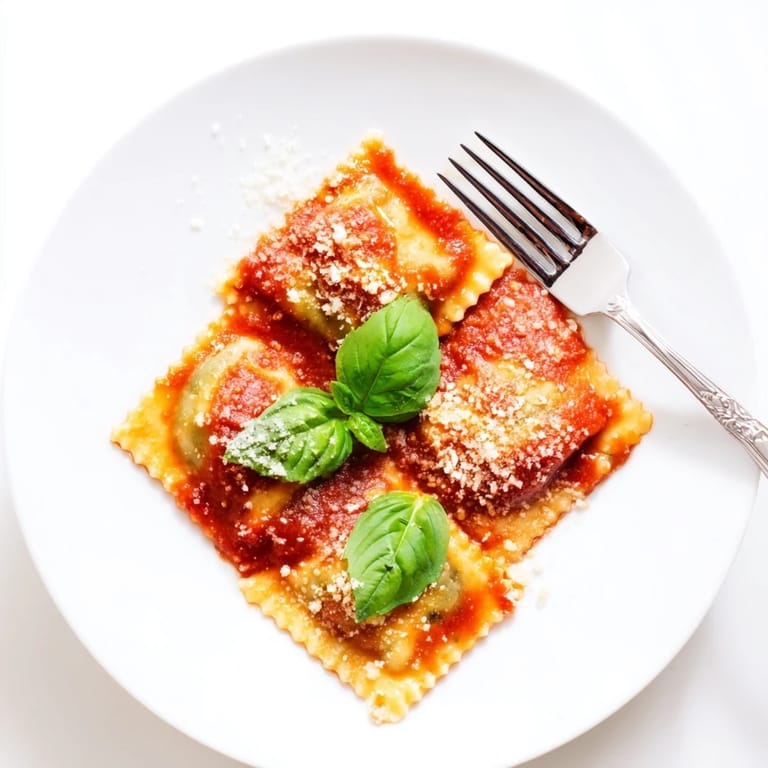
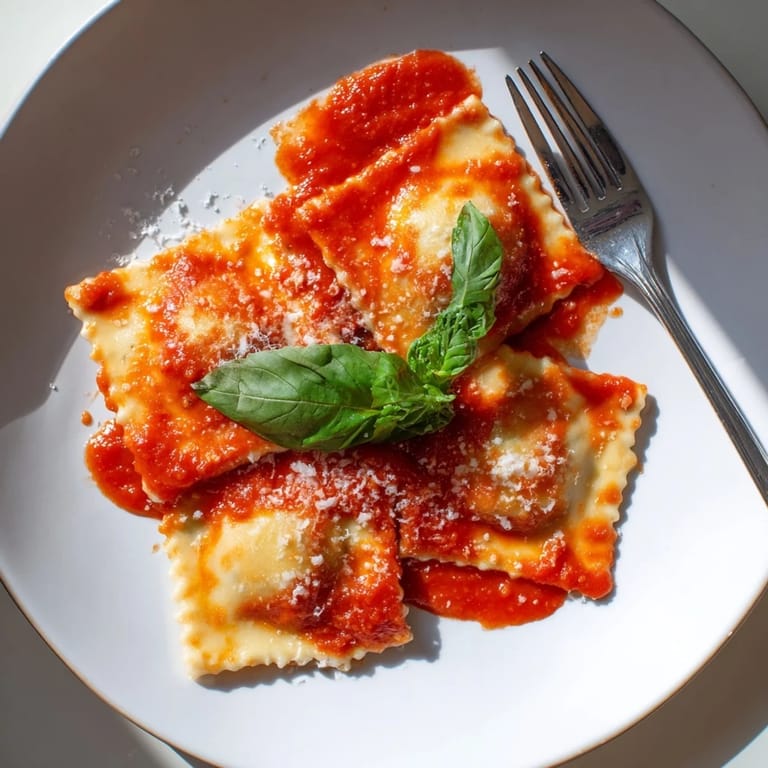
- Spoon a pool of sauce onto each plate, nestle the hot ravioli on top, and spoon more sauce over them. Scatter fresh basil and a generous shower of Parmesan over everything, and serve immediately while it's still steaming.
 Save to Pinterest
 There's a moment when you lift the first ravioli from the boiling water and it sits on the spoon, glistening and perfect, that makes all the work feel like magic. I've served this dish at dinner parties and quiet weeknight meals, and every time someone takes that first bite and closes their eyes, I remember why I keep coming back to it. It's not just pasta, it's proof that you can make something beautiful with your own two hands. The flour on the floor and the aching shoulders fade away, and what's left is a plate of something that feels like love.
Getting the Dough Just Right
The dough will feel sticky and impossible at first, but resist the urge to add too much extra flour or you'll end up with cardboard. I learned this the hard way after my first batch came out tough enough to bounce off the floor. Knead it longer than you think you need to, until it's silky and smooth, and when you press a finger into it, the indent should slowly spring back. If it's still tacky after 10 minutes, dust it lightly and keep going, your arms will thank you later when it rolls out like a dream. That 30-minute rest is when the magic happens, so don't rush it.
Filling Secrets That Matter
The key to a perfect filling is getting the spinach as dry as humanly possible, because even a little extra moisture will make your ravioli weepy and sad. I twist mine up in a clean kitchen towel and squeeze until I think I'm done, then squeeze again. The nutmeg is subtle but essential, it adds a warmth that makes people ask what your secret ingredient is, and you can smile and keep it to yourself. Taste your filling before you start assembling, it should be well-seasoned and rich, because once it's sealed inside pasta, there's no going back. If it tastes a little bland now, it'll taste really bland later.
Cooking and Serving Like a Pro
When you drop the ravioli into the water, do it gently and don't crowd the pot, or they'll stick together and tear. I usually cook them in two or three batches, and I keep a warm plate nearby so they don't get cold while I finish the rest. The water should be at a gentle boil, not a violent one, think of it as a hot tub rather than a jacuzzi. Once they float, give them another minute and then lift them out carefully with a slotted spoon, letting the water drain off before you plate them.
- Have your sauce warm and ready before the ravioli are done, so you can serve everything hot.
- Don't drown them in sauce, just enough to coat and pool a little on the plate.
- A drizzle of good olive oil at the end adds a lovely richness and shine.
 Save to Pinterest
 This recipe has become one of those things I make when I want to slow down and remember why I love cooking in the first place. It's messy and takes time, but every bite is worth it, and the people you share it with will remember it long after the plates are cleared.
Recipe Q&A
- → Can I make the pasta dough ahead of time?
Yes, prepare the dough up to 2 days in advance. Wrap it tightly in plastic wrap and refrigerate. Let it come to room temperature for 15 minutes before rolling.
- → What's the best way to prevent ravioli from sticking?
Dust the pasta sheets and finished ravioli generously with flour or semolina. Work quickly and keep unused dough covered with plastic wrap to prevent drying.
- → How do I know when ravioli is properly cooked?
Ravioli is ready when it floats to the surface of boiling water, typically after 3-4 minutes. Cook for an additional minute after floating for tender, cooked pasta.
- → Can I freeze unbaked ravioli for later?
Absolutely. Place shaped ravioli on a floured tray, freeze for 2 hours, then transfer to freezer bags. Cook directly from frozen, adding 1-2 extra minutes to cooking time.
- → What wines pair well with this dish?
Crisp white wines like Pinot Grigio, Vermentino, or Sauvignon Blanc complement the creamy filling and tomato sauce beautifully.
- → Can I use frozen spinach instead of fresh?
Yes, frozen spinach works perfectly. Thaw it completely and squeeze out all excess moisture to prevent a watery filling.