 Save to Pinterest
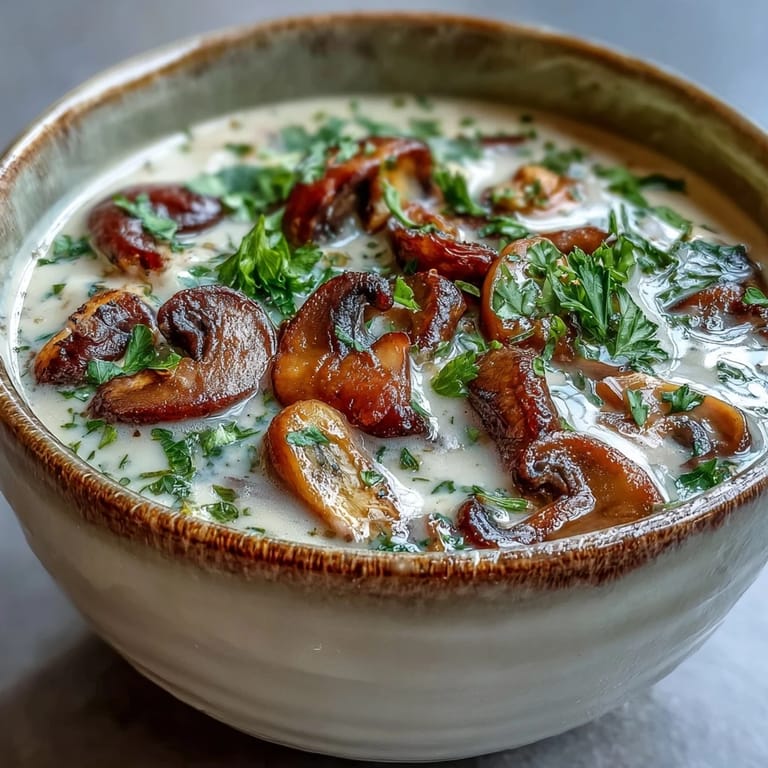
 There's something about the smell of mushrooms hitting hot butter that makes you slow down and pay attention. I was rushing through a Tuesday evening, honestly just wanting something warm in a bowl, when I decided to throw together whatever mushrooms were lurking in the back of my fridge. What started as a quick dinner became this deeply savory, almost velvety soup that made me sit at the kitchen counter and actually taste each spoonful instead of gulping it down. That night, I learned that the simplest ingredients, given proper time and a little patience, can transform into something genuinely special.
I made this soup for my neighbor one particularly gray November afternoon when she mentioned offhandedly that she was tired of takeout. She brought it back three days later asking for the recipe, saying it was the first thing in weeks that didn't taste like she was trying too hard. That compliment meant more than a hundred blog comments ever could, because it meant the soup tasted honest and real.
Ingredients
- Mixed fresh mushrooms (cremini, button, shiitake), 500 g: The mix matters here—button mushrooms bring mild earthiness, cremini adds deeper notes, and shiitake brings that savory umami punch that makes the entire soup taste expensive.
- Unsalted butter, 2 tbsp: This is where the foundation lives; it's worth using good butter because you'll actually taste it.
- Olive oil, 1 tbsp: The butter alone would burn at the heat you need, so this partnership keeps everything golden and prevents any bitter edge.
- Medium onion, finely chopped: Don't skip the fine chop—it helps the onion dissolve into the broth and creates a silky base that holds the soup together.
- Garlic, 2 cloves minced: Mince small; large pieces turn bitter and sharp instead of sweet and mellow.
- Medium carrot and celery stalk, diced: These aren't flavor—they're structure and depth, building that classic soup foundation that tastes like someone cared about every detail.
- Vegetable broth, 1 L: Use something you'd actually drink on its own, because a mediocre broth will make a mediocre soup no matter what else you do.
- Heavy cream, 120 ml: This is what turns a good mushroom broth into something luxurious; it lets all those flavors bloom instead of getting lost.
- Dry sherry, 2 tbsp (optional but not really): It sounds fancy, but it's just adding a whisper of sweetness and complexity that makes people say the soup tastes like something from a restaurant.
- Dried thyme, ½ tsp fresh or 1 tsp: Thyme and mushrooms are partners; it's non-negotiable for that authentic earthy flavor.
- Bay leaf: One is perfect; two will overpower and taste medicinal.
- Salt and freshly ground black pepper: Taste as you go because the final seasoning is what lets all those layers actually shine.
- Fresh parsley, 2 tbsp chopped: This is the finishing touch that makes it look intentional and adds a tiny brightness that lifts everything else.
Tired of Takeout? 🥡
Get 10 meals you can make faster than delivery arrives. Seriously.
One email. No spam. Unsubscribe anytime.
Instructions
- Heat your fat and build your base:
- Melt the butter with olive oil in a large pot over medium heat—the moment it stops foaming, you're ready. Add your onion, carrot, and celery, and let them soften for about five minutes while you listen to them sizzle, because that sound tells you they're actually cooking and not just getting warm.
- Wake up the garlic:
- Drop in your minced garlic and let it toast for just a minute until the kitchen smells insanely good. This is where patience matters; longer than a minute and it's bitter, shorter and it tastes raw and sharp.
- Brown the mushrooms properly:
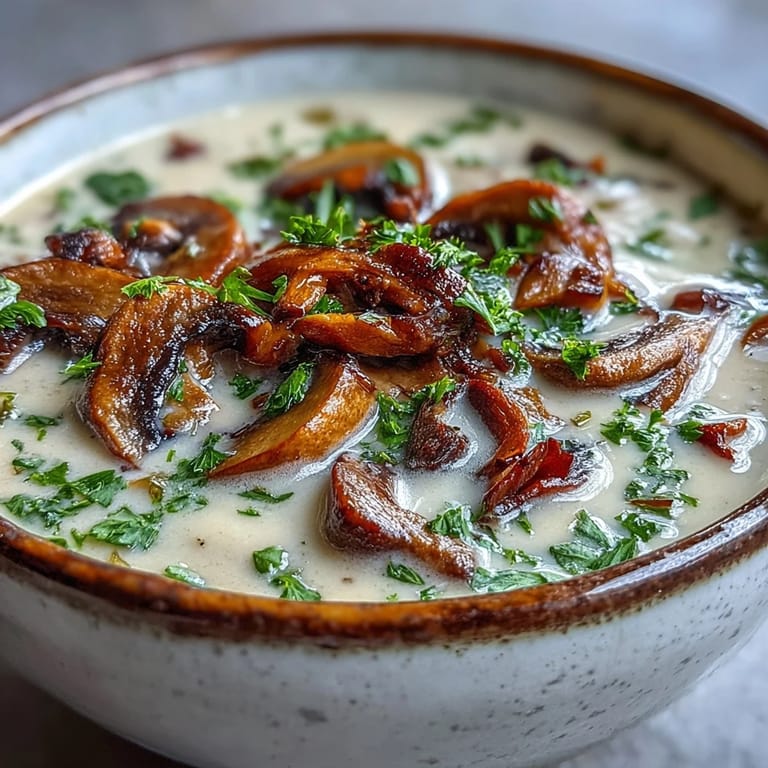
- Add your sliced mushrooms and thyme, then let them sit undisturbed for a minute or two before stirring—this is how you get actual browning instead of just cooking them into submission. Stir occasionally for 8 to 10 minutes until the mushrooms have released their moisture and are turning golden, which is when all that umami really concentrates.
- Optional but worthwhile—deglaze with sherry:
- If you're using it, pour in the sherry and let it bubble for a minute or two, scraping the bottom of the pot to lift all those flavorful brown bits. This step is where cooking stops being follow-the-recipe and starts feeling instinctive.
- Build depth with broth:
- Pour in your vegetable broth, add the bay leaf, and bring it to a gentle boil before turning the heat down to a simmer for 15 minutes. This slow approach lets everything meld instead of just mixing.
- Make it your texture:
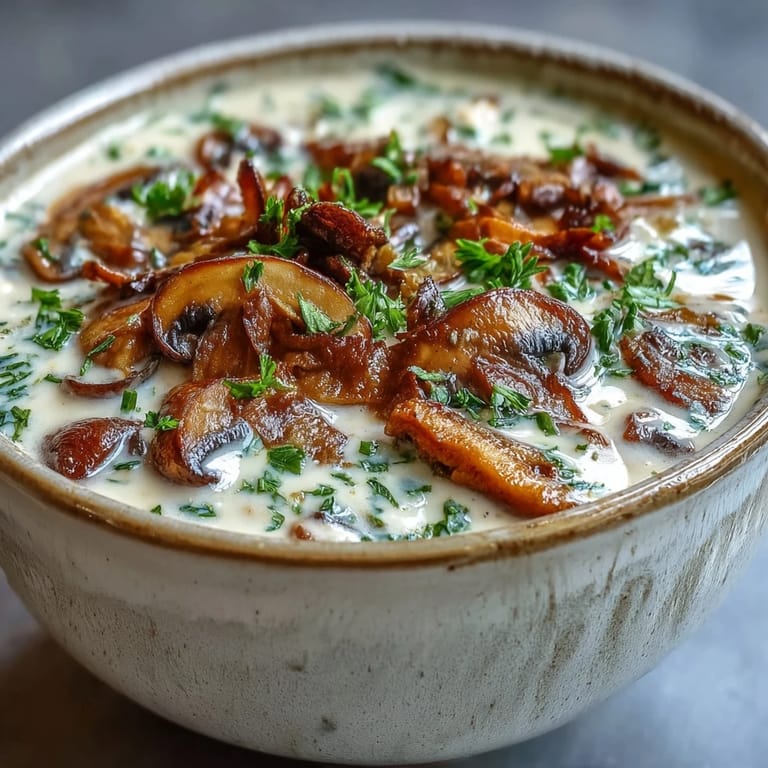
- Remove the bay leaf, then use an immersion blender to purée part of the soup if you like it silky, or leave it chunky if that's more your style—there's no wrong choice here. Some people do half and half, creating this lovely textured consistency that's both interesting and smooth.
- Finish with cream and seasoning:
- Stir in the cream slowly, tasting as you go, then season with salt and pepper until it tastes like you made it on purpose. Heat it through gently without letting it boil, because boiling cream can make it separate and turn grainy.
- Serve and garnish:
- Ladle into warm bowls and scatter fresh parsley on top, which adds color and a tiny bright note that reminds you this came from your kitchen.
 Save to Pinterest
 Years ago, a friend going through a rough patch showed up at my door without warning, and I made this soup while we sat in my kitchen talking. Something about the ritual of chopping and stirring let us both relax into the conversation in a way nothing else that day had. The soup became part of those hours—not the main event, but the thing that made everything else possible.
Variations Worth Exploring
This soup is a canvas if you want it to be. A handful of rehydrated porcini mushrooms adds almost supernatural depth, or you can stir in fresh spinach at the very end for color and nutrition. Some people add a splash of balsamic vinegar or a tiny pinch of nutmeg, and while that might sound strange, it works because these additions don't fight the mushrooms—they whisper alongside them instead.
Making It Vegan or Dairy Free
Swap the butter for plant-based butter and the cream for coconut cream or cashew cream, and you lose almost nothing—the soup stays rich and complete. The key is using something with actual fat content instead of thin plant milk, because the fat is what makes the soup feel luxurious rather than like you're settling for less. I've made it both ways for different people, and honestly, if someone didn't tell me which version they were eating, they might not even notice.
Serving and Pairing Ideas
This soup tastes best when served in actual bowls, warmed by either running them under hot water or placing them in a low oven while you finish cooking—cold bowls make warm soup taste worse somehow. A slice of crusty bread is the obvious choice, something you can tear and dunk, but it also pairs beautifully with a simple green salad if you want something lighter alongside it. The wine pairing suggestions of Chardonnay or Pinot Noir aren't pretentious recommendations—they actually work because those wines have enough body to stand up to the richness without overwhelming the delicate mushroom flavor.
- Make extra because it reheats beautifully and tastes even better after a night in the refrigerator.
- Freeze portions in individual containers for those moments when you need comfort but don't have the energy to cook.
- If it seems too thick when reheating, thin it with a bit of broth or cream rather than water, which keeps it from becoming diluted and sad.
 Save to Pinterest
 This is the kind of soup that proves simplicity isn't boring when every ingredient is treated with respect. Make it when you need something to slow you down, or make it for someone else and watch how quickly a bowl of soup becomes a moment worth remembering.
Recipe Q&A
- → What type of mushrooms work best?
Mixed mushrooms like cremini, button, and shiitake create the most complex flavor. Shiitake adds extra umami, while cremini provides earthiness. You can also add dried porcini for deeper flavor.
- → Can I make this vegan?
Yes, substitute the butter with plant-based butter or olive oil, and use coconut cream or cashew cream instead of heavy cream. The result remains velvety and satisfying.
- → Should I blend the soup completely smooth?
It depends on your preference. Blending part of the soup creates a creamy base while leaving some mushroom pieces for texture. Fully blending gives a smooth, velvety consistency.
- → What's the purpose of adding sherry?
Dry sherry adds depth and complexity, enhancing the natural umami flavors in the mushrooms. If unavailable, you can substitute with white wine or simply omit it.
- → How long does this soup keep?
Stored in an airtight container in the refrigerator, the soup keeps for 3-4 days. Reheat gently over low heat to prevent the cream from separating. The flavors often improve overnight.
- → What should I serve with mushroom soup?
Crusty bread, garlic knots, or a simple green salad complement this soup beautifully. A glass of Chardonnay or Pinot Noir also pairs wonderfully with the earthy flavors.