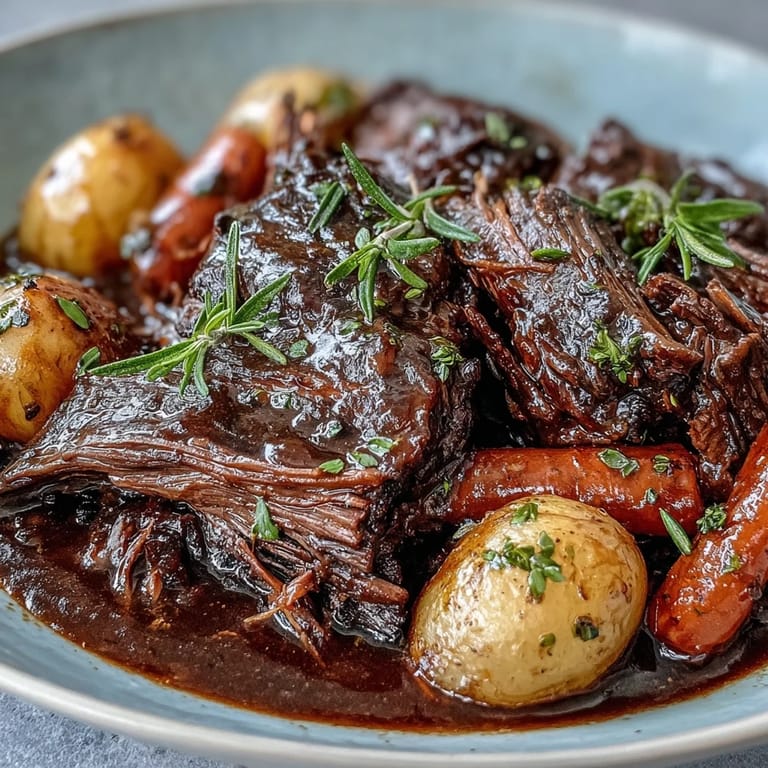
 Save to Pinterest
 The smell of slow-cooked beef filling the house on a rainy Sunday morning is one of those small luxuries that makes everything feel right with the world. I stumbled onto pot roast during a particularly brutal winter when I needed something that would basically cook itself while I buried myself under blankets with a book. Now its the dish that automatically appears on my table whenever anyone needs feeding, comforting, or both.
My grandmother used to make pot roast every single Sunday without fail and the entire neighborhood would somehow materialize at her door around dinner time. I've carried that tradition forward though my version includes more wine and slightly less relying on butter than hers did. Last month my neighbor texted me three days after I dropped off some leftovers just to say it was the best thing shes eaten all year.
Ingredients
- Beef chuck roast: Chuck roast is the absolute MVP here because all that marbling melts into the meat during braising making it fork tender with incredible flavor
- Kosher salt and black pepper: Generous seasoning is crucial since youre building layers of flavor from the outside in
- All-purpose flour: This creates a beautiful crust when searing and helps thicken the cooking liquid into that gravy everyone fights over
- Olive oil and butter: The combination gives you a higher smoke point for searing while adding that rich buttery flavor we all want
- Yellow onion: Thick wedges hold their shape during hours of cooking and become sweet and meltingly soft
- Garlic: Smashed cloves release their oils more readily and infuse the entire braising liquid
- Carrots: Cut into chunks they absorb all that beefy flavor while adding sweetness to balance the wine
- Celery: Essential for that classic mirepoix base that makes the gravy taste like it came from a restaurant kitchen
- Baby potatoes: Small potatoes stay intact better than large ones and act like flavor sponges in the braising liquid
- Tomato paste: This concentrates and deepens the sauce giving it that gorgeous rich color and body
- Dry red wine: Use something you would actually drink because it reduces down and the flavors really do come through
- Beef broth: Low sodium lets you control the salt level while still building that beefy foundation
- Worcestershire sauce: The secret ingredient that adds umami and that indescribable restaurant quality depth
- Fresh rosemary and thyme: Woody herbs hold up to long cooking better than delicate ones
- Bay leaves: They quietly work their magic in the background adding subtle complexity
- Cornstarch: Optional for thickening at the end if you prefer a more gravy like consistency
Tired of Takeout? 🥡
Get 10 meals you can make faster than delivery arrives. Seriously.
One email. No spam. Unsubscribe anytime.
Instructions
- Get your oven ready:
- Preheat to 300°F if youre going the oven route which gives you more freedom than stovetop braising
- Season the beef:
- Pat the roast completely dry with paper towels then season generously on all sides with salt and pepper
- Dust with flour:
- Lightly coat the roast in flour shaking off any excess because you just want a thin layer not a heavy coating
- Sear the beef:
- Heat oil and butter in a heavy Dutch oven over medium high then sear the roast 4 to 5 minutes per side until deeply browned
- Cook the aromatics:
- Reduce heat to medium and cook onions until golden then add garlic for just a minute until fragrant
- Add the tomato paste:
- Stir in the tomato paste and let it cook for a minute or two until it darkens slightly which intensifies the flavor
- Deglaze the pot:
- Pour in the wine and scrape up all those gorgeous browned bits from the bottom letting it simmer for a few minutes
- Build the braising liquid:
- Add beef broth Worcestershire sauce and the herbs then return the beef to the pot with all its juices
- Start the slow cook:
- Bring to a gentle simmer then cover tightly and cook on low heat or in the oven for an hour and a half
- Add the vegetables:
- Flip the roast then tuck carrots celery and potatoes around it submerging them in the liquid
- Finish braising:
- Cook for another hour and a half to two hours until the beef yields easily to a fork
- Rest the meat:
- Transfer beef and vegetables to a platter and cover with foil while you work on the gravy
- Thicken the sauce:
- Skim fat from the liquid then stir in cornstarch slurry and simmer until thickened to your liking
- Serve it up:
- Discard herbs and bay leaves then slice or shred the beef and arrange everything with that glorious gravy over the top
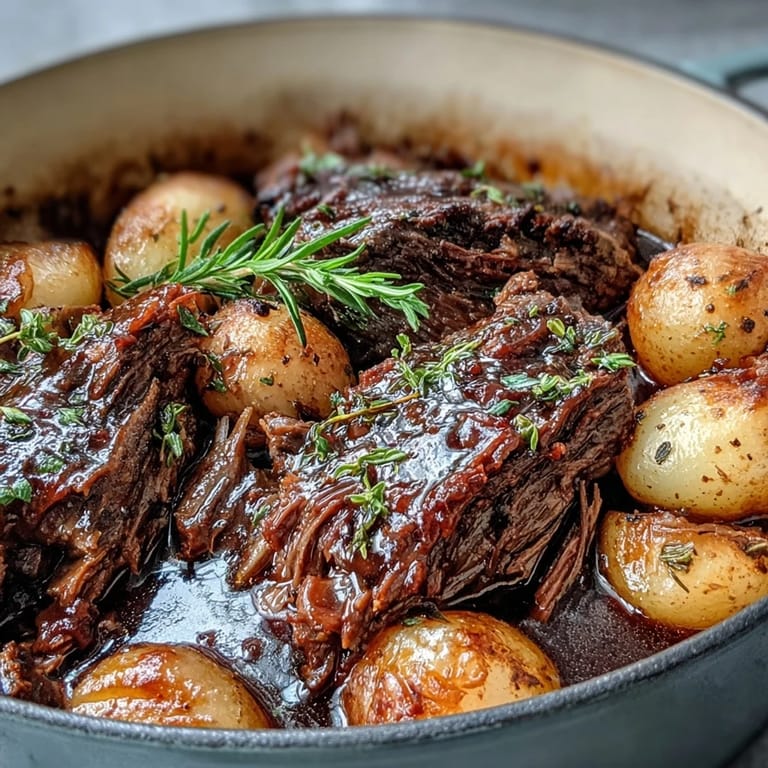 Save to Pinterest
 My cousin once asked if I could teach her how to make pot roast and we spent a whole Sunday afternoon in the kitchen together. She called me the next day completely shocked that something so simple could taste that good and now she makes it every Sunday for her family too.
Making It Your Way
I've learned that pot roast is incredibly forgiving and you can adapt it based on what you have on hand or what your family prefers. Sometimes I swap parsnips for some of the carrots or add whole garlic cloves that become sweet and spreadable. The technique stays the same but small tweaks keep it interesting.
Timing Is Everything
The hardest part about pot roast is honestly the waiting and I know that sounds ridiculous but the smell will test your patience like nothing else. I've found that starting it early in the day is the best approach because then the anticipation becomes part of the experience rather than torture. Your house will smell incredible for hours and that's honestly half the joy.
Serving Suggestions
Crusty bread is non negotiable in my house because that gravy is precious and I want to enjoy every last drop of it. Buttered noodles or mashed potatoes are the classic choices but I've also served it over polenta when I'm feeling fancy.
- The leftovers make incredible sandwiches especially with some sharp cheddar and horseradish
- Try stirring shredded meat into mac and cheese for an upgraded comfort food situation
- Frozen portions reheat beautifully so make a double batch and thank yourself later
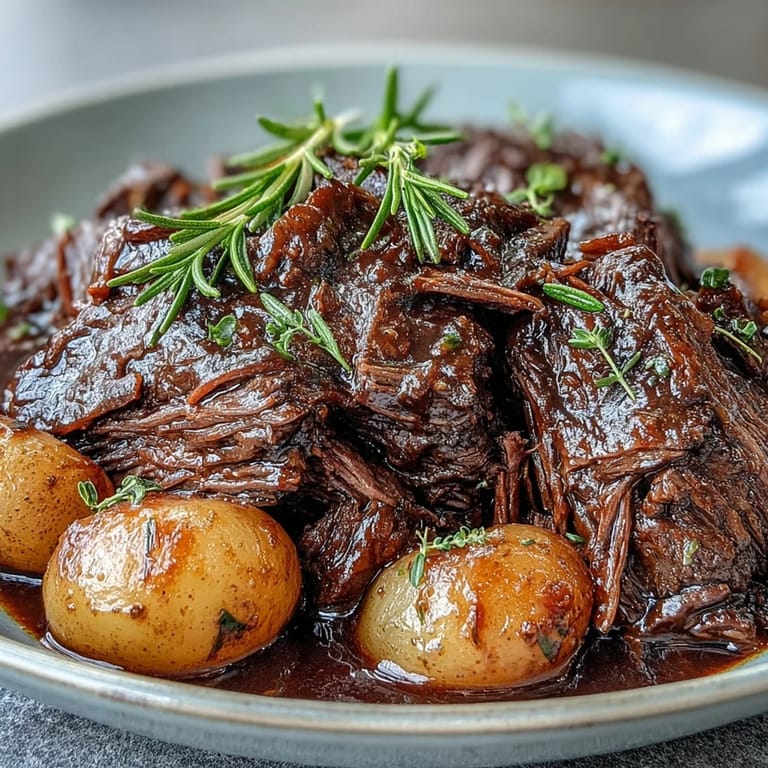 Save to Pinterest
 There is something deeply satisfying about a dish that rewards patience with such incredible flavor. This is the kind of meal that makes people feel loved without you ever having to say a word.
Recipe Q&A
- → What cut of beef works best for pot roast?
Chuck roast or blade roast are ideal choices because they have abundant marbling and connective tissue. As the meat braises slowly, these tissues break down, creating exceptionally tender, succulent beef that falls apart easily.
- → Can I make this in a slow cooker?
Absolutely. After searing the beef and sautéing the aromatics, transfer everything to your slow cooker. Cook on low for 8-10 hours or high for 5-6 hours, adding the vegetables halfway through cooking if you prefer them to hold their shape.
- → What can I substitute for red wine?
For a non-alcoholic version, simply replace the red wine with additional beef broth or stock. You can also use balsamic vinegar mixed with broth for depth, though the flavor profile will shift slightly.
- → How do I know when the pot roast is done?
The beef is ready when it yields easily to a fork and shreds into large chunks with minimal pressure. This typically takes 3-4 hours of braising. The vegetables should be tender but not falling apart.
- → Can I prepare this ahead of time?
Pot roast actually improves overnight as the flavors meld and the fat solidifies for easy removal. Make it a day ahead, refrigerate, skim the fat, then reheat gently. Leftovers also make excellent sandwiches, tacos, or toppings for rice and polenta.