 Save to Pinterest
 I discovered this dish while watching light filter through my kitchen window one afternoon, catching the glint of a perfectly sliced beet. There's something about arranging vegetables on a plate that made me think less about cooking and more about painting. The idea of playing with shadows and brightness, of making something that tasted as good as it looked, became an obsession I couldn't shake. That's when The Shadow Play was born, a dish that proved vegetables could be theater.
I made this for my sister's dinner party when she mentioned feeling uninspired by her usual vegetable sides. Watching her guests lean in closer to the plate, debating whether it was too beautiful to eat, reminded me that food is as much about the moment as the taste. By the end of the meal, three people had asked for the recipe, and one admitted they'd never thought about arranging beets like this before.
Ingredients
- Golden beet: The warm, sweet undertone that makes you wonder why this vegetable isn't celebrated more often.
- Red beet: Earthier and more intense than its golden cousin, it grounds the whole composition.
- Baby arugula: Its peppery snap keeps things from feeling too precious or staged.
- Watermelon radish: The secret weapon that brings playful color and a gentle bite without overwhelming.
- Blackberries: They create those mysterious dark pockets that make the plate feel intentional, not random.
- Black olives: Adding umami depth and that slight brininess that makes people pause and taste more carefully.
- Black tahini: If you can find it, use it, as it creates dramatic smears; regular tahini with squid ink works if you're feeling experimental.
- Extra virgin olive oil: The good stuff matters here since there's nowhere for it to hide.
- Lemon juice: Just enough acid to wake up every single ingredient on the plate.
- Honey: A whisper of sweetness that ties the bitter and bright elements together.
- Microgreens: The final flourish that says you know what you're doing.
Tired of Takeout? 🥡
Get 10 meals you can make faster than delivery arrives. Seriously.
One email. No spam. Unsubscribe anytime.
Instructions
- Slice your vegetables like you mean it:
- Use a mandoline if you have one, but a very sharp knife works just as well if you're patient. The beets need to be thin enough to catch light, almost translucent at the edges.
- Build your base with intention:
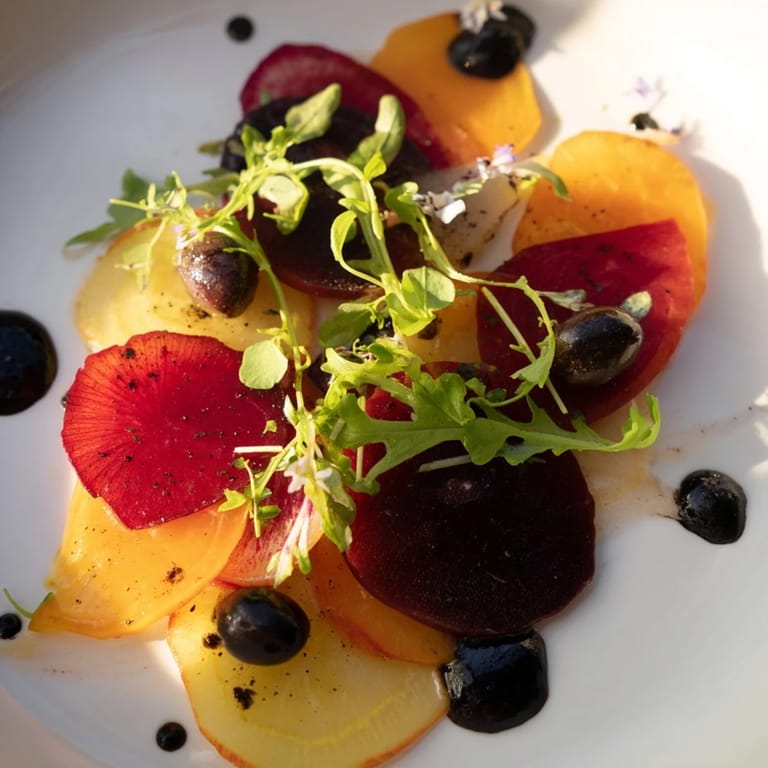
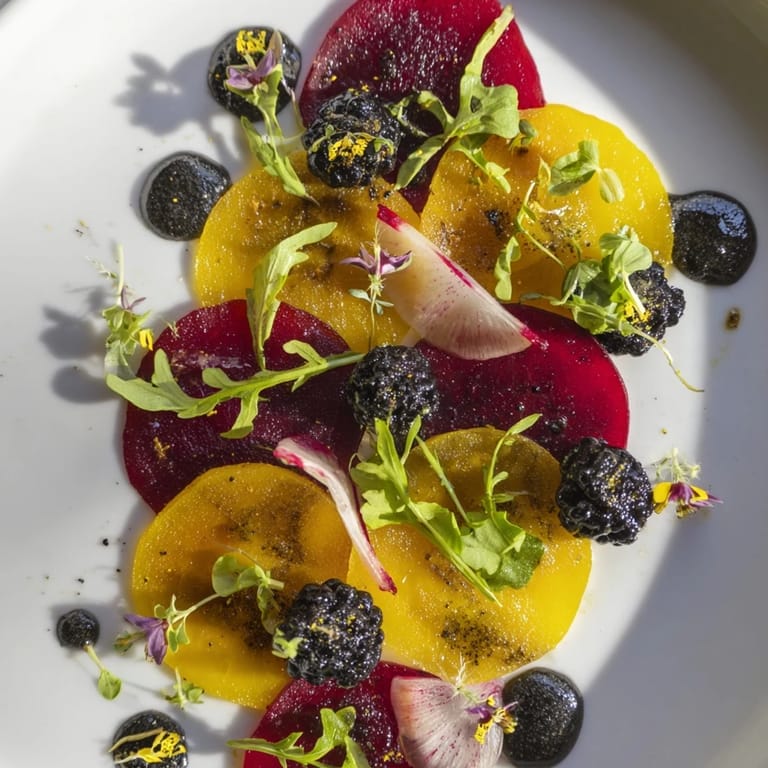
- Lay the golden and red beet slices down in an overlapping pattern, alternating colors as you go. This isn't random; each slice should lean against the last like they're leaning in to tell you a secret.
- Add the brightness:
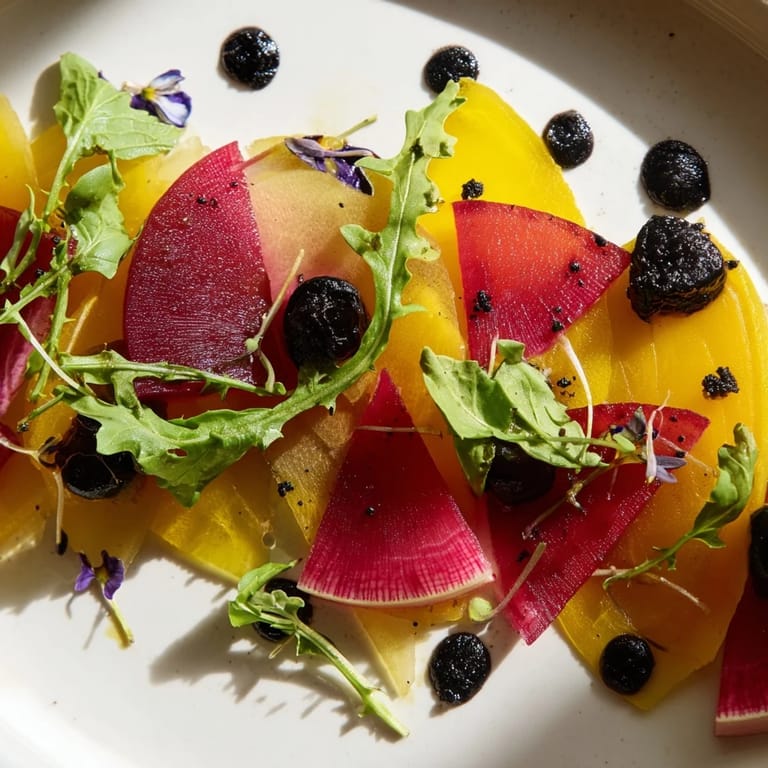
- Fan your watermelon radish slices across the beets, then scatter the arugula with a light hand. You want pockets of air, not a crowded plate.
- Create mystery with shadows:
- This is where it gets fun, tuck blackberries and halved olives behind and under your bright ingredients so they peek through like they're playing hide and seek.
- Whisk your dressing:
- Combine the olive oil, lemon juice, honey, salt, and pepper, tasting as you go. The balance matters more than the measurements.
- Add dramatic contrast:
- Spoon small dollops of black tahini around the plate and smear them slightly with the back of your spoon. This is your painting's shadows, so be bold.
- Finish with flourish:
- Crown everything with microgreens and edible flowers if you have them, then serve right away before anything wilts or settles.
 Save to Pinterest
 The moment someone really understood this dish was when a friend took a photo and sat with it for a minute before eating. She said it made her feel like the food was giving her permission to slow down and look closer. That's when I knew it had become more than a beautiful appetizer; it had become an invitation.
The Art of the Plate
Plating this dish taught me that cooking isn't just about flavor; it's about the conversation between colors and shapes. The beets create soft, curved lines while the radish adds crisp geometry, and the blackberries anchor everything with their dark mystery. When you stand back and look at what you've created, you realize you've been making art without a brush.
Playing with Substitutions
The beauty of this dish is that it bends to what you have on hand. Black garlic brings an almost smoky depth that regular garlic can't touch, and roasted purple carrots add another layer of earthiness if you want to push the dark palette further. Even the bright elements are flexible, swap in citrus segments or pomegranate for the watermelon radish if that's what calls to you from your produce drawer.
Making It Your Own
I've learned that the most important part of cooking is knowing when to follow the rules and when to bend them. This dish is a framework for you to play within, not a rigid formula. Trust your instincts about balance, remember that contrast is what makes this work, and never apologize for the choices you make on your own plate.
- Keep your platter cold if possible, as it helps everything stay crisp and prevents wilting.
- Taste the dressing before you drizzle; lemon juice strengths vary, and you want it bright but not aggressive.
- Serve this as soon as you finish plating, because the magic is in the moment.
 Save to Pinterest
 This dish reminds me that food doesn't have to be complicated to be memorable, and sometimes the simplest ingredients arranged with intention become the most powerful. Make it when you want to prove to yourself that you can create something beautiful in your own kitchen.
Recipe Q&A
- → How can I slice the beets uniformly?
Using a mandoline slicer or a very sharp knife helps achieve thin, even slices for an elegant layered presentation.
- → What alternatives can I use for black tahini?
Regular tahini tinted with squid ink offers a similar dark color, or you can experiment with black garlic paste for added depth.
- → Can this dish be prepared vegan?
Yes, simply substitute honey with agave syrup to maintain sweetness while keeping the dish plant-based.
- → Which wines pair well with these flavors?
A crisp Sauvignon Blanc or a light, earthy Pinot Noir complements the dish’s vibrant accents and fresh textures.
- → How do I enhance the shadow effect on the plate?
Strategically place dark elements like blackberries and olives beneath brighter vegetables and gently smear black tahini to create artistic shadows.