 Save to Pinterest
 I still remember the first time I stood in a small osteria in Tuscany, watching the owner arrange a board with the kind of casual confidence that only comes from doing something a thousand times. She didn't measure anything—just grabbed hunks of cheese, draped cured meats with her hands, tore bread like she was having a conversation with it. When she set it down in front of our table, it felt less like food and more like an invitation. That board taught me that the best meals aren't about perfection; they're about generosity and the simple joy of sharing good ingredients with people you care about.
My favorite moment with this board was when I made it for my sister's birthday dinner. I'd spent the morning at three different shops—the Italian market for the Taleggio, the specialty butcher for properly aged Prosciutto, the bakery for bread that still had warmth in it. When I arranged it all on our old wooden cutting board, my hands got messy with olive oil and my fingertips smelled like rosemary. That board sat in the center of the table for almost three hours while we ate, talked, laughed, and kept coming back for just one more piece.
Ingredients
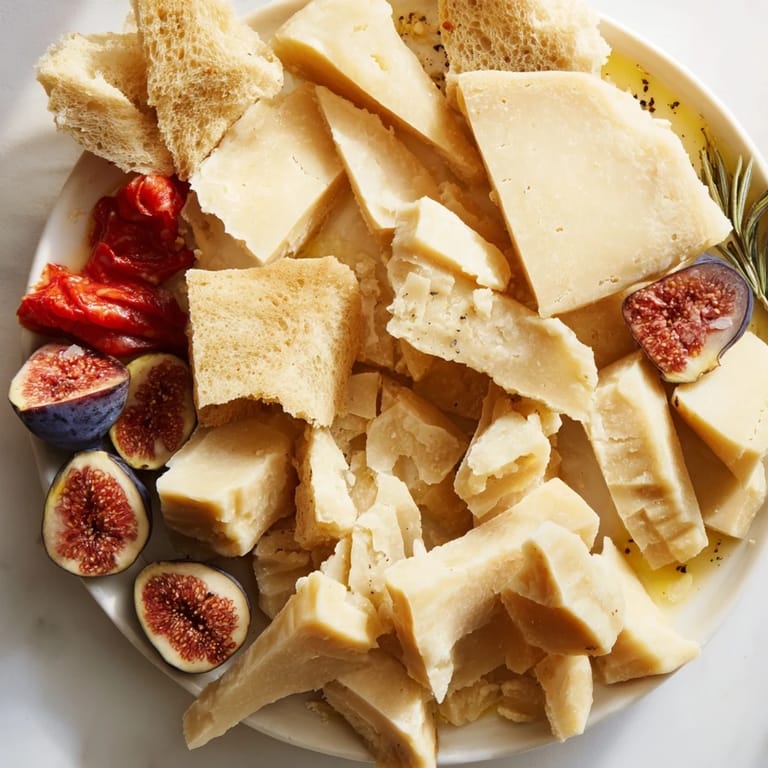
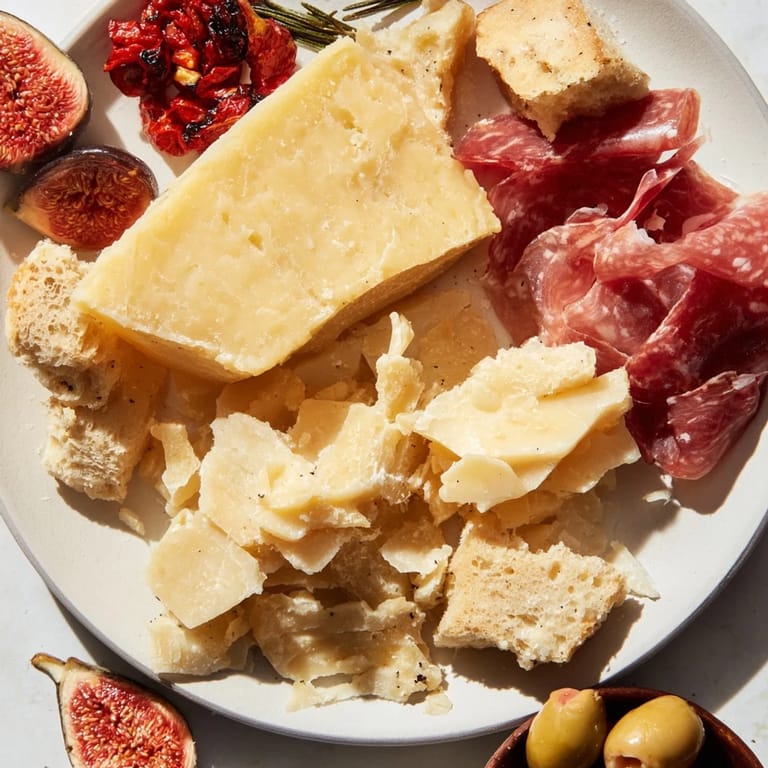
- Parmigiano-Reggiano, 200 g broken into chunks: This isn't about grating it fine—those large chunks give you a real bite of nutty, crystalline texture. When you break it rather than cut it, you get those beautiful irregular edges that catch the light and feel more natural on the board
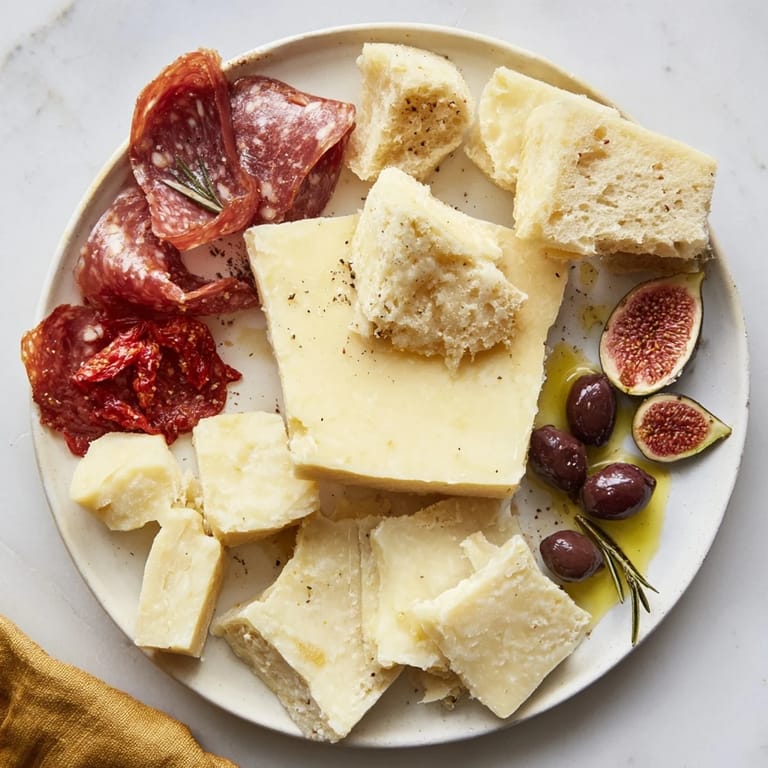
- Pecorino Toscano, 200 g cut into wedges: Sharper and more assertive than Parmigiano, it's what makes people pause and take another bite. The wedge shape invites people to break off their own piece
- Taleggio, 150 g torn into rustic pieces: This is your creamy, almost buttery moment on the board. It's soft enough that your guests will actually spread it on bread without struggling, but it holds its shape long enough to look beautiful
- Prosciutto di Parma, 150 g loosely piled: Never, and I mean never, stack it flat. Let it fall naturally into folds and ruffles—that's where the beauty lives and where people will want to pick it up
- Finocchiona salami, 120 g thickly sliced: The fennel gives it a subtle sweetness that feels different from other salamis. Thick slices show respect for the ingredient and give people something substantial to bite into
- Coppa, 120 g arranged in rustic folds: The marbling is what makes coppa special, so let it show. Fold it loosely so people can see those lines of fat running through the meat
- Rustic Italian loaf like ciabatta, 1 large loaf torn into rough pieces: Tear it by hand—rough pieces with torn edges soak up olive oil better and feel more intentional than neat cuts. If your bread is really good, it almost doesn't need anything on it
- Castelvetrano olives, 1 cup: These are buttery and mild, not the harsh kind that overwhelm everything else. They're the gentle moment on the board
- Sun-dried tomatoes in olive oil, 1 cup drained: The oil they're packed in is liquid gold, so save it for drizzling later. Sun-dried tomatoes add a concentrated, almost wine-like depth
- Marinated artichoke hearts, 1 cup quartered: Quartering them instead of leaving them whole makes them easier to grab, and the cut edges let the marinade shine through
- Fresh grapes or figs, 1 small bunch halved: This is your moment of sweetness and surprise. Halving them lets people eat them whole in one bite, the way they're meant to be
- Extra-virgin olive oil, 1/4 cup for drizzling: This isn't cooking oil—it's the final brushstroke. Use something you actually enjoy tasting, something with personality
- Fresh rosemary sprigs and coarse sea salt and cracked black pepper, to taste: The rosemary is as much for fragrance as it is for flavor. Crush a tiny bit between your fingers before you taste it, and you'll understand why it's there
Tired of Takeout? 🥡
Get 10 meals you can make faster than delivery arrives. Seriously.
One email. No spam. Unsubscribe anytime.
Instructions
- Start with your canvas:
- Place your wooden board in front of you. Take a moment to visualize where you want the main components to go—think of it like three anchors: one for cheese, one for meats, one for bread. This isn't a rigid plan, just a rough idea to guide your hands
- Arrange the cheeses with intention:
- Break your Parmigiano into chunks—let some pieces be small and sharp-looking, others bigger and more generous. Arrange your Pecorino wedges like you're telling a story with them. Then tear the Taleggio into soft, irregular pieces and nestle them in the spaces between. The idea is that every piece should invite someone's hand to pick it up
- Build the meat landscape:
- Pile your prosciutto loosely in one area—let it fall into natural folds and ruffles rather than laying it flat. Arrange your coppa slices the same way, creating little valleys and peaks. Then fan your salami slices out in overlapping layers, like you're creating a pattern. This is where your board starts to feel alive
- Scatter the bread with abandon:
- Tear your bread into pieces of varying sizes—some small enough for one bite, others big enough that people will need to hold them with both hands. Arrange them around the edges and in the gaps, creating little pockets of texture. Leave some pieces turned face-up so people can see the open crumb if your bread is beautiful
- Fill the spaces with color and personality:
- Now add your olives in little piles, then your sun-dried tomatoes, then your artichoke hearts. Scatter your fruit halves around—they should feel like hidden treasures people discover. You're not looking for neat rows; you're looking for abundance and visual interest
- Finish with oil, herbs, and seasoning:
- Drizzle your olive oil over the bread pieces and across the cheese—be generous but not sloppy. Tuck your fresh rosemary sprigs into the gaps, then very lightly dust everything with coarse sea salt and crack your black pepper over the top. Step back and look at it. If there are any bare spots that feel too empty, fill them. If it feels crowded, that's good—a farmhouse board should feel abundant
- Serve immediately:
- Bring it to the table while everything is still at its best, and let people find their own rhythm with it. The board is meant to be grazed, not eaten in courses. Watch how people slow down around it
 Save to Pinterest
 There's a particular magic that happens when a board comes out and people suddenly stop being polite and start being real with each other. I watched a room full of strangers turn into a group of friends over the course of an evening, all because there was good food in the middle of the table that didn't require ceremony or utensils. That's when I understood that this simple thing—torn bread, aged cheese, folded meat—is actually one of the most generous ways to feed people.
Why Quality Ingredients Make All the Difference
This board lives or dies by its ingredients. You can't hide anything here because everything is meant to speak for itself. When I first started making boards like this, I thought I could get away with grocery store cheese and mass-produced salami. The board looked fine, but nobody lingered over it. Then I started shopping at real Italian markets, tasting things before I bought them, and suddenly the same board became something people actually wanted. The difference isn't dramatic until you taste it, but then it's everything. Seek out a proper Italian deli if you can—the person behind the counter has usually spent their whole life learning which producers matter.
Building Your Own Variations
The beautiful thing about a board like this is that it's a framework, not a rule. Once you understand the basic balance—creamy cheese with sharp cheese, soft cured meat with sliced cured meat, something salty with something sweet—you can build from there. I've made autumn versions with roasted nuts and dried figs, spring versions with fresh ricotta and pickled vegetables, winter versions with aged Gorgonzola and candied walnuts. The architecture stays the same; the ingredients just shift with what's beautiful and good right now. Pay attention to what's in season, what makes you stop and look at it in the market, and build your board around that.
The Art of Presentation and Pacing
A board isn't just about feeding people—it's about creating an experience and a rhythm. The way you arrange it sets the tone. When you let things be irregular and abundant, people relax. When you're generous with the olive oil and the herbs, people feel cared for. When you use a real wooden board instead of a plate, something shifts in how people approach the food. I've learned that boards work best when they arrive at the table warm and fragrant, when people are unhurried enough to actually sit and taste, and when there are good people to share it with. The food is important, but the pause it creates is everything.
- Let everything come to room temperature before serving so flavors actually shine instead of being muted by cold
- Keep a wooden board and good knives specifically for this—it's worth the investment because they make everything look and feel better
- Have good wine nearby; this kind of food almost demands it, and the ritual of pairing makes the whole thing feel special
 Save to Pinterest
 The most important thing I've learned about making this board is that it's an act of generosity, not perfection. Every time I make it, I think of that woman in Tuscany, arranging food with the confidence that comes from knowing that good ingredients, shared freely, are always enough.
Recipe Q&A
- → What cheeses are best for this board?
Parmigiano-Reggiano, Pecorino Toscano, and Taleggio offer a balanced mix of sharp, creamy, and rustic textures, ideal for this board.
- → How should the bread be prepared?
Tear rustic Italian bread, like ciabatta, into rough, uneven pieces to complement the textures of cheeses and meats.
- → Can I substitute the cured meats?
Yes, alternatives like pancetta or soppressata work well, providing similar flavors and textures.
- → What accompaniments enhance the board?
Olives, sun-dried tomatoes, marinated artichoke hearts, and fresh fruit add brightness and variety to the spread.
- → How to serve the board for best flavor?
Serve at room temperature with a drizzle of extra-virgin olive oil and a sprinkle of coarse salt and cracked black pepper.
- → What wine pairs well with this selection?
A robust Chianti or Sangiovese complements the rich cheeses and cured meats beautifully.