 Save to Pinterest
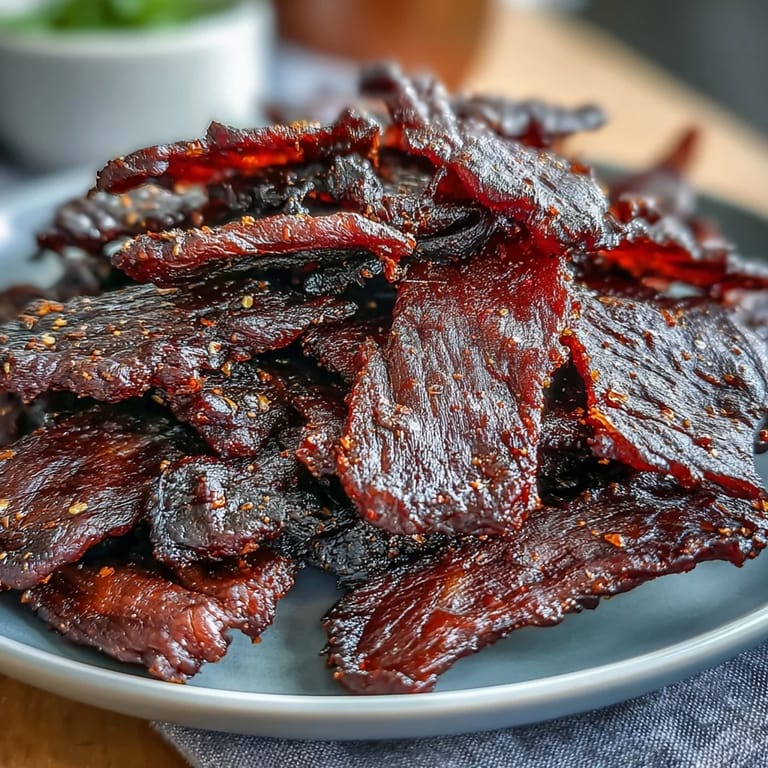
 There's something about the smell of cherry wood smoke mingling with black currant that stops you mid-thought. I discovered this combination entirely by accident one fall afternoon when my neighbor was smoking ribs and I had a jar of black currant jam staring at me from the pantry. What started as a wild experiment—what if I made jerky that tasted like a sophisticated BBQ sauce?—turned into something I now make obsessively. The tanginess hits first, then comes that sweet fruit note, and finally the smoke wraps around everything like a warm hand.
I made this for my dad's poker night last winter, and he ended up hoarding the whole batch in his shed. When I finally confronted him about it, he admitted he'd been eating it before work as his morning protein, saying it was the only thing that kept him satisfied until lunch. That's when I knew this recipe had crossed from experiment into something real.
Ingredients
- Lean beef (top round, flank, or sirloin): Thinly sliced against the grain is non-negotiable—it's the difference between jerky that snaps satisfyingly and jerky that's chewy in a bad way. Buy from a good butcher if you can; they'll slice it thinner and more evenly than you'll manage with a knife.
- Black currant jam or preserves: This is your secret weapon, the thing that makes people tilt their heads in confusion then ask for more. Use actual jam with fruit, not the bright artificial stuff—you can taste the difference.
- Soy sauce: The umami backbone that keeps the sweet from becoming candy-like. If you're gluten-free, tamari is your friend and honestly tastes slightly better.
- Worcestershire sauce: Those few tablespoons add a depth that plain salty marinades can't touch, a funky fermented complexity that builds as the jerky dries.
- Apple cider vinegar: This is what keeps the black currant from being one-dimensional, cutting through with a bright tang that makes you reach for another piece.
- Brown sugar: A small amount dissolves into the marinade and caramelizes slightly during smoking, creating little pockets of concentrated sweetness.
- Smoked paprika: Use the real stuff, not the generic paprika sitting next to it; there's a genuine wood smoke flavor that echoes the smoking process later.
- Garlic powder and onion powder: These are your dry seasoning foundation, and they intensify as the meat dehydrates.
- Ground black pepper and kosher salt: Kosher salt dissolves more slowly into the marinade than table salt, giving you more control over the final seasoning.
- Cayenne pepper: Optional but worth adding if you want the sweetness balanced with heat; even a half teaspoon makes a difference.
- Cherry wood chips: The smoking component that ties everything together with an actual smokehouse flavor.
Tired of Takeout? 🥡
Get 10 meals you can make faster than delivery arrives. Seriously.
One email. No spam. Unsubscribe anytime.
Instructions
- Build Your Marinade Base:
- Whisk the black currant jam, soy sauce, Worcestershire, apple cider vinegar, brown sugar, smoked paprika, garlic, onion powder, pepper, salt, cayenne, and water together in a large bowl until everything is completely smooth with no jam lumps hiding in the corners. If you feel jam resistance, add the water a tablespoon at a time and keep whisking until the whole thing becomes glossy and uniform.
- Coat and Wait:
- Add your thinly sliced beef to the marinade and use your hands or tongs to make sure every single piece gets coated, rolling them around like you're giving them a flavor bath. Cover with plastic wrap and refrigerate for at least 8 hours, though overnight is when the magic really happens—the jam breaks down further and the soy and Worcestershire permeate the meat completely.
- Pat Everything Dry:
- Pull the beef from the marinade and lay it out on paper towels, then pat the top side dry with more towels; this step matters more than you'd think because excess surface moisture is the enemy of good smoke penetration. Discard the marinade entirely—it's done its job.
- Arrange with Space:
- Lay the beef slices on your wire racks or dehydrator trays in a single layer with space between each piece so air can circulate freely. This isn't a time to be efficient and cram them together; the space is how they transform from wet meat to jerky.
- Set Your Smoking Temperature:
- Get your smoker or oven to 160°F (71°C), which is low enough to dry the meat gently without cooking it tough. If using a smoker, load your cherry wood chips according to whatever your specific model requires, and if using an oven, you'll smoke it in the first phase then finish without smoke.
- Smoke and Watch:
- Place your racks in the smoker or oven and let them sit for about 2 hours while the cherry wood does its work, filling everything with that deep woody-fruit smell. After 2 hours, flip each piece over so the other side gets equal exposure, then continue smoking for another 2 to 4 hours until the beef is visibly dried but still bends slightly without snapping completely.
- Cool Before Storage:
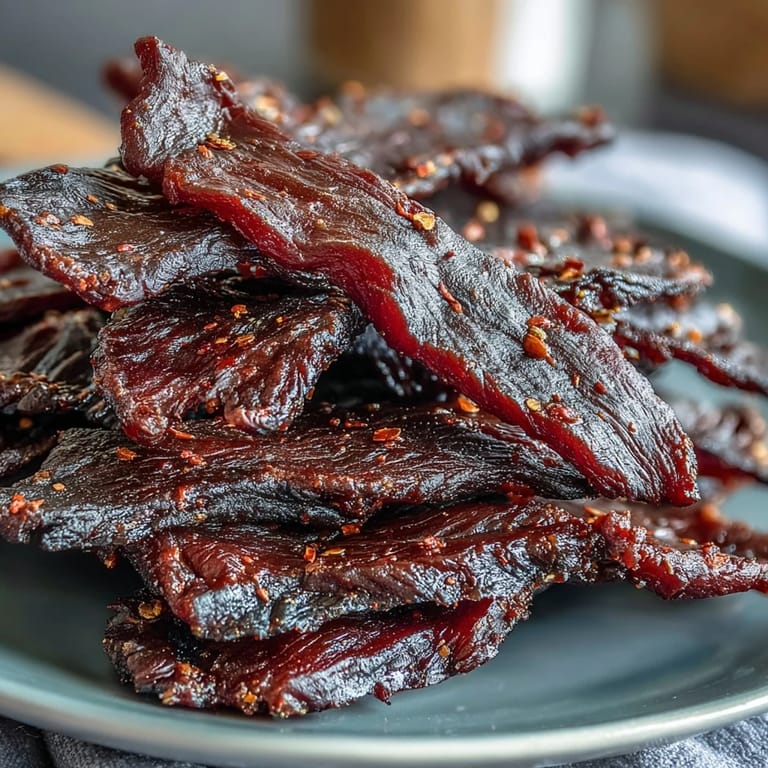
- Remove the jerky and let it sit on the racks at room temperature for at least 30 minutes so any residual heat dissipates and the texture sets. Once completely cool, transfer to an airtight container—this is where it lives for the next two weeks, or a month if you vacuum-seal it.
 Save to Pinterest
 My sister brought this jerky to a camping trip, and I watched a group of strangers pass the container around, each one stopping mid-conversation to figure out what they were tasting. By the end of the night, it had become this shared mystery, the kind of moment that makes you realize food is really just a vehicle for connection.
The Black Currant Mystery
Black currant isn't something most people grow up eating in America, which is partly why this jerky surprises people so thoroughly. The flavor sits in this interesting space between jam and BBQ sauce, sweet but not sugary, fruity but grounded in savory spice. Once you taste it this way—as part of something unexpected—you start seeing black currant differently, which is exactly what good cooking does.
Smoking Versus Pure Dehydration
You technically can make this jerky in a pure dehydrator without any smoke, and it will still taste fantastic because the marinade is doing so much flavor work. But the smoke, especially cherry wood's subtle sweetness, elevates it to something restaurant-quality that tastes like you actually know what you're doing in a smoker. If you don't have a smoker, an oven at low temperature works, though I've also seen people use a smoker box in their regular oven to capture that cherry wood element.
Storage and Shelf Life
Properly dried jerky lasts longer than you'd think, partly because the low moisture content makes it hostile to bacteria, and partly because the salt and smoke act as natural preservatives. I keep mine in airtight containers in the pantry, and it stays perfect for two weeks; vacuum-sealing extends that to a month, which is useful if you make a big batch and want it to last through the month. The beautiful thing about homemade jerky is knowing exactly what went into it, with no mystery additives or preservatives hiding behind complicated names.
- If you notice any moisture condensing inside your storage container, it means your jerky wasn't quite dry enough, so pop it back in the oven at 160°F for another hour.
- Vacuum sealing is worth doing if you make larger batches or want to gift it, because the seal keeps everything protected from air and moisture.
- Once opened, eat within a few days and store in that same airtight container, not in a jar that's been sitting in the sun.
 Save to Pinterest
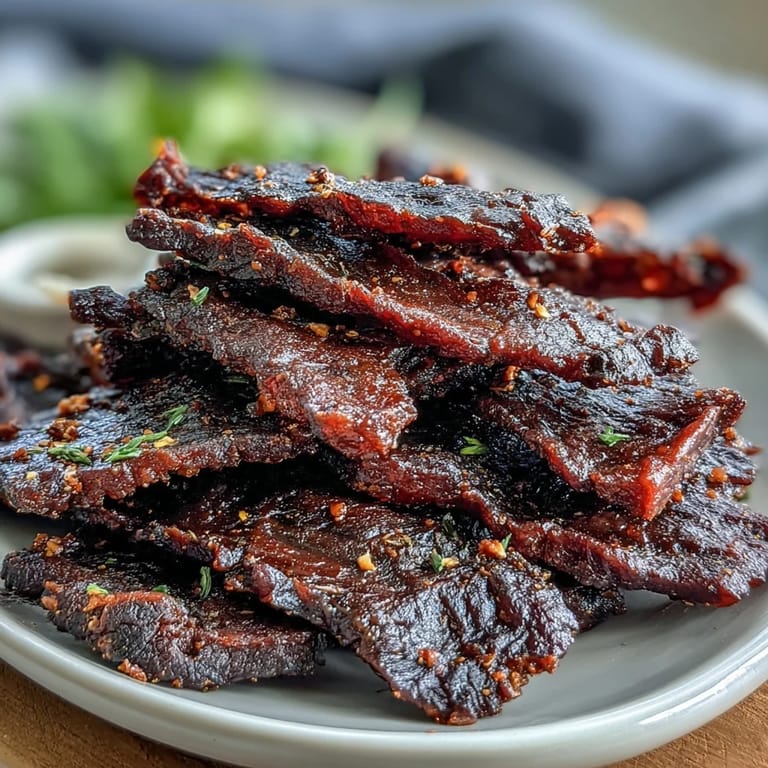
 This jerky represents something I've learned about cooking: that the best recipes often come from happy accidents and the willingness to trust your instincts. Make this for someone you want to impress, or just for yourself on a quiet afternoon.
Recipe Q&A
- → What cut of beef works best for jerky?
Lean cuts like top round, flank steak, or sirloin are ideal because they have minimal fat. Fat doesn't dehydrate well and can make the jerky spoil faster. Slice the meat thinly against the grain for the most tender texture.
- → How long should I marinate the beef?
Marinate for at least 8 hours, but overnight (12-24 hours) is optimal. The longer marinating time allows the black currant flavors and spices to fully penetrate the meat, resulting in a more flavorful final product.
- → Can I make this without a smoker?
Yes, you can use a dehydrator or your oven set to its lowest temperature (usually 160°F/71°C). The jerky won't have the same wood-smoked flavor, but you can add extra smoked paprika to the marinade to compensate.
- → How do I know when the jerky is done?
The jerky is ready when it's dry to the touch but still slightly pliable. It should bend without breaking but not feel soft or moist. A piece should crack slightly when bent but not snap apart completely.
- → How should I store the finished jerky?
Store in an airtight container or vacuum-sealed bag in the refrigerator for up to 2 weeks. For longer storage (up to 1 month), vacuum seal and keep refrigerated. Properly dried jerky can also be frozen for several months.
- → Is black currant jam necessary?
Black currant jam provides the signature tangy-sweet flavor that makes this jerky unique. You could substitute other fruit preserves like currant jelly, grape, or even raspberry, though the flavor profile will change slightly.