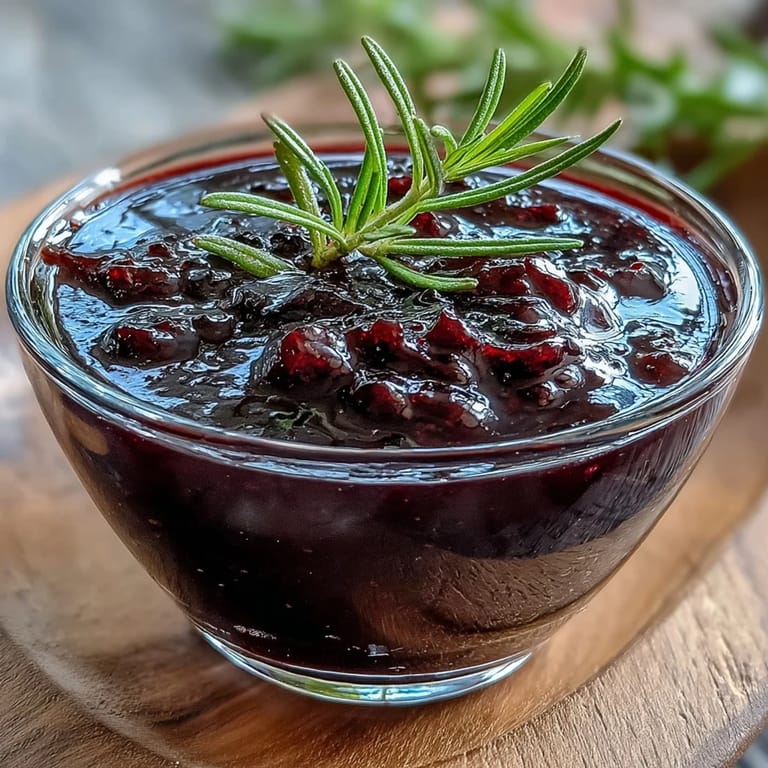
 Save to Pinterest
 There's something about black currant that stops you mid-bite—that sharp, almost forbidden tartness mixed with something deeply sweet. I discovered this reduction on a grey autumn evening when I had a bottle of unsweetened black currant juice sitting in my pantry and a piece of venison that needed something memorable. Twenty minutes later, my kitchen smelled like a European wine bar, and I realized I'd stumbled onto a sauce that could transform an ordinary dinner into something worth remembering.
My partner took one taste and asked if I'd been secretly trained as a chef. I hadn't, of course—I'd just let a saucepan do the heavy lifting while the rosemary infused the sauce with its piney warmth. Watching that ruby-dark liquid reduce and thicken, I understood why people get excited about cooking. This sauce doesn't demand perfection; it just asks for your attention and a little patience.
Ingredients
- Black currant juice: The foundation of everything here, unsweetened so the natural tart brightness cuts through rich meats without turning cloying.
- Dry red wine: Adds structure and a subtle complexity that pure juice alone can't deliver.
- Balsamic vinegar: Those two tablespoons bridge the gap between sweet and savory, adding umami depth that feels almost mysterious.
- Black currant jam: This is your shortcut to richness without spending hours reducing fruit, plus it helps thicken the sauce naturally.
- Fresh rosemary: Two sprigs are enough—too much and it tastes like you're sipping a pine forest, too little and you miss its magic entirely.
- Shallot and garlic: These create a savory foundation that makes people wonder what your secret ingredient is.
- Salt and black pepper: The final whisper that brings everything into focus.
Tired of Takeout? 🥡
Get 10 meals you can make faster than delivery arrives. Seriously.
One email. No spam. Unsubscribe anytime.
Instructions
- Build Your Base:
- Pour the black currant juice, red wine, balsamic vinegar, and jam into a medium saucepan and stir over medium heat until the jam dissolves completely into the liquid. You'll notice the color deepening as everything combines, which is deeply satisfying to watch.
- Introduce the Aromatics:
- Add the rosemary sprigs, finely chopped shallot, and minced garlic to the pan. The moment they hit the warm liquid, the kitchen will fill with a smell that makes you understand why people keep cooking.
- Let It Reduce:
- Bring the mixture to a gentle boil, then lower the heat and simmer uncovered for 15 to 18 minutes, stirring now and then. You're waiting for that magical moment when it thickens slightly and the volume has roughly halved—this is where patience becomes flavor.
- Finish with Care:
- Remove from heat and discard the rosemary sprigs. If you want a silky-smooth sauce, strain it through a fine-mesh sieve, though honestly, a few flecks of shallot and garlic add character.
- Season to Your Taste:
- Add salt and pepper gradually, tasting as you go. The seasoning should enhance, not dominate.
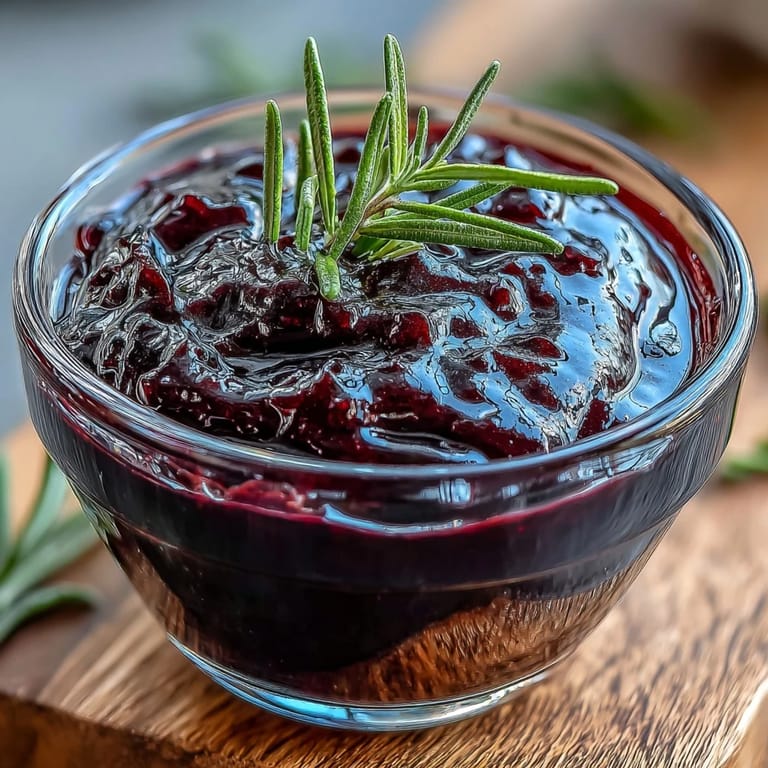 Save to Pinterest
 I served this sauce at a dinner party where someone was hesitant about game meat, worried it would taste too wild or gamey. One bite of that roasted duck with the black currant reduction and they asked for the recipe. That moment reminded me that good cooking isn't about being fancy—it's about finding the right partner for whatever's on the plate.
The Magic of Black Currant in Savory Cooking
Black currant is one of those underrated ingredients that European cooks have known about forever but somehow never made it into everyday American kitchens. Its tartness has a sophistication that regular berries can't match, and when combined with wine and herbs, it creates this elegant tension between sweet and savory that feels almost luxurious. If you've only experienced black currant in cocktails or jams, this sauce is your chance to see what it's really capable of.
Serving This Sauce Beyond the Obvious
Yes, it's stunning on roasted lamb and venison, but one evening I poured it over crispy roasted root vegetables and found it worked just as beautifully. The acidity cuts through the natural sweetness of roasted vegetables while the rosemary echoes their earthiness. I've also spooned it over seared duck breast, grilled tofu for a vegan dinner, and even—don't judge—as a glaze drizzled over a cheese board.
Customizing Your Reduction
The base recipe is balanced and reliable, but it rewards small tweaks based on what you're serving it with. If you find yourself drawn to sweeter sauces, add an extra tablespoon of jam during the initial steps. For something richer and more dessert-like, swap the dry red wine for port wine and let it simmer a minute longer. And if you ever have fresh black currants—actual fruit, not juice—save them for an afternoon when you want to make this from scratch and feel a little bit like a European kitchen wizard.
- Remember that reductions concentrate flavor, so taste carefully before reaching for more seasoning.
- This sauce keeps beautifully in the refrigerator for up to five days, and it's one of those make-ahead sauces that gives you one less thing to worry about on dinner day.
- If it thickens too much when cool, a tablespoon of warm water or wine will loosen it back to the right consistency.
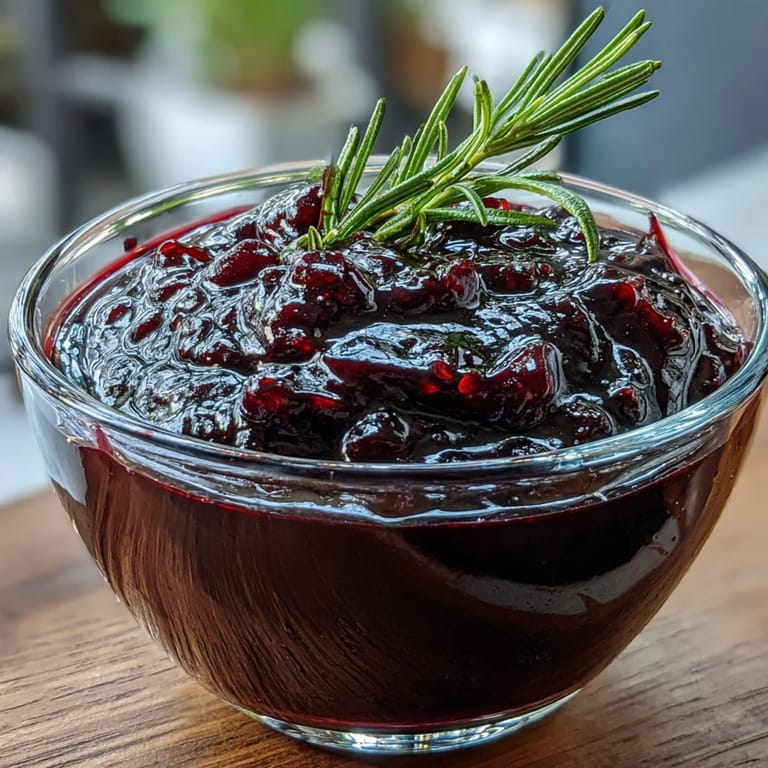 Save to Pinterest
 This reduction has become one of those sauces I make without thinking now, the kind that turns a regular Tuesday dinner into something worth pausing for. That's the real magic of cooking—finding something simple that makes people slow down and actually taste their food.
Recipe Q&A
- → What dishes pair best with this reduction?
This tangy sauce complements roasted meats beautifully, especially lamb, duck, and venison. It also enhances grilled vegetables and works wonderfully as a glaze for roasted or grilled tofu.
- → Can I make this ahead of time?
Yes, prepare the reduction up to 3 days in advance and store in an airtight container in the refrigerator. Reheat gently over low heat before serving, adding a splash of water if needed to reach desired consistency.
- → How do I store leftovers?
Keep leftover reduction in a sealed jar in the refrigerator for up to one week. For longer storage, freeze in ice cube trays and thaw individual portions as needed. The flavors may intensify over time.
- → What can I substitute for black currant juice?
Cranberry juice or pomegranate juice work well as alternatives, though they'll produce slightly different flavor profiles. Cranberry offers similar tartness, while pomegranate adds sweeter, deeper notes.
- → Is straining necessary?
Straining is optional but recommended for an elegant, smooth finish. If you prefer a rustic texture with bits of shallot and garlic, skip this step. The strained version creates a more refined presentation.
- → How can I make it sweeter?
Add an extra tablespoon of black currant jam during cooking, or substitute port wine for the red wine to introduce rich, sweet notes that complement the tart currants beautifully.