 Save to Pinterest
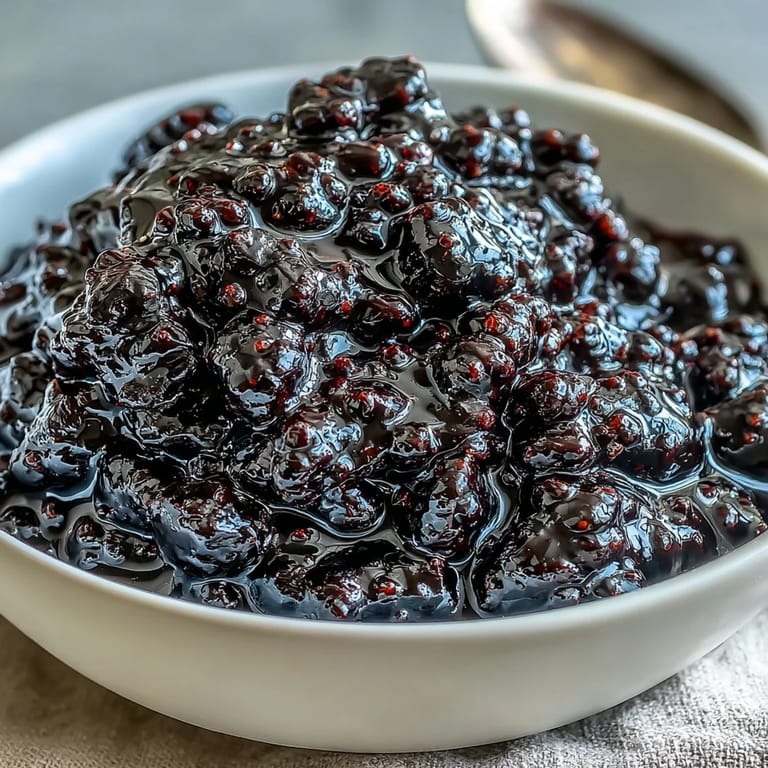
 There's a moment in autumn when I realized that a sauce could be just as important as the main dish itself—it was watching a friend's face light up when she tasted duck breast glazed with something dark, glossy, and impossibly complex. That's when I understood black currant reduction: it's concentrated sophistication in a spoon, the kind of thing that makes people ask what you did differently. It took me three attempts to stop overthinking it, to trust that time and gentle heat would do the real work.
I made this for a dinner party once when someone mentioned they couldn't eat heavy cream sauces, and I suddenly felt protective of this recipe—because it doesn't need cream to be luxurious. The black currants do all the heavy lifting, breaking down into this velvety syrup while the red wine adds that subtle earthiness. My guests finished it by spooning extra onto their plates, and someone asked if I'd trained as a chef.
Ingredients
- Fresh or frozen black currants (1 cup / 150 g): These are the soul of the sauce—use frozen if fresh aren't available, and don't thaw them first; they'll release their color and tannins more gradually into the liquid.
- Dry red wine (1 cup / 240 ml): Pick something you'd actually drink, nothing labeled cooking wine; the wine's character shapes the entire flavor profile.
- Chicken or vegetable stock (1/2 cup / 120 ml): This mellows the wine's sharpness and adds body without muddying the fruit's intensity.
- Balsamic vinegar (2 tbsp / 30 ml): It brings a hidden sweetness and helps the reduction cling to meat; cheap balsamic tastes thin, so splurge slightly here.
- Small shallot, finely chopped: Shallots dissolve into the sauce almost invisibly, adding savory depth that currants alone can't achieve.
- Fresh thyme sprig: One sprig is enough; too much thyme turns the sauce medicinal instead of elegant.
- Bay leaf: This adds a whisper of structure that keeps the sauce from tasting one-dimensional.
- Granulated sugar (2 tbsp / 25 g): Sugar isn't about making it sweet—it balances the wine's acidity and helps the berries release their flavor.
- Freshly ground black pepper and fine sea salt: Grind the pepper just before using; pre-ground pepper tastes dusty against the sauce's brightness.
- Cold unsalted butter, cubed (2 tbsp / 30 g): This final addition creates that glossy, silky finish that makes the sauce coat everything beautifully.
Tired of Takeout? 🥡
Get 10 meals you can make faster than delivery arrives. Seriously.
One email. No spam. Unsubscribe anytime.
Instructions
- Soften the shallot gently:
- Melt butter in your saucepan over medium heat and let the chopped shallot cook slowly for 2–3 minutes until it's almost translucent; you'll notice it releases a sweet smell and loses its raw bite. This foundation flavors everything that comes next, so don't rush this step or use high heat.
- Build the sauce base:
- Add the black currants, wine, stock, balsamic vinegar, thyme, bay leaf, sugar, salt, and pepper all at once and stir gently to combine. You'll see the currants begin to release their deep purple color almost immediately.
- Reduce with patience:
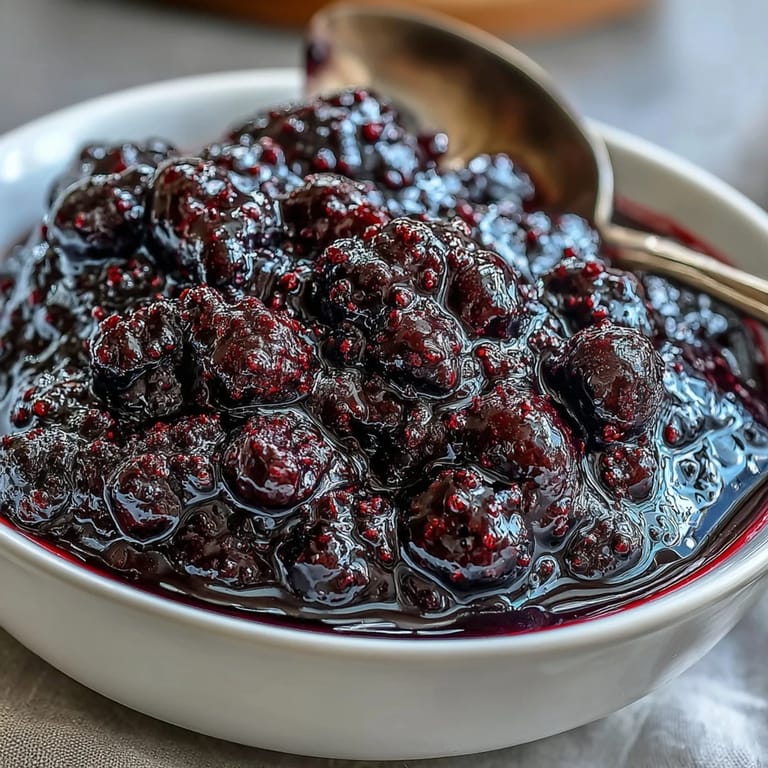
- Bring everything to a gentle boil, then lower the heat and let it simmer uncovered for 15–20 minutes, stirring occasionally. Watch it transform: the liquid reduces, the currants soften and begin to break apart, and the sauce takes on this rich, syrupy consistency that coats the back of a spoon.
- Strain out the solids:
- Remove the thyme and bay leaf with tongs, then pour the sauce through a fine mesh strainer into a clean pan, pressing the cooked currants gently with the back of a spoon to extract every bit of liquid. This step gives you that smooth, refined texture that makes the difference between homemade and restaurant-quality.
- Mount with butter for shine:
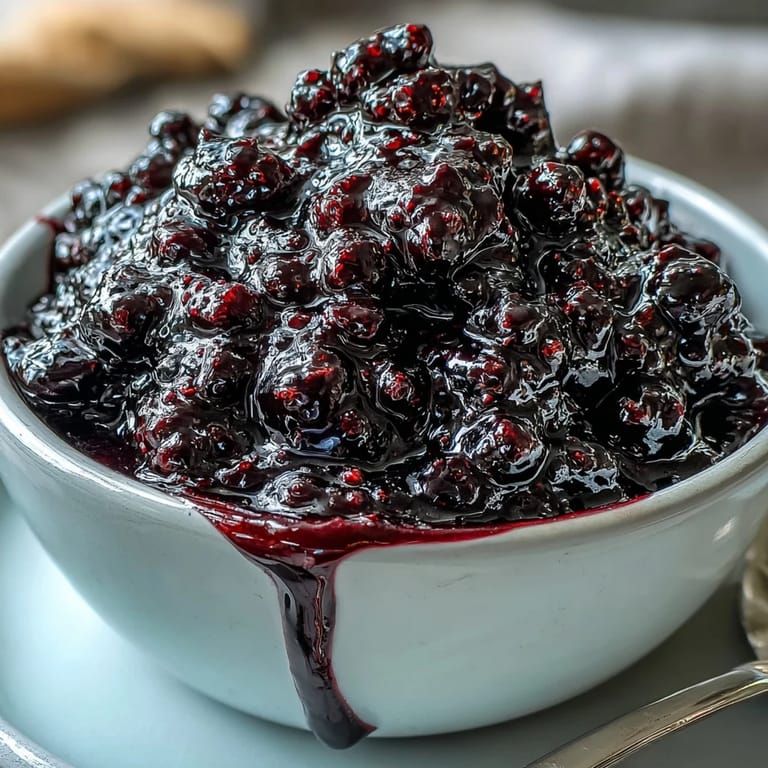
- Return the strained sauce to low heat and whisk in the cold butter cubes one at a time, waiting for each piece to melt before adding the next. This technique, called mounting, creates that silky, glossy finish that clings to meat beautifully.
- Taste and adjust:
- Once the butter is incorporated, taste it and adjust the seasoning—a pinch more salt, a crack of pepper, or a splash of vinegar if you want it sharper. Serve it warm, and watch it pool beside whatever meat or cheese it accompanies.
 Save to Pinterest
 The first time someone used this sauce for a charcuterie board and came back asking for the recipe, I realized it had stopped being just a sauce and become a reason to gather. There's something about that dark, glossy finish that makes everything around it taste more intentional.
When To Serve This Sauce
This reduction shines alongside rich, flavorful proteins where its tangy-sweet intensity actually enhances rather than masks. Duck breast is the classic pairing—the sauce's acidity cuts through the fat and its fruit notes echo the meat's subtle gaminess. But it's equally at home on pork chops, venison, or even roasted lamb, and I've spooned it over charcuterie boards where it became the unexpected star.
Making It Ahead
One of the best qualities of this sauce is that it actually improves overnight—the flavors deepen and marry as it sits. Make it up to a day ahead, store it in a glass jar in the refrigerator, and gently reheat it in a small saucepan over low heat before serving, adding a splash of water if it's thickened too much. This makes entertaining easier because your sauce is ready and waiting while you focus on cooking the main event.
Variations and Flavor Tweaks
This sauce has a foundation that's flexible enough to bend to your preferences without breaking. Some cooks add a splash of crème de cassis for extra depth—use it to replace a couple tablespoons of wine if you want that liqueur's distinctive flavor. Others finish with a touch of freshly grated nutmeg or a tiny pinch of ground clove for subtle spice, though I prefer to let the black currants be the star.
- For a sharper, more acidic sauce, add another splash of balsamic vinegar or red wine vinegar at the very end, tasting as you go.
- If you love the herb element, try adding a small sprig of rosemary or a single juniper berry during the simmer, though remove them before straining.
- Make it with white wine instead of red for a lighter, more delicate sauce that pairs beautifully with fish or white meats like chicken or pork tenderloin.
 Save to Pinterest
 This sauce taught me that sometimes the most elegant things are the simplest: fruit, wine, butter, and patience. It's worth making just to understand what concentration and time can do to flavor.
Recipe Q&A
- → What meats pair best with black currant reduction?
Duck, pork, venison, and lamb work exceptionally well. The sauce's tart-sweet profile cuts through rich meats while complementing their natural flavors. It's also excellent alongside game birds and roasted pork tenderloin.
- → Can I use frozen black currants?
Absolutely. Frozen currants work just as well as fresh in this reduction. Thaw them briefly before adding to the pan, though they can go in slightly frozen—just allow an extra minute or two of simmering time.
- → How long will the sauce keep?
Store in an airtight container in the refrigerator for up to 5 days. Gently reheat over low heat, whisking to restore the glossy texture. The sauce may separate slightly when cold but will emulsify again when warmed.
- → Can I make this dairy-free?
Yes. Omit the butter finish and instead whisk in a teaspoon of olive oil or a small amount of dairy-free butter alternative. The sauce will have slightly less gloss but still deliver excellent flavor.
- → What wine works best?
A dry red wine like Pinot Noir, Burgundy, or Côtes du Rhône works beautifully. Avoid overly tannic wines as they can taste bitter when reduced. The wine should be good enough to drink on its own.