 Save to Pinterest
 One Tuesday evening, I stood at my kitchen counter watching the oven glow as salmon cubes browned under the broiler, and suddenly the whole apartment smelled like honey and sesame—not fancy, just honest. My roommate wandered in following that smell, and within minutes we were building these bowls together, each person arranging their vegetables like we were creating tiny edible art projects. That's when I realized this wasn't just dinner; it was the kind of meal that brings people into the kitchen instead of keeping them out of it.
I made this for my sister who'd gone pescatarian, and she took one bite and actually closed her eyes—the kind of genuine moment that made me feel like I'd discovered something. The salmon's slight char against the cool cucumber, that creamy avocado melting into the warm rice—it all clicked in a way that showed me healthy eating doesn't have to taste like compromise.
Ingredients
- Salmon fillet, cut into 2 cm cubes: The size matters here because smaller cubes cook evenly under the broiler without drying out, and they distribute perfectly through each spoonful of rice.
- Soy sauce: Use tamari if you're avoiding gluten—it has the same umami punch but won't throw off anyone with sensitivities.
- Sesame oil: A little goes a long way; this is the secret that transforms the marinade from basic to unforgettable.
- Fresh ginger and garlic: Mincing them fine ensures they meld into the marinade rather than sitting as chunks.
- Jasmine or sushi rice: The slight sweetness and delicate texture of jasmine rice plays beautifully with the savory salmon—don't use long-grain white rice unless you're in a pinch.
- Cucumber: Slice it thin so it stays crisp and refreshing; thick slices can feel watery and heavy.
- Edamame: If you're buying frozen, thaw and pat them dry so they don't release excess moisture into your bowl.
- Avocado: Add it right before serving; exposed avocado turns brown quickly and loses that buttery appeal.
- Toasted sesame seeds: Buy them already toasted or toast raw seeds in a dry pan for about two minutes—the fragrance tells you exactly when they're ready.
- Sriracha mayo: Mix it fresh if you can; bottled versions often taste flat compared to homemade.
Tired of Takeout? 🥡
Get 10 meals you can make faster than delivery arrives. Seriously.
One email. No spam. Unsubscribe anytime.
Instructions
- Heat your oven and prep your workspace:
- Preheat to 220°C (425°F) and line a baking tray with parchment paper so cleanup later feels like a gift to your future self.
- Create the marinade and marinate the salmon:
- Whisk together soy sauce, sesame oil, honey, ginger, garlic, and black pepper until it looks glossy and smells incredible. Toss in your salmon cubes and let them sit for 10 minutes—this short window is enough to let the flavors start their work without overwhelming the delicate fish.
- Start the rice while salmon rests:
- Rinse your rice under cold running water, stirring gently with your fingers until the water runs mostly clear; this removes excess starch so your rice stays fluffy instead of clumpy. Combine with fresh water and salt, bring to a boil, then reduce heat to low, cover, and let it simmer for 12 to 15 minutes.
- Broil the salmon to golden perfection:
- Spread the marinated salmon in a single layer on your parchment-lined tray and slide it into the oven for 8 to 10 minutes. You're looking for the edges to turn a light golden brown while the inside stays tender—it'll continue cooking slightly after you pull it out.
- Prep your fresh vegetables with intention:
- While salmon broils, slice your cucumber thin, shred your carrots, slice your avocado, and scatter your green onions. Having everything ready before assembly means your bowls come together smoothly and nothing sits around getting sad.
- Assemble each bowl like you're building something worth eating:
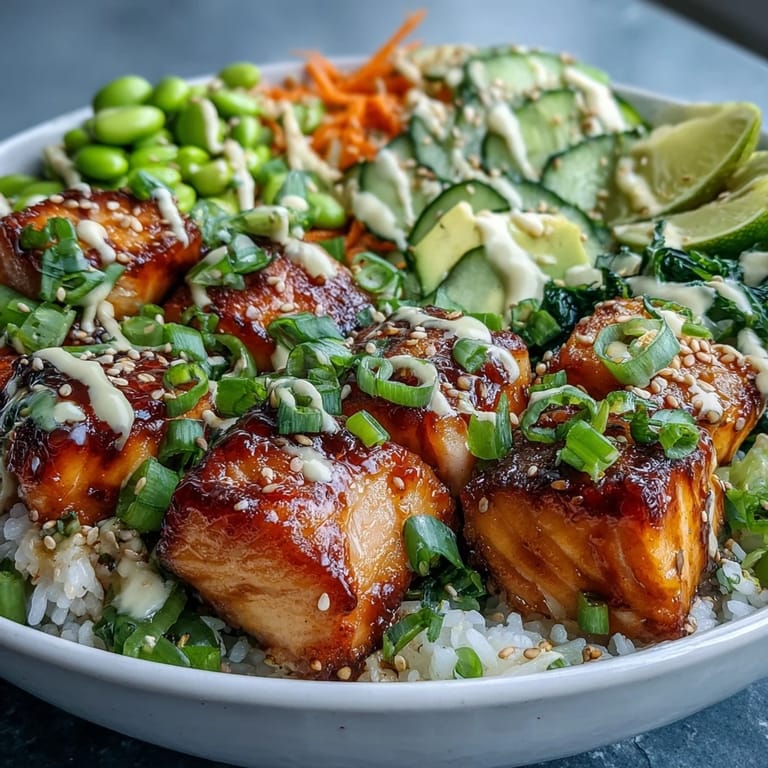
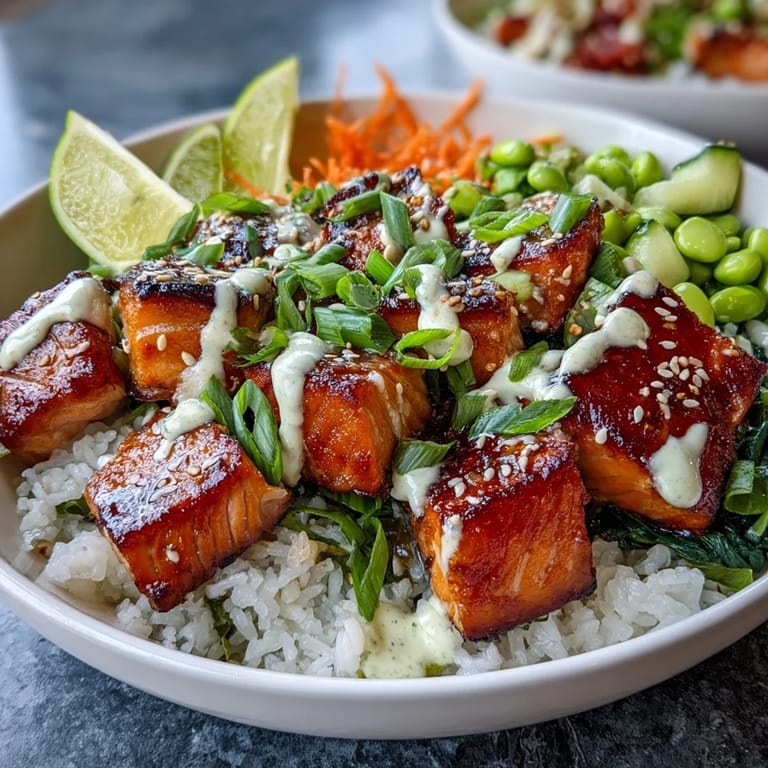
- Start with a generous bed of warm rice in each bowl, then layer on the broiled salmon, then all your vegetables in whatever arrangement makes you happy. Drizzle your chosen sauce across the top, sprinkle with sesame seeds, and finish with a lime wedge.
 Save to Pinterest
 There was something almost meditative about assembling these bowls—the repetition of rice, salmon, vegetables, the ritual of drizzling sauce just so. It reminded me that cooking doesn't always have to be complicated to feel meaningful, and sometimes the simplest meals are the ones that stay with you longest.
Making This Bowl Your Own
The frame of this recipe is solid, but the interior is completely yours to play with. Swap brown rice for white if you want earthier flavor, add crispy tofu for a vegetarian twist, or pile on pickled radish and seaweed if you're craving that authentic Japanese soul food energy. The marinade can handle swaps too—try mirin instead of honey for a deeper sweetness, or add a pinch of chili flakes if heat calls to you.
Sauce Strategy That Actually Works
I used to pour sauce over everything and end up with soggy rice, which taught me to be deliberate. Drizzle sriracha mayo if you want creaminess and mild spice, keep soy sauce on the side if you want to control the saltiness, or mix a little lime juice into your soy sauce for brightness that cuts through the richness. The pickled ginger acts as a palate cleanser between bites, so even if you don't use any other sauce, a small pile of that gives your bowl complexity and keeps things interesting.
Timing Tips for Seamless Cooking
The beauty of this dish is that everything can happen in parallel once you understand the rhythm. Your rice takes the longest at 12 to 15 minutes, so start that first, then get your salmon marinating while the rice cooks, and use that broiling time to prep vegetables. By the time salmon hits the oven, your rice is nearly done, and everything finishes within minutes of each other.
- Prep all your vegetables before you start cooking so you're never scrambling mid-assembly.
- Use a timer for the salmon—even two minutes over can turn perfectly cooked fish into something rubbery.
- Warm your bowls by rinsing them with hot water if you have the time; warm rice against warm ceramic tastes somehow better than cold bowls.
 Save to Pinterest
 This bowl has become my go-to when I want something that feels both restaurant-quality and completely within reach on a random weeknight. The fact that it's healthy, fast, and endlessly adaptable means it's earned a permanent spot in my rotation, and I hope it finds its way into yours too.
Recipe Q&A
- → Can I use frozen salmon for this bowl?
Yes, frozen salmon works well. Thaw it completely in the refrigerator overnight before cutting into cubes and marinating. Pat the fillets dry to ensure the marinade sticks properly.
- → What other grains can I use instead of jasmine rice?
Brown rice, quinoa, cauliflower rice, or even noodles make excellent substitutes. Adjust cooking times accordingly—brown rice takes about 40 minutes while quinoa cooks in roughly 15 minutes.
- → How do I store leftovers?
Store components separately in airtight containers. Rice and salmon keep for 3-4 days in the refrigerator. Reheat salmon gently in the oven or microwave to maintain texture.
- → Can I meal prep these bowls?
Absolutely. Cook the rice and salmon in batches, chop vegetables, and prepare sauces. Store everything in separate containers and assemble bowls throughout the week for quick lunches.
- → What's the best way to get crispy edges on the salmon?
Broiling at high heat creates those delicious browned edges. Space salmon cubes evenly on the tray without overcrowding, and keep an eye on them during the last 2 minutes to prevent burning.
- → Is this bowl gluten-free?
It can be. Use tamari instead of soy sauce and check all condiments. Sriracha mayo is typically gluten-free, but always verify labels to ensure your version meets dietary needs.