 Save to Pinterest
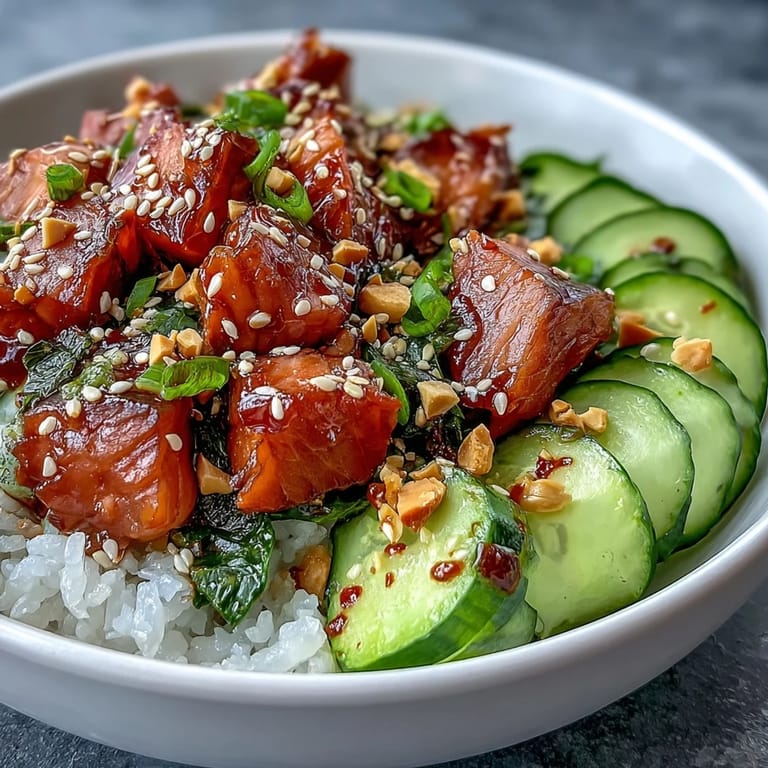
 One Tuesday afternoon, my coworker arrived at lunch with this beautiful bowl, and I watched her drizzle chili oil over creamy avocado and perfectly seared salmon while barely touching her phone. She caught me staring and said, "You've got to make this," handing me a forkful that tasted like someone had bottled umami and joy together. That simple lunch sparked an obsession, and now I make it whenever I need something that feels both indulgent and effortlessly fresh.
I made this for a friend who'd just cut gluten out of her diet, and her eyes lit up when she realized she could eat every single component without worry. Watching her scoop up salmon and avocado with pure delight reminded me that the best meals aren't about complexity, they're about making someone feel seen through food.
Ingredients
- Fresh salmon fillet (250 g, skinless, cubed): Choose pieces that are firm and smell like the ocean, not fishy; if your fishmonger is good, ask them to remove the skin for you and cut it into roughly bite-sized pieces so the marinade coats everything.
- Tamari sauce (2 tbsp): This soy sauce's deeper, less salty flavor is what makes the marinade taste sophisticated rather than just salty, and it's naturally gluten-free if that matters to you.
- Toasted sesame oil (1 tsp): A tiny amount goes a long way, and toasted is essential because it carries that warm, nutty backbone that makes people ask what your secret ingredient is.
- Rice vinegar (1 tsp for marinade, 1 tbsp for rice): This is gentler than regular vinegar and adds brightness without harshness; keep a bottle around because it's a workhorse in the kitchen.
- Honey or agave syrup (1 tsp): Just enough sweetness to balance the salty tamari and create a marinade that clings to the salmon instead of sliding off.
- Cooked sushi rice (200 g or about 1 cup uncooked): The short grains hold sauce better than long-grain rice, and if you don't have a rice cooker, simmering it in a pot works perfectly fine.
- Ripe avocado (1 large): Cut it just before assembling the bowl so it doesn't brown, and a ripe avocado should yield slightly to gentle pressure but not be mushy.
- Roasted peanuts (2 tbsp, roughly chopped): These add the textural contrast that makes your mouth happy, but if peanuts aren't your thing, crushed cashews or even toasted sunflower seeds work beautifully.
- Chili oil (1 tbsp, adjust to taste): This is where the heat and richness live, so taste it first on a grain of rice to decide how much you actually want.
- Wasabi paste (1 tsp, or to taste): A little goes a long way because wasabi hits differently than regular spice; start small and add more if you're brave.
- Nori sheets: Cutting them into strips adds visual appeal and a subtle sea-salt umami that ties everything together.
- Cucumber (1 small, thinly sliced): This keeps everything cool and crisp, providing a textural contrast to the soft salmon and avocado.
- Spring onions (2, sliced): They add a gentle onion bite that brightens the whole bowl without overwhelming the other flavors.
- Toasted sesame seeds (1 tbsp): Toast them yourself if you have time, because the difference between store-bought and freshly toasted is like comparing a photograph to seeing something in person.
Tired of Takeout? 🥡
Get 10 meals you can make faster than delivery arrives. Seriously.
One email. No spam. Unsubscribe anytime.
Instructions
- Make the marinade and prepare the salmon:
- Whisk tamari, sesame oil, rice vinegar, and honey together in a medium bowl until the honey dissolves, then add your salmon cubes and toss gently so each piece gets coated. Cover and refrigerate for 10 to 15 minutes while you prep everything else, letting the marinade season the fish from the inside out.
- Season your rice:
- Mix the warm cooked rice with rice vinegar, sugar, and salt while it's still hot so the grains absorb the seasoning and become slightly tangy and sweet rather than plain. Set it aside and keep it warm, or if it cools down, you can gently reheat it before serving.
- Prep all your toppings:
- Slice your avocado lengthwise around the pit, twist, remove the stone, and slice the flesh into neat pieces; chop your peanuts roughly; cut the nori into strips; and slice your cucumber and spring onions so everything is ready to go. This mise en place moment is your friend because once you start assembling, you want to move quickly.
- Divide the rice:
- Scoop the seasoned rice into your serving bowls, using the back of your spoon to gently press it down so it forms a solid base that won't shift when you add the toppings. Don't pack it too tight, or it'll feel dense rather than fluffy.
- Arrange your toppings:
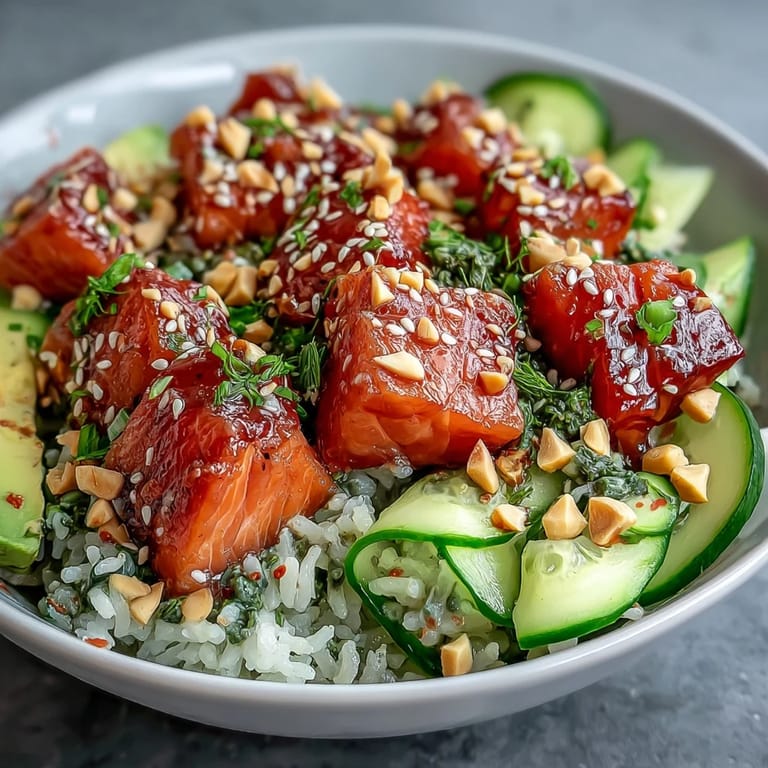
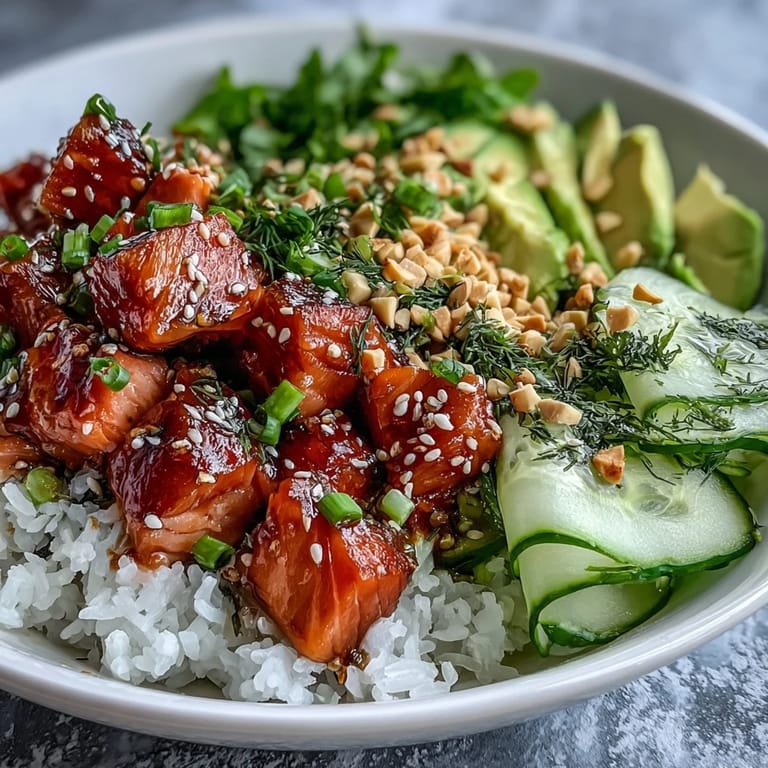
- Place the marinated salmon, avocado slices, cucumber, and spring onions in sections over the rice, creating little flavor zones so someone eating can get salmon and avocado in one bite, cucumber and wasabi in another. Arrange it however feels beautiful to you.
- Add the finishing touches:
- Drizzle chili oil across the bowl in a light pattern, dot wasabi paste in a few strategic spots (you can always add more), then sprinkle peanuts, sesame seeds, and nori strips over the top. If you're using cilantro or microgreens, add them now for color and freshness.
- Serve with lime:
- Hand the bowl over with lime wedges on the side so people can squeeze a little brightness into each bite. Tell them to mix everything together or eat it in sections, whatever makes them happy.
 Save to Pinterest
 My partner took one bite and said, "This tastes like health," which made me laugh because we're shoveling it in like it's not, but somehow it doesn't feel heavy. That's the magic of this bowl, it tastes indulgent but leaves you feeling clear-headed and satisfied.
Why the Marinade Matters So Much
The three minutes I spend whisking tamari, sesame oil, vinegar, and honey together is what separates this from just dumping raw salmon on rice. That marinade is salty, nutty, slightly sweet, and tangy all at once, so every piece of salmon tastes intentional rather than bland. I used to skip this step thinking the toppings would flavor everything on their own, and the result was forgettable, which taught me that salmon needs to be seasoned on its own terms.
Rice Vinegar Is Your Secret Weapon
The sushi rice gets a hit of rice vinegar while it's still warm, which is what makes it taste bright and slightly pickled rather than starchy. This is the same technique Japanese sushi chefs use, and it's simple enough that I was shocked it made such a difference when I first tried it. Once you understand this trick, you'll start using vinegared rice in other bowls and situations because it completely transforms the eating experience.
Building Flavor Through Layers
This bowl works because every component has its own flavor story, and they tell those stories together without stepping on each other's toes. The wasabi hits you with sharp heat, the chili oil brings warm spice, the sesame seeds add nuttiness, and the avocado smooths everything out into something cohesive and delicious. If I had to give one piece of advice, it's this: don't mix everything together before eating, instead take bites that include different combinations of toppings so you get the full experience with each spoonful.
- Start by taking a bite with salmon, avocado, and a tiny bit of wasabi to understand the core flavors.
- Then try the same combination but with cucumber instead of avocado, or with extra chili oil to see how the heat changes things.
- The beauty of a bowl is that you control every bite, so give yourself permission to be thoughtful about it.
 Save to Pinterest
 This bowl has become my answer to the question "what's for dinner?" on nights when I want something that feels like a restaurant but tastes like care. It's fast enough for a weeknight and impressive enough to serve to someone you want to impress.
Recipe Q&A
- → Can I use other fish instead of salmon?
Yes, tuna or yellowtail work beautifully with these flavors. For a vegetarian option, try marinated tofu cubes or tempeh.
- → How do I prevent the avocado from browning?
Slice the avocado just before serving. If preparing ahead, toss slices in lime juice to slow oxidation.
- → Can I make the components ahead?
Cook and season the rice up to 2 days ahead. Marinate salmon just before cooking for best texture. Prep toppings in advance and store separately.
- → Is this bowl gluten-free?
Use certified gluten-free tamari instead of soy sauce. Verify that all condiments and seasonings are gluten-free.
- → Can I reduce the spice level?
Adjust chili oil and wasabi to your preference. Start with smaller amounts and add more gradually after tasting.
- → What other toppings can I add?
Pickled ginger, edamame, radishes, shredded carrots, or microgreens all complement these flavors well.