 Save to Pinterest
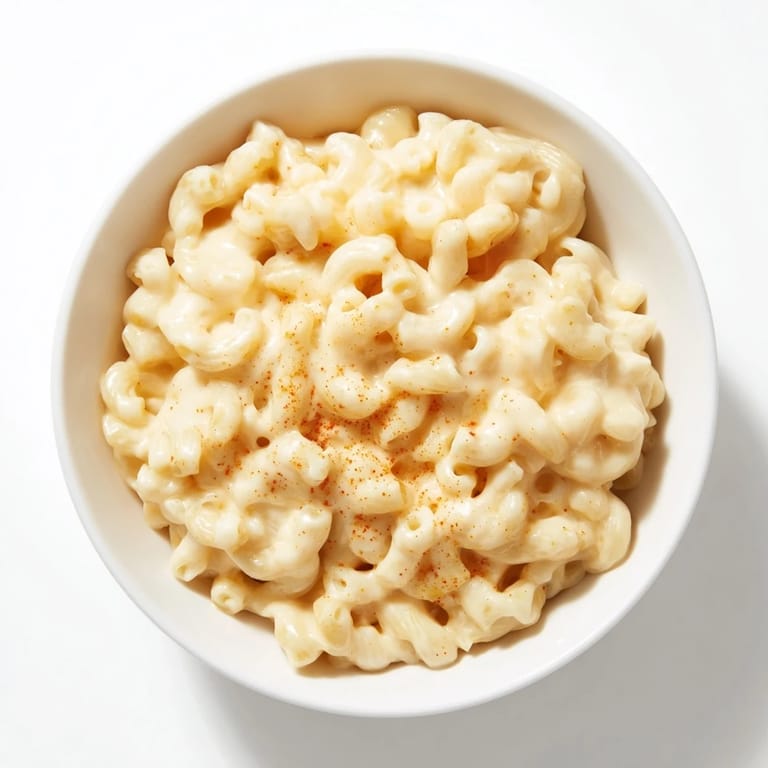
 This mac and cheese came together one unremarkable Tuesday when my wallet was thinner than I'd like to admit, and I was staring at a half-empty fridge wondering what could possibly stretch into dinner for four. Sharp cheddar and American cheese seemed like an odd pairing at first, but the moment they melted into that cream sauce, I understood why people get genuinely excited about simple dishes. It's the kind of recipe that doesn't ask for much but delivers something unexpectedly satisfying.
I made this for a dinner party once when money was tight but pride wasn't, and I watched someone take a second bowl without asking. Nobody mentioned the lack of fancy ingredients or artisanal cheese. They just asked for the recipe, which somehow felt better than any compliment.
Ingredients
- 12 oz elbow macaroni: The shape matters because those little tubes catch the sauce and make every bite creamy, not just the ones at the bottom.
- 2 cups sharp cheddar cheese, grated: Buy a block and grate it yourself—pre-shredded cheese has anti-caking agents that make the sauce gritty, trust me on this.
- 1 cup American cheese: This ingredient gets a bad reputation, but it's actually a secret weapon for smoothness because of how its emulsifiers work.
- 2 cups whole milk: Don't use skim; the fat is what makes this feel rich on your tongue.
- 2 tbsp unsalted butter: For the roux, and for tasting what you're actually making instead of just salt.
- 2 tbsp all-purpose flour: This thickens the milk without making anything lumpy if you whisk properly.
- 1/2 tsp salt and 1/4 tsp black pepper: Season as you go, not all at the end.
- 1/4 tsp paprika: Optional, but it adds warmth and a tiny hint of smokiness.
- 1/2 cup breadcrumbs and 1 tbsp melted butter (topping): For a crispy finish that happens fast under the broiler, or skip it entirely for pure comfort in a bowl.
Tired of Takeout? 🥡
Get 10 meals you can make faster than delivery arrives. Seriously.
One email. No spam. Unsubscribe anytime.
Instructions
- Get your pasta ready:
- Boil a pot of salted water like you're making pasta for dinner—it should taste like the sea. Cook the macaroni until it's just barely tender, then drain it but don't rinse it. The starch clinging to the pasta helps the sauce cling too.
- Build the roux:
- Melt butter in a saucepan over medium heat, then sprinkle in flour and whisk constantly for a full minute. You're cooking out the raw flour taste and creating a paste that'll thicken everything without lumps.
- Whisk in the milk:
- Pour the milk in slowly while whisking, watching for lumps and breaking them up as they form. Keep going for 3 to 5 minutes until the mixture coats the back of a spoon and feels noticeably thicker.
- Melt the cheese in:
- Turn the heat down low, then add both cheeses and stir constantly until everything is smooth and glossy. Go slow here—high heat breaks cheese emulsions and you'll end up with greasy pools instead of silky sauce.
- Season and combine:
- Taste it, then season with salt, pepper, and paprika if you're using it. Dump in the drained pasta and stir until every piece is coated in that creamy cheese.
- Top and bake (optional):
- If you want a crispy top, transfer everything to a greased baking dish, mix breadcrumbs with melted butter, and scatter it over the top. Bake at 375°F for about 15 minutes until golden and bubbling at the edges.
- Serve immediately:
- Hot mac and cheese is perfect mac and cheese. The longer it sits, the tighter the sauce gets as the pasta absorbs liquid.
 Save to Pinterest
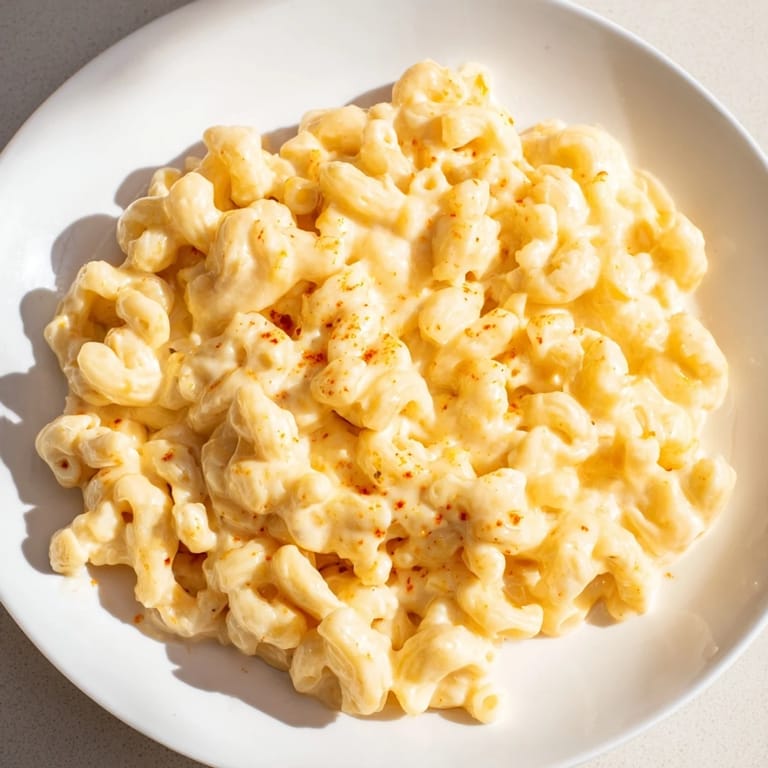
 There's something about serving a bowl of mac and cheese that makes people relax. Conversations get easier, people linger at the table, and suddenly it feels like dinner is actually about being together instead of just eating. That's when I knew this recipe was worth keeping.
Cheese Choices You Can Actually Make
The beauty of this recipe is that you work with what you have. If you're missing American cheese, use extra cheddar and add a small splash of evaporated milk for creaminess. If cheddar is the expensive one, grab a mild cheese and lean harder on the American. I've made this with Gruyère when someone gifted me a wedge, and it was fancy, but honestly the combination here works because it's designed to. Don't overthink the cheese aisle—your wallet will thank you.
When You Want to Make It Fancier (Or Not)
A pinch of cayenne adds heat that makes people ask what the secret is. Stirring in cream cheese at the end makes it even richer, though I find it unnecessary. Frozen peas or steamed broccoli are honest additions that nobody minds. Some people add crispy bacon bits or breadcrumbs seasoned with herbs, and sure, those are nice, but this recipe proves you don't need them. The point is that the base is strong enough to stand alone, or flexible enough to carry whatever you want to add.
Storage and Reheating
Leftovers keep for three days in the fridge and reheat gently in a pot with a splash of milk stirred in to loosen everything back up. The breadcrumb topping won't stay crispy, but honestly that's fine because day-old mac and cheese has its own comfort. Freezing works if you need it to, though the texture becomes a little less creamy when thawed.
- Always add a little milk when reheating, because pasta keeps absorbing liquid in storage.
- Low heat on the stove is gentler than the microwave, which heats unevenly.
- Taste it before serving again—you might need an extra pinch of salt.
 Save to Pinterest
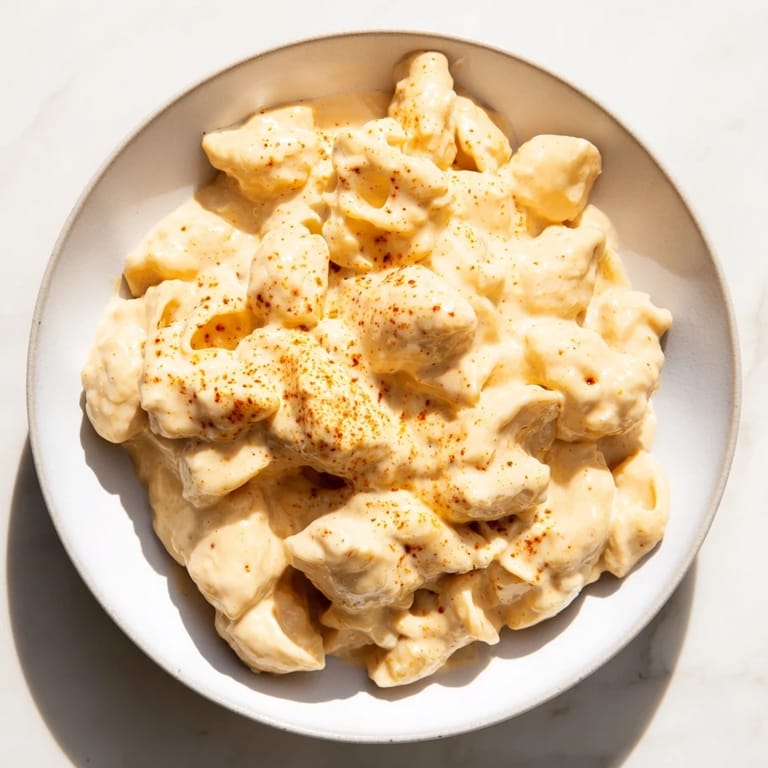
 This is the kind of recipe that reminds you why cooking matters, even when you're doing it on a tight budget and tight schedule. Make it, feed people, and let them ask for seconds.
Recipe Q&A
- → What cheeses are used in this dish?
Sharp cheddar and American cheese are blended to create a creamy, flavorful sauce.
- → Can the pasta be substituted?
Yes, any short pasta like rotini or shells can be used instead of elbow macaroni.
- → Is baking necessary for this dish?
Baking is optional and used only to brown the breadcrumb topping for added crunch.
- → How can I add extra creaminess?
Stirring in sour cream or cream cheese enhances the sauce's richness.
- → Are there any spice options?
A pinch of cayenne or paprika adds gentle heat and depth to the cheese sauce.