 Save to Pinterest
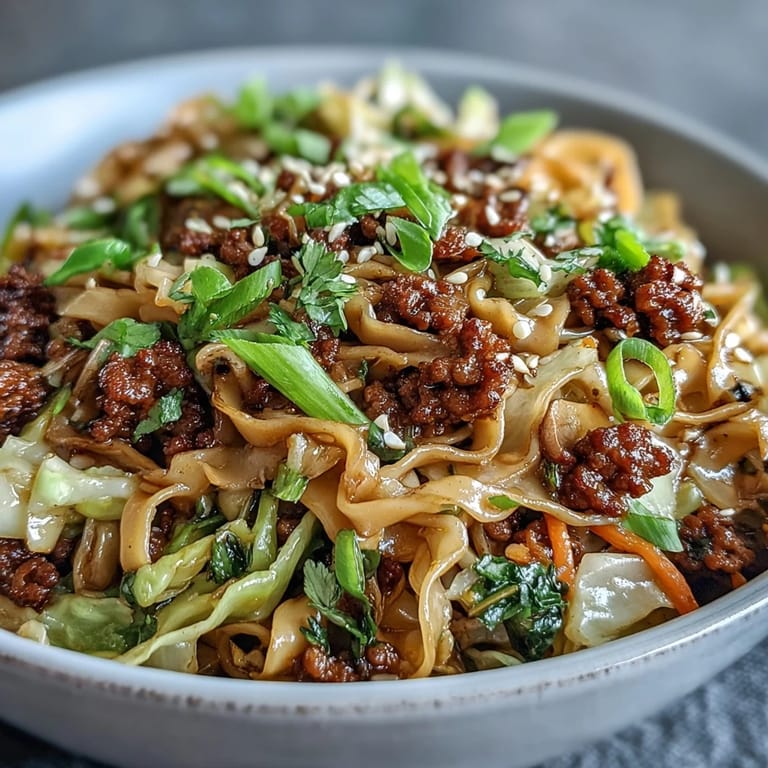
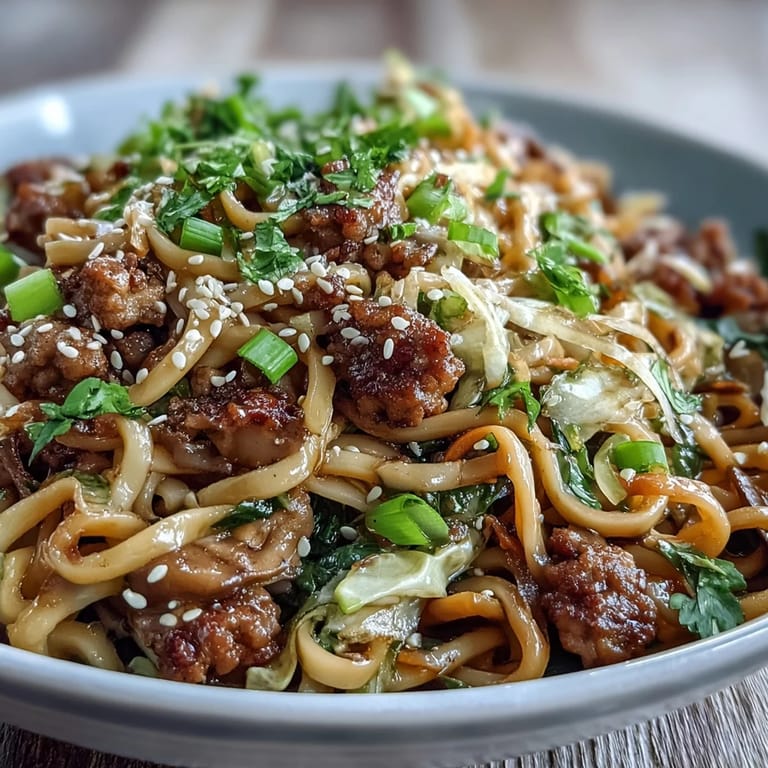
 The skillet was hissing louder than I expected, and I stood there watching the pork crisp up in uneven golden patches, realizing I'd just invented dinner by accident. I had a craving for potstickers but no wrappers, no patience for pleating, and a pile of rice noodles I'd bought on impulse. What came together that night wasn't dumplings at all, but something better: a bowl that captured every flavor I loved about potstickers without any of the fuss. The sauce clung to the noodles, the cabbage stayed crisp, and the sesame seeds stuck to my fingers as I tossed everything together.
I made this for friends on a rainy Tuesday, the kind of night where nobody wanted to go out but everyone was hungry. I doubled the batch, set out extra chili-garlic sauce, and watched four people go quiet over their bowls. One of them asked if I'd been holding out on them, like I'd been making this for years and never shared. I hadn't, but I didn't correct her.
Ingredients
- Rice noodles: They soak up the sauce beautifully and stay tender without getting gummy, and rinsing them briefly after cooking keeps them from clumping in the pan.
- Ground pork: Seasoned like dumpling filling with soy, sesame oil, and a pinch of sugar, it browns into crispy, flavorful bits that remind you exactly why potstickers exist.
- Toasted sesame oil: A little goes a long way, adding that nutty, roasted depth that makes everything taste more intentional.
- Garlic and ginger: Freshly minced and grated, they bloom in hot oil and fill the kitchen with the kind of smell that makes people wander in asking what's for dinner.
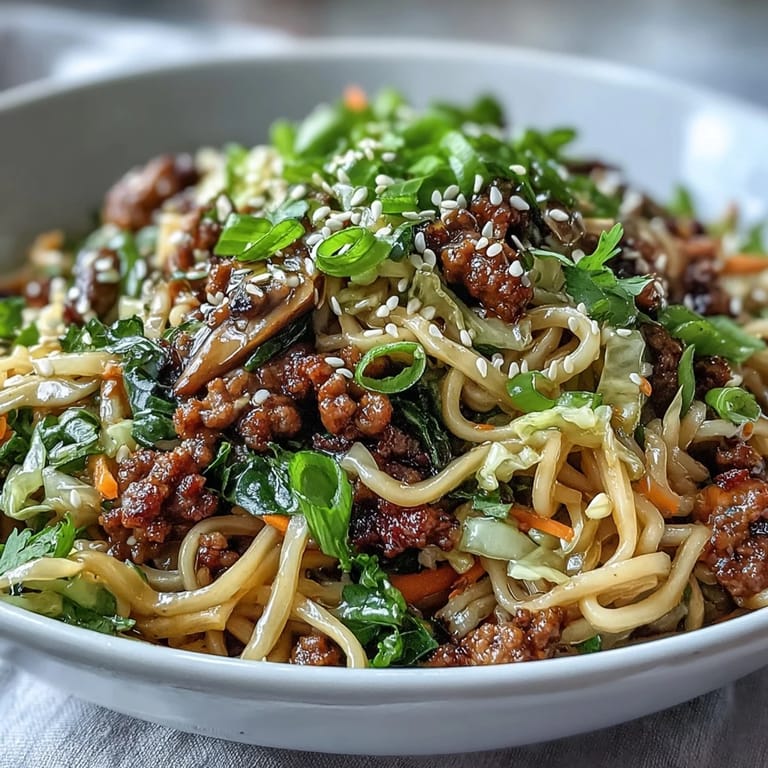
- Green cabbage and carrots: Shredded thin, they wilt just enough to stay sweet and crisp, adding crunch and color to every bite.
- Shiitake mushrooms: They turn golden and chewy, soaking up the sauce and adding an earthy richness that balances the pork.
- Soy sauce, rice vinegar, and chili-garlic sauce: The backbone of the potsticker-style sauce, salty, tangy, and as spicy as you want it to be.
- Oyster sauce: It brings a subtle sweetness and umami that ties everything together without overpowering the other flavors.
- Green onions and cilantro: Stirred in at the end, they add freshness and a pop of green that makes the bowl feel alive.
- Toasted sesame seeds: A small detail that makes a big difference, adding texture and a final nutty note right before you dig in.
Tired of Takeout? 🥡
Get 10 meals you can make faster than delivery arrives. Seriously.
One email. No spam. Unsubscribe anytime.
Instructions
- Cook the noodles:
- Boil the rice noodles until just tender, then drain and rinse them quickly under cold water to stop the cooking. Toss with a few drops of oil so they don't turn into a sticky brick while you work on everything else.
- Season the meat:
- Whisk together soy sauce, sesame oil, cornstarch, white pepper, sugar, and salt, then fold it gently into the ground pork until it feels slightly sticky and cohesive. If you're using finely minced napa cabbage, squeeze it dry first and fold it in for extra moisture and sweetness.
- Mix the sauce:
- Combine soy sauce, rice vinegar, oyster sauce, chili-garlic sauce, sesame oil, brown sugar, and chicken broth in a bowl, whisking until the sugar dissolves. Taste it now and adjust the heat or sweetness so it's exactly how you like it.
- Prep the vegetables:
- Shred the cabbage and carrots, slice the mushrooms thin, and separate the white and green parts of the green onions. Having everything ready before you start cooking makes the whole process feel easy and fast.
- Brown the pork:
- Heat a tablespoon of oil in a large skillet or wok over medium-high heat, then add the seasoned pork in an even layer and let it sit undisturbed for a few minutes. Those crispy, golden edges are where all the flavor lives, so resist the urge to stir too early.
- Add the aromatics:
- Push the browned meat to one side of the pan, add another tablespoon of oil to the empty space, then toss in the garlic, ginger, and white parts of the green onions. Stir for 30 to 60 seconds until the smell hits you, then mix everything together.
- Cook the vegetables:
- Add the mushrooms first and let them soften for a couple of minutes, then toss in the cabbage and carrots and stir-fry until the cabbage wilts but still has some snap. If the pan looks dry, add a splash of water to keep things moving.
- Combine with sauce:
- Pour the prepared sauce over the meat and vegetables, tossing everything to coat evenly. Let it simmer for a minute or two until the sauce thickens slightly and clings to everything in the pan.
- Toss in the noodles:
- Add the cooked noodles and toss gently but thoroughly, adding a few tablespoons of water or broth if it looks too dry. If you're using bean sprouts, toss them in during the last minute so they stay crisp.
- Finish and serve:
- Taste and adjust with more soy sauce, chili-garlic sauce, or a squeeze of lime, then stir in half the green onion tops and turn off the heat. Divide between bowls and top with the remaining green onions, cilantro, and sesame seeds.
 Save to Pinterest
 The first time I made this, I forgot to set out lime wedges and someone squeezed one over their bowl anyway, having brought their own from the fridge. It was such a small thing, but it made the whole bowl brighter and more balanced. Now I always put them on the table, even if I don't use one myself.
Swaps and Substitutions
If you don't have ground pork, ground chicken or turkey works just as well, and I've even used crumbled tofu when I wanted something lighter. For the noodles, lo mein or even spaghetti can step in if rice noodles aren't in the pantry. Napa cabbage, baby bok choy, or finely chopped kale can replace green cabbage, and hoisin sauce makes a sweeter, richer alternative to oyster sauce if that's what you have on hand.
Make It Your Own
This bowl is endlessly adaptable, and I've played with it more times than I can count. Sometimes I add a soft-boiled egg on top for extra richness, or toss in snap peas or bell peppers if I have them. If you like it spicier, double the chili-garlic sauce or drizzle on some chili oil at the end. On nights when I want something lighter, I skip the pork entirely and load up on mushrooms and bok choy.
Storing and Reheating
Leftovers keep well in the fridge for up to three days, though the noodles will soak up more sauce as they sit. When you reheat, add a splash of water or broth to loosen everything up, and warm it gently in a skillet or microwave. The flavors actually deepen overnight, so sometimes I make extra on purpose.
- Store in an airtight container to keep the noodles from drying out.
- Reheat in a skillet over medium heat for the best texture.
- Top with fresh herbs and sesame seeds after reheating to bring back the brightness.
 Save to Pinterest
 This bowl has become one of those recipes I reach for when I want something comforting, fast, and just a little bit exciting. It reminds me that the best meals don't always follow the rules, they just follow what tastes good.
Recipe Q&A
- → Can I make this ahead of time?
Yes, prepare all components in advance—cook the meat, chop vegetables, and whisk the sauce up to 24 hours ahead. Store separately in the refrigerator. When ready to serve, reheat the meat and vegetables, add the sauce, then toss with freshly cooked noodles for best texture.
- → What type of noodles work best?
Rice noodles and lo mein noodles both perform beautifully here. Rice noodles stay slightly chewy and absorb sauce well, while lo mein offers a more substantial bite. Avoid delicate glass noodles or thick udon, as they won't hold up to the hearty sauce and toppings.
- → Is this dish spicy?
The recipe includes chili-garlic sauce, which provides moderate heat. Adjust the amount to your preference—start with half the suggested amount if you're sensitive to spice, or increase it for extra kick. The fresh lime wedges on the side help balance any heat with bright acidity.
- → Can I use different vegetables?
Absolutely. This bowl is incredibly adaptable. Try baby bok choy, napa cabbage, bell peppers, snow peas, or broccoli in place of or alongside the cabbage and carrots. Just keep total vegetable quantities similar and add heartier vegetables like broccoli earlier in the cooking process.
- → How do I store leftovers?
Store cooled leftovers in an airtight container in the refrigerator for up to 3 days. The noodles will absorb more sauce over time, so reheat with a splash of water or broth to restore moisture. The flavors often develop even more depth overnight.
- → Can I make this gluten-free?
Yes, use gluten-free tamari instead of regular soy sauce, ensure your oyster sauce is certified gluten-free, and stick with rice noodles. Check all labels carefully, especially for the chili-garlic sauce and any condiments, as hidden gluten can appear in unexpected places.