 Save to Pinterest
 The first time I made this bowl, I wasn't trying to be trendy—I just had a beautiful salmon fillet, some leftover rice, and a craving for something that felt both comforting and vibrant. I whisked together soy sauce and mirin while standing at the stove, watching the steam rise, and something about that sweet-savory aroma made me pause. That simple moment taught me that the best meals often come from working with what you have, not what some recipe dictates you must buy.
I remember bringing this to my friend Maya's kitchen one Saturday afternoon, and she watched me assemble it with her arms crossed, skeptical about the whole sriracha mayo situation. By the second bite, she was quiet in that way that means she's impressed but won't admit it immediately. That moment sealed it for me—this isn't just a bowl you eat alone; it's something that makes people slow down.
Ingredients
- Salmon fillets: Two pieces, about 150 grams each, skinless—the skinless part matters because you want the glaze to coat every bit evenly, and skin can get chewy when it's not the star of the show.
- Soy sauce: Two tablespoons, the foundation of your glaze and the reason this whole thing tastes authentic without tasting fussy.
- Mirin: One tablespoon, which brings a gentle sweetness that honey alone can't quite capture—it's subtle but essential.
- Honey or maple syrup: One tablespoon, your backup sweetness that rounds out the glaze and helps it caramelize beautifully.
- Rice vinegar: One tablespoon, the quiet ingredient that adds brightness so nothing feels one-note.
- Sesame oil: One teaspoon, a small but mighty amount that gives everything a whisper of toasted, nutty depth.
- Garlic and ginger: One minced clove and one teaspoon grated, fresh and never from a jar if you can help it—they make all the difference in how the glaze tastes.
- Cornstarch slurry: One teaspoon cornstarch mixed with one tablespoon water, which transforms your glaze from liquid to luxuriously thick in about a minute.
- Cooked rice: Two cups of short-grain white rice, fluffy and ready to cushion everything else; leftover rice works perfectly fine.
- Avocado: One small one, sliced just before serving so it doesn't turn gray and sad.
- Cucumber: One small one, thinly sliced so it stays cool and crisp against the warm salmon.
- Carrot: One whole carrot julienned, adding a bright pop of color and a gentle crunch that keeps your mouth interested.
- Scallions: Two tablespoons finely sliced, scattered on top like a final thought rather than buried inside.
- Toasted sesame seeds: One tablespoon, which you can buy pre-toasted or toast yourself for two minutes in a dry pan.
- Nori strips: One sheet cut into strips, the umami-rich finish that ties everything back to its Japanese roots.
- Mayonnaise: Three tablespoons, the creamy base for your sriracha situation.
- Sriracha: One tablespoon, adjusted to your heat tolerance because what's the point of hot sauce if you can't taste your meal.
- Lime juice: One teaspoon, which brightens the mayo and reminds you that acid is your friend.
Tired of Takeout? 🥡
Get 10 meals you can make faster than delivery arrives. Seriously.
One email. No spam. Unsubscribe anytime.
Instructions
- Make your glaze foundation:
- Whisk together soy sauce, mirin, honey, rice vinegar, sesame oil, minced garlic, and grated ginger in a small bowl until everything looks uniform and fragrant. This is your moment to taste and adjust—if it feels too salty, add a tiny splash of water; if it feels flat, squeeze in a bit more lime.
- Give the salmon a quick bath:
- Place your salmon fillets in a shallow dish and pour half the glaze over them, letting them sit for about 10 minutes while you prep your vegetables. The marinade doesn't need hours; it just needs enough time to start whispering its flavor into the fish.
- Cook the salmon with care:
- Heat your non-stick skillet over medium heat until it's warm but not smoking—you want a gentle sear, not an aggressive one. Add the salmon skin-side up first and cook for 3 to 4 minutes until the underside is golden and the flesh is mostly opaque, then flip gently and cook another 3 to 4 minutes until it's cooked through but still has a tiny bit of give when you press it.
- Finish the glaze into something silky:
- Pour the remaining marinade into your warm pan and stir in your cornstarch slurry—it'll thicken almost immediately, turning glossy and irresistible. Return your cooked salmon to the pan and spoon that thickened glaze over it until every surface is coated and shimmering.
- Build your sriracha mayo:
- In a clean small bowl, whisk mayonnaise, sriracha, and lime juice together until it's completely smooth and has a light coral color. Taste it and adjust the sriracha if you want it hotter or if you want to dial it back.
- Assemble with intention:
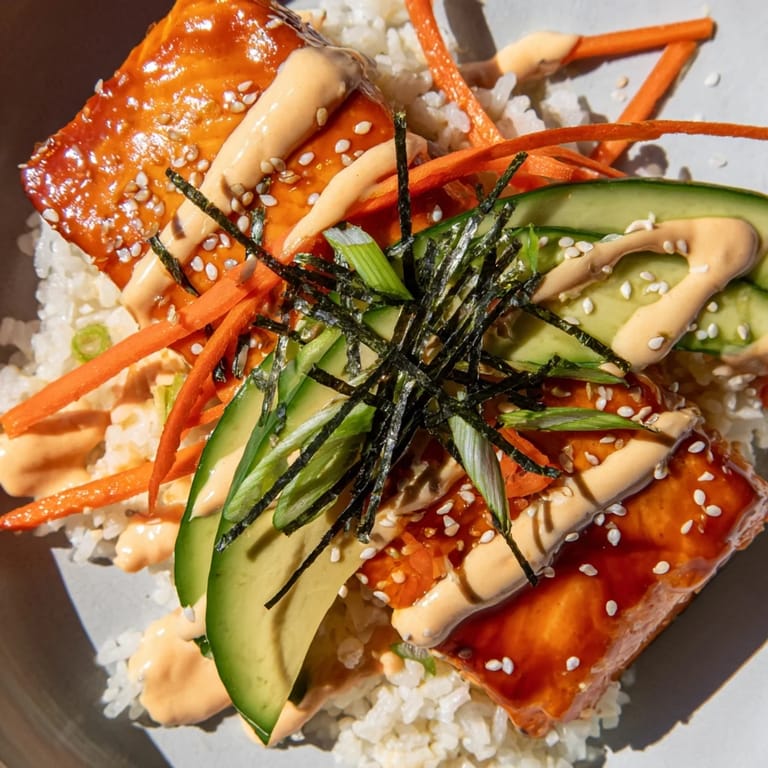
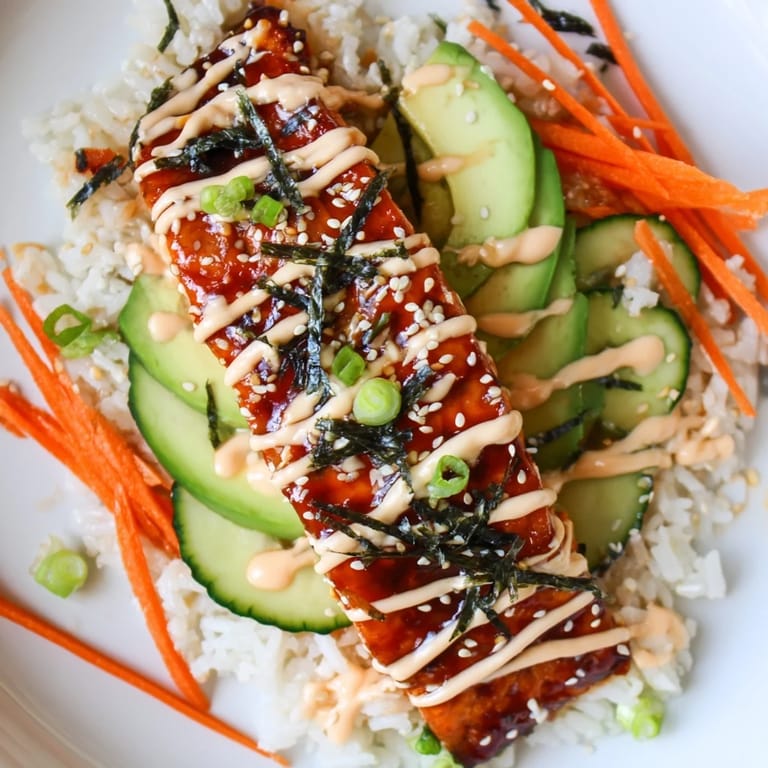
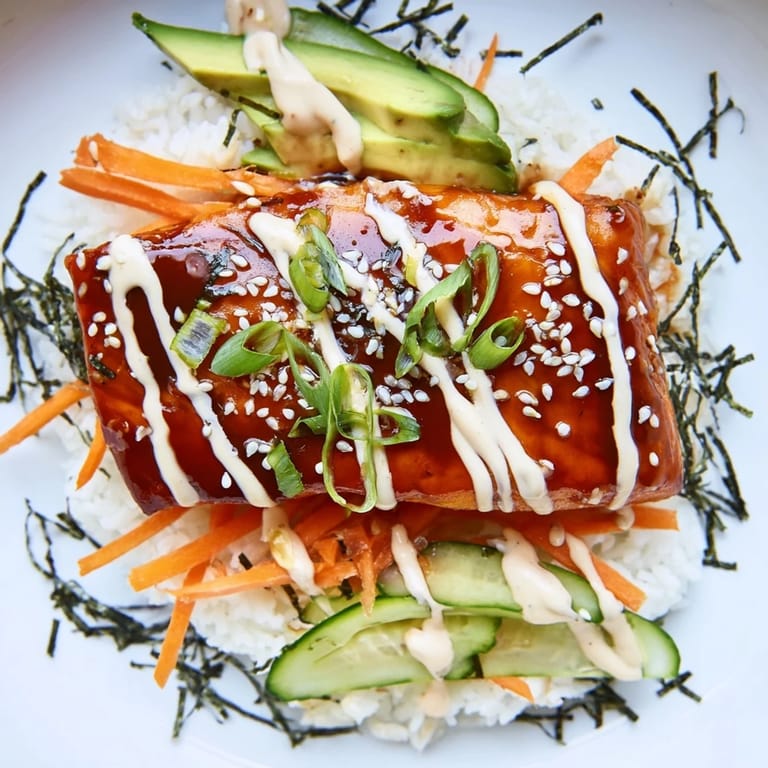
- Divide your warm rice between two bowls, creating a flat base, then flake your glazed salmon over the top. Arrange your sliced avocado, cucumber, and julienned carrot around the salmon in a loose, natural way—this is where it starts to look like something worth photographing.
- Finish and serve immediately:
- Drizzle your sriracha mayo over the bowl, scatter scallions, sesame seeds, and nori strips on top, and eat while everything is still warm and the avocado is still soft. The moment you finish is the right moment to serve.
 Save to Pinterest
 There's a moment right before you take that first bite where the steam rises off the warm rice and salmon, the sriracha mayo glistens, and you realize you're about to eat something that feels restaurant-quality but was made in your own kitchen in less time than a show episode. That's the moment I keep chasing with this bowl.
The Glaze Is Everything
I've learned that teriyaki isn't complicated—it's just the right balance of salty, sweet, tangy, and deep. The soy sauce brings the salt and umami, the mirin and honey bring sweetness, the rice vinegar and lime bring brightness, and the sesame oil brings a richness that makes people ask what you did differently. When you layer those flavors together in the right amounts, they stop being individual tastes and become one thing that tastes like it's been simmering for hours.
Building Your Bowl Like You Mean It
The best part of this dish is that there's no wrong way to assemble it, but there's definitely a way that makes it more fun to eat. Warm rice gets arranged first so it's still steaming when you add the salmon, cold vegetables go around it so you get temperature contrast with every bite, and the mayo drizzle happens last so it doesn't get absorbed into the warm rice before you eat it. Think of your bowl as a small landscape where each ingredient has its own spot and its own temperature, and somehow it all works together.
Make It Your Own
Once you've made this bowl a few times, you'll start understanding what's essential and what's just there because I suggested it. Swap the white rice for brown rice or quinoa if that's what feeds you. Add pickled ginger if you want more punch, or edamame if you want more protein. Use tamari instead of soy sauce if gluten is something you're avoiding, or swap the salmon for grilled tofu if salmon isn't your thing.
- The glaze works on almost any protein, so think of it as a technique you've learned, not a recipe you've memorized.
- Sriracha mayo is secretly delicious on almost everything, so make extra and keep it in your fridge for when you need a reason to eat vegetables.
- Your bowl is only as good as your rice, so if you have leftover rice, actually use it—it's often better than freshly cooked because it's firmer and holds its shape.
 Save to Pinterest
 This bowl became a favorite because it tastes like something you had to think about, but it only asks for 30 minutes of your time. Once you've made it once, it becomes the meal you make when you want to feel like you've nailed something.
Recipe Q&A
- → How do I make the teriyaki glaze sticky?
Simmering the marinade with a cornstarch slurry thickens it into a glossy glaze that coats the salmon beautifully.
- → Can I use brown rice instead of white rice?
Yes, substituting brown rice adds fiber and a nuttier flavor that works well with the rich salmon.
- → What alternatives are there for sriracha mayo?
You can adjust the heat by mixing mayonnaise with chili paste or opt for plain mayo for a milder taste.
- → How long should salmon marinate for best flavor?
Marinating the salmon for about 10 minutes allows the teriyaki flavors to infuse without overpowering the fish.
- → Is it possible to make this dish gluten-free?
Yes, by using tamari or gluten-free soy sauce in the marinade, you can enjoy a gluten-free version.