 Save to Pinterest
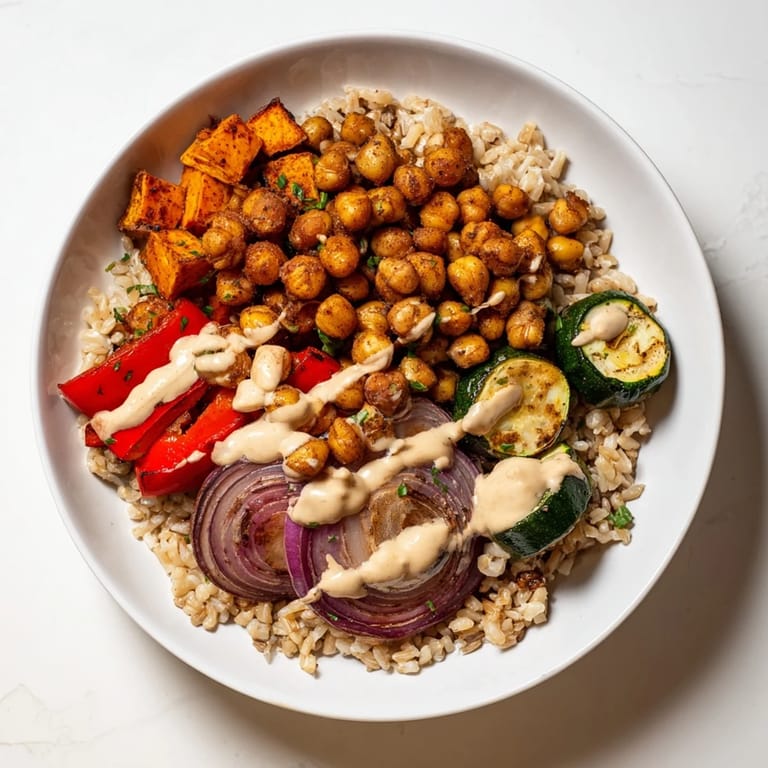
 There was a Tuesday afternoon when I'd had enough of sad desk lunches, so I started roasting everything in my kitchen at once—chickpeas, vegetables, whatever needed using up. The smell alone made me stay in the kitchen instead of eating at my desk, and by the time I poured that tahini sauce over the bowl, I realized I'd accidentally discovered something I'd want to make again and again. That chaotic experiment turned into this Buddha bowl, which has become my answer to 'what's for lunch?' on days when I need something colorful and filling and genuinely good for me.
I made this for my friend Maya when she mentioned she was tired of complicated meals, and watching her take that first bite—the way she paused, then went right back for another forkful—told me everything. She's made it three times since, and now when I text her that I'm having a Buddha bowl day, she knows exactly what I mean.
Ingredients
- Chickpeas (1 can, drained and rinsed): The star that becomes crispy and golden when roasted properly—make sure you pat them very dry with paper towels so they actually crisp up instead of steaming.
- Smoked paprika (1 tsp): Adds a whisper of smoke and warmth that makes people ask what secret ingredient you used.
- Ground cumin (1/2 tsp) and garlic powder (1/2 tsp): These two together create a depth that keeps the chickpeas from tasting one-dimensional.
- Sweet potato (1 medium, diced): Gets sweet and tender when roasted, creating little pockets of caramel-like flavor throughout the bowl.
- Red bell pepper (1) and red onion (1 small): The brightness and slight sharpness they bring balance the richness of tahini perfectly.
- Zucchini (1 small, sliced): Roasts into tender coins and absorbs all the savory spices.
- Brown rice (1 cup): The hearty base that keeps you full; white rice works fine if you prefer something lighter.
- Tahini (1/4 cup): The creamy glue that holds everything together—use the highest quality you can find, because it's the main flavor.
- Lemon juice (2 tbsp): Cuts through the richness of tahini and brings everything alive on your palate.
- Fresh herbs (parsley or cilantro): The final flourish that makes it look intentional and taste like you tried.
Tired of Takeout? 🥡
Get 10 meals you can make faster than delivery arrives. Seriously.
One email. No spam. Unsubscribe anytime.
Instructions
- Heat your oven and set up:
- Get your oven to 200°C (400°F) and line two baking sheets with parchment paper so nothing sticks and you avoid the burnt corners that haunt you. This small prep step saves you from scrubbing pans later.
- Dry and season the chickpeas:
- Pat your drained chickpeas completely dry—this is non-negotiable because moisture is the enemy of crispiness. Toss them with olive oil, smoked paprika, cumin, garlic powder, salt, and pepper, then spread them on one baking sheet in a single layer so each one can breathe and crisp up.
- Season the vegetables:
- Chop everything into roughly the same size so they roast evenly, then toss with olive oil, salt, and pepper. Spread on your second baking sheet and nestle them in so they'll caramelize, not steam.
- Roast until golden:
- Pop both sheets in the oven for 25 to 30 minutes, stirring everything halfway through so the edges that touch the pan get gorgeously browned. You'll know it's done when the chickpeas sound hollow when you shake them and the vegetables have dark, crispy edges.
- Start the rice:
- While everything roasts, rinse your rice under cold water to remove excess starch, then combine it with water and salt in a saucepan. Bring it to a boil, cover, turn the heat down low, and let it simmer for 30 to 35 minutes until the water is absorbed and each grain is tender.
- Make the tahini sauce:
- Whisk tahini with lemon juice, water, minced garlic, maple syrup, and salt until it's smooth and pourable—it might seem thick at first, but keep whisking and add a splash more water if you need it silkier. Taste it and adjust the lemon for brightness or salt for depth.
- Bring it all together:
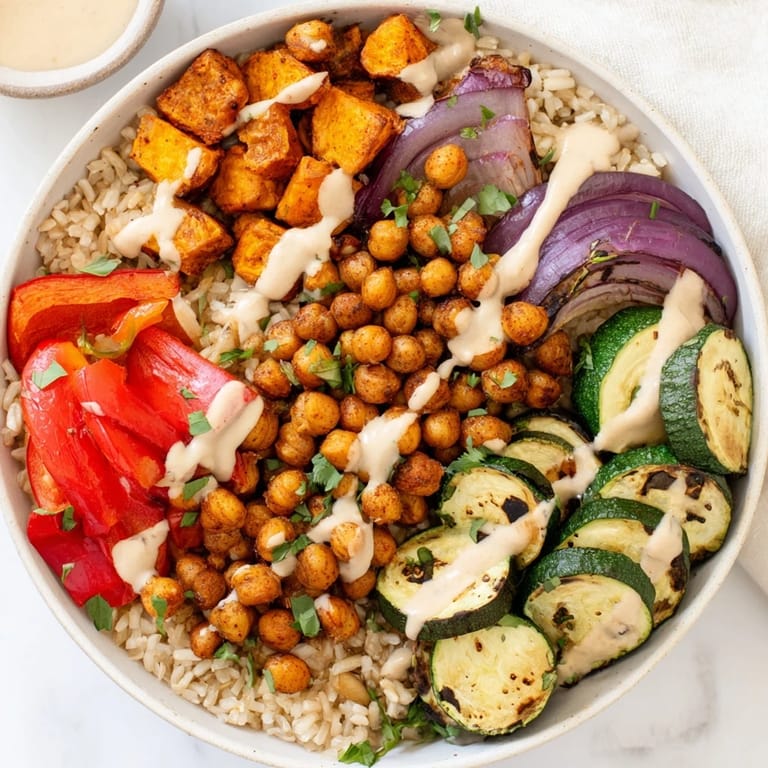
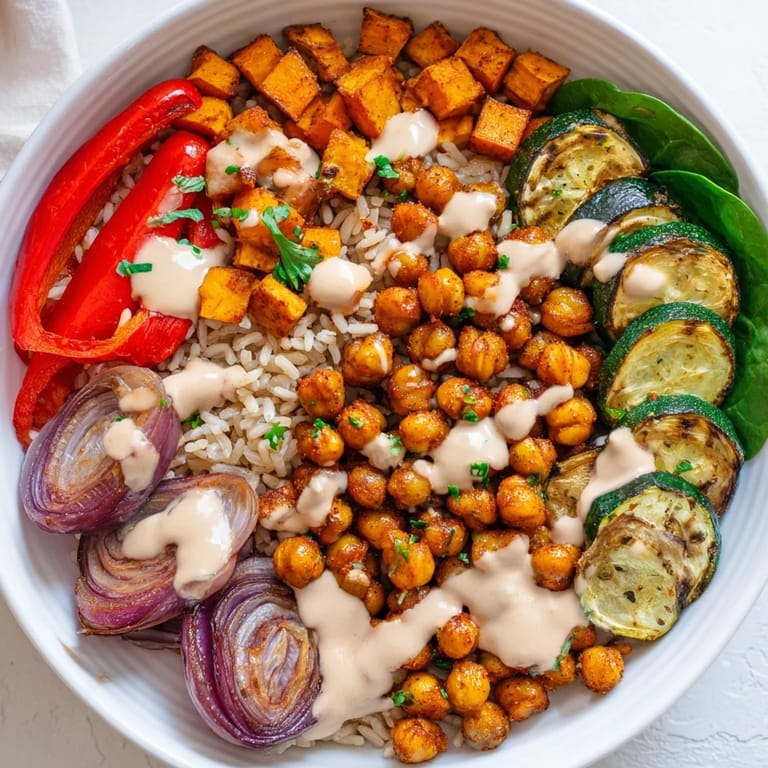
- Divide warm rice among four bowls, then arrange the roasted vegetables and chickpeas on top with a handful of fresh greens tucked in. Drizzle generously with tahini sauce and finish with fresh herbs and a wedge of lemon if you're feeling fancy.
 Save to Pinterest
 My partner once said, after eating a bowl I'd made on a random Wednesday, 'This is the kind of food that makes you feel good about yourself,' and I realized that's exactly what this bowl does. It's nourishing in a way that goes beyond the nutrients—it's the act of putting together something beautiful and feeding yourself well.
Why This Bowl Works Every Time
The genius of a Buddha bowl isn't the fancy name—it's the balance of textures and flavors that happen naturally when you roast things instead of boiling them. Roasting concentrates flavors and creates caramelization, which means every bite tastes intentional rather than diet-adjacent. The warm rice and roasted vegetables contrast beautifully with cool greens and creamy tahini, so every spoonful feels like three different dishes at once. Once you understand this balance, you can swap out almost any ingredient and it still works because the structure is sound.
Making It Your Own
The magic of this bowl is that it's infinitely customizable based on what's in your kitchen or what you're craving that day. I've made versions with butternut squash in fall, added shredded beets for earthiness, swapped in feta if I'm not being vegan, and thrown in pickled onions when I needed something with bite. The tahini sauce works as a glue for any combination you choose, which means you can experiment without fear of it falling apart. Once you've made it a couple of times, you'll stop following the recipe and start following your intuition about what tastes good together.
Storage and Make-Ahead Magic
This bowl is one of the rare recipes that actually improves when you make it ahead, because the flavors meld and the rice absorbs the tahini sauce overnight. I often roast the chickpeas and vegetables on Sunday and store them in separate airtight containers in the fridge, then assemble bowls throughout the week whenever I need them. The roasted chickpeas stay crispy for up to three days if you keep them in an airtight container and don't store them with the warm components, and the tahini sauce lasts about five days covered in the fridge. The only thing I assemble fresh is the greens and herbs so they don't wilt into sadness.
- Make the tahini sauce up to five days ahead and store it in a jar in the fridge for grab-and-go ease.
- Roasted chickpeas stay crispiest when stored separately from anything wet or warm.
- Brown rice reheats beautifully with a splash of water and a quick stir over gentle heat if you want it warm again.
 Save to Pinterest
 This bowl has become my go-to recipe when I want to feel nourished and taken care of by my own hands. Make it once and you'll understand why it's so easy to make it again.
Recipe Q&A
- → How do I achieve crispy roasted chickpeas?
Pat chickpeas dry to remove moisture, then toss with olive oil and spices before roasting on a baking sheet until golden and crisp, about 25-30 minutes.
- → Can I substitute the brown rice?
Yes, options like jasmine rice, quinoa, or cauliflower rice can be used depending on preference.
- → What is the best way to prepare the tahini sauce?
Whisk tahini with lemon juice, water, minced garlic, maple syrup, and salt until smooth. Adjust water to reach desired consistency.
- → How do I keep the roasted vegetables tender yet caramelized?
Roast diced sweet potato, bell pepper, onion, and zucchini with olive oil and seasoning at 200°C (400°F) until softened and lightly caramelized, about 25-30 minutes.
- → Can I prepare components ahead of time?
Roasted chickpeas can be cooked in advance and stored airtight for up to 3 days; vegetables and sauce are best fresh.