 Save to Pinterest
 There's something about assembling a Buddha bowl that feels like you're creating art on a plate rather than just making lunch. I discovered this Mediterranean version on a particularly chaotic Tuesday when my fridge was overflowing with roasted vegetables and I needed something that would actually taste intentional, not like leftovers thrown together. The first time I layered quinoa, warm roasted zucchini, cool creamy hummus, and tangy feta all in one bowl, I understood why people get genuinely excited about their lunch. That bowl became my go-to when I wanted to eat well without pretending cooking was complicated. Now it's the recipe friends ask me to bring to potlucks because it somehow manages to be both impressive and effortless.
My neighbor brought her kids over one evening and my daughter wanted to help make dinner, which usually means things get messy and I get stressed. Instead, we turned it into a bowl-building party where everyone layered their own components however they wanted. Watching a six-year-old get genuinely proud of their healthy dinner creation, and her actually eating the roasted zucchini without complaint, was worth more than any cooking achievement. That's when this recipe became more than food to me—it became a way to make cooking feel like togetherness instead of obligation.
Ingredients
- Quinoa (1 cup, rinsed): This ancient grain is a complete protein containing all nine essential amino acids, and rinsing it removes the bitter outer coating that nobody enjoys discovering mid-bite.
- Water (2 cups): A simple 2-to-1 ratio with quinoa creates fluffy, separate grains rather than a mushy mass.
- Zucchini (1 medium, chopped): Cut into roughly the same size as your bell pepper pieces so everything roasts evenly and caramelizes at the same rate.
- Red bell pepper (1, chopped): The sweetness that balances the earthiness of roasted vegetables, and it gets soft enough to actually taste good, not vegetal.
- Red onion (1 small, sliced): Those thin slices turn jammy and sweet in the oven, not sharp and biting like raw onion would be.
- Cherry tomatoes (1 cup, halved): These burst slightly during roasting and create little pockets of concentrated tomato flavor that feel luxurious.
- Olive oil (2 tablespoons): Good olive oil matters here because it's not being cooked long enough to be masked by heat—use something you'd actually drink if you were being silly.
- Dried oregano (1/2 teaspoon): This is your Mediterranean anchor, the flavor that makes people taste it and think immediately of sunny places and leisurely meals.
- Ground cumin (1/2 teaspoon): A small amount adds warmth and depth without announcing itself as an ingredient—it just makes everything taste more intentional.
- Salt and black pepper: Season as you go and taste before serving, because roasted vegetables concentrate flavors in ways that surprise you.
- Chickpeas (1 can, drained and rinsed): Rinsing them removes the starchy liquid and warming them briefly wakes up their flavor so they're not just neutral protein.
- Kalamata olives (1/2 cup, halved): These briny, funky olives are what makes this feel Mediterranean rather than just healthy—don't skip them or use the sad canned black ones.
- Hummus (1/2 cup): This creates a creamy base that makes every spoonful feel luxurious without being heavy, and homemade is noticeably better if you have time.
- Greek yogurt (1/2 cup): The tanginess cuts through the richness of hummus and feta, and it brings probiotics that make you feel like you're actually being good to your body.
- Feta cheese (1/2 cup, crumbled): The salty, sharp counterpoint that makes everything else taste more like itself—a little goes a long way in the best way.
- Fresh parsley (1/4 cup, chopped): This bright garnish looks beautiful and tastes fresh, preventing the whole bowl from feeling heavy despite all those rich ingredients.
- Lemon wedges: Squeeze these over your finished bowl just before eating because a little acid is what transforms all these elements from pleasant to crave-worthy.
Tired of Takeout? 🥡
Get 10 meals you can make faster than delivery arrives. Seriously.
One email. No spam. Unsubscribe anytime.
Instructions
- Heat your oven to 425°F and arrange your vegetables:
- Spread your zucchini, bell pepper, red onion, and cherry tomatoes on a baking sheet in a single layer, trying not to overcrowd because vegetables steam instead of roast when they're packed together. Drizzle with olive oil, sprinkle your oregano, cumin, salt, and pepper over everything, then toss with your hands until each piece is lightly coated and glistening.
- Roast until caramelized and tender:
- Put the sheet in the oven and set a timer for about 12–13 minutes, then stir everything around because the edges touching the pan get darker and more flavorful than what's just sitting on top. The vegetables are ready when they're soft inside and the edges look slightly shriveled and golden, which takes another 8–12 minutes.
- Cook the quinoa while vegetables roast:
- In a saucepan, combine your rinsed quinoa with 2 cups of water and bring it to a boil over medium-high heat, which usually takes about 5 minutes. Once it's boiling, cover with a lid, turn the heat down to low, and let it simmer undisturbed for 15 minutes, then remove it from heat and let it sit covered for 5 more minutes to absorb any remaining liquid.
- Fluff and warm the chickpeas:
- After you remove the pan from heat, use a fork to fluff the quinoa gently, separating the grains so it doesn't get clumpy. While you're doing that, heat those drained chickpeas in a small skillet over medium heat for just 2–3 minutes, stirring occasionally and adding a pinch of salt, which makes them taste more like themselves rather than just canned chickpeas.
- Assemble your bowls:
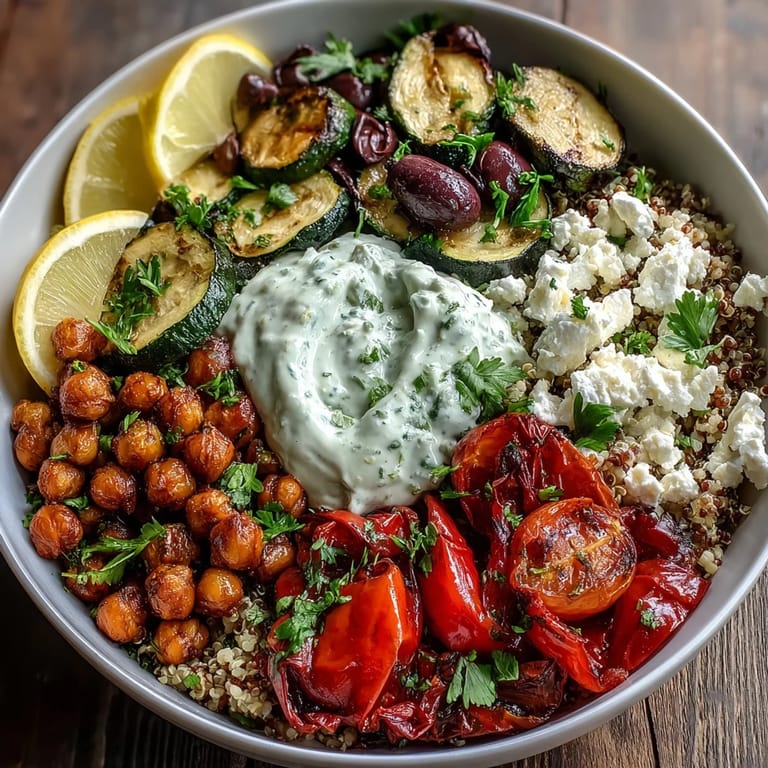
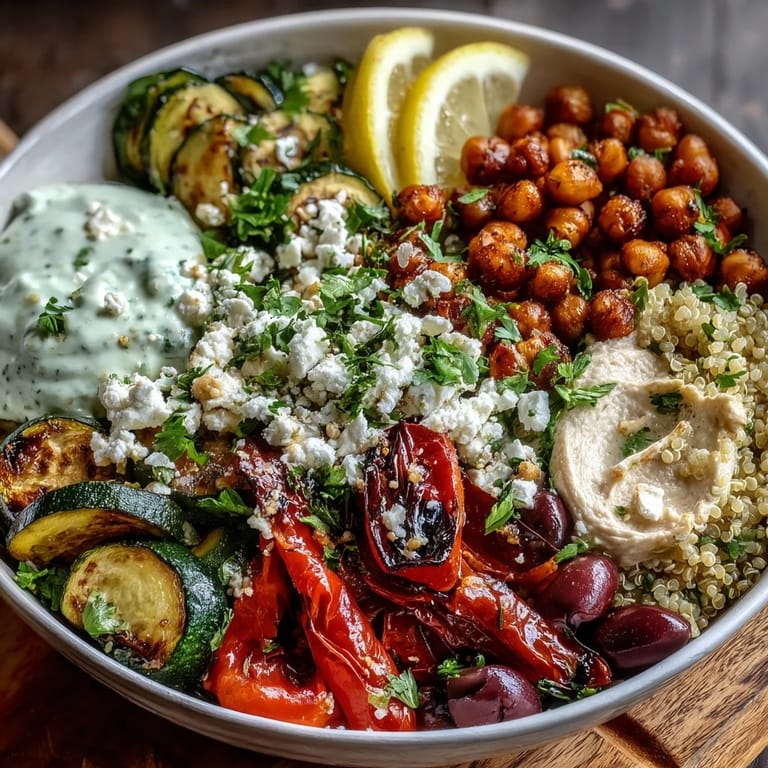
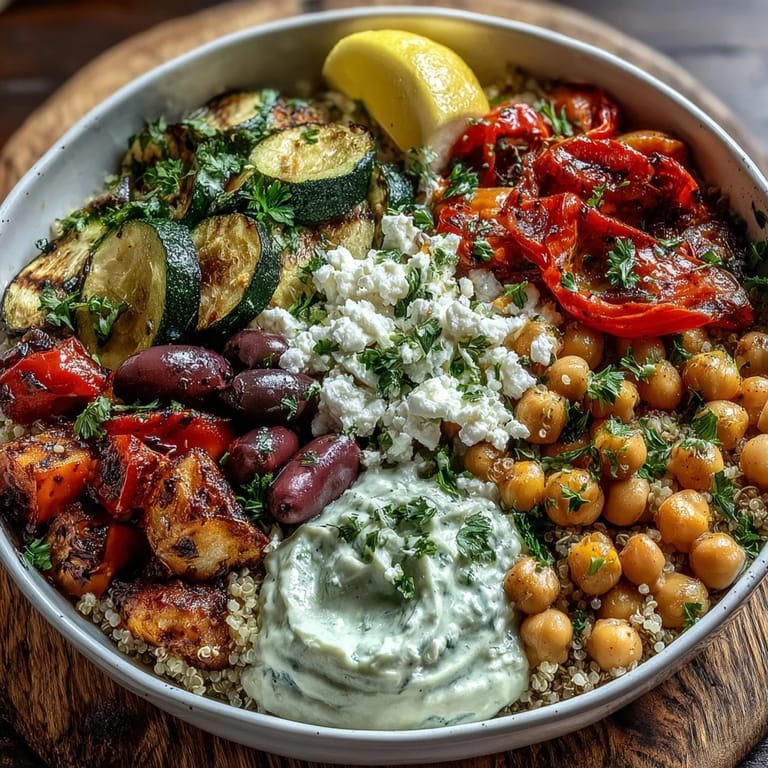
- Divide the fluffy quinoa among four bowls, creating a base layer that everything else will rest on. Arrange your roasted vegetables, warm chickpeas, olives, a dollop of hummus, a scoop of Greek yogurt, and a generous scatter of crumbled feta around the top of each bowl like you're creating something beautiful, because you are.
- Finish and serve:
- Sprinkle fresh chopped parsley over the top for color and brightness, and serve each bowl with lemon wedges on the side so people can squeeze as much or as little as they like. The lemon is crucial—it's the final note that makes everything sing.
 Save to Pinterest
 One weekend I made these bowls for a small gathering and noticed everyone went quiet while eating, which almost never happens because people love talking. When I asked what was going on, someone said it was the kind of food that makes you slow down and actually pay attention to flavors rather than just eating. That moment taught me that food doesn't need to be complicated to feel special—it just needs to be honest, well-made, and assembled with care.
Why Prepping Ahead Changes Everything
The genius of this bowl is that you can roast the vegetables an hour or even a day ahead, cook the quinoa whenever, and then assembly takes five minutes. I started doing this on Sunday afternoons, preparing components that made weekday lunches feel like a choice rather than a default to whatever's fastest. The beauty is that everything tastes fresh even when it's been sitting in the refrigerator because the textures and temperatures—warm quinoa, cool vegetables, cold yogurt—all feel intentional rather than like leftovers that got assembled.
Variations That Keep This Bowl Interesting
This recipe is flexible in ways that make it feel less like a rigid formula and more like a canvas for whatever you have or whatever you're craving. In summer I add grilled chicken or shrimp for extra protein, and in winter I sometimes use farro or brown rice instead of quinoa because their earthier texture feels right alongside roasted root vegetables. The core idea—a grain, roasted vegetables, creamy and tangy elements, something briny—stays the same while everything else can shift based on season, mood, or what's actually in your kitchen.
- Try adding grilled chicken, shrimp, or even a soft egg on top for extra protein if you want this to feel even more like a complete meal.
- Substitute roasted sweet potato, cauliflower, or Brussels sprouts for any of the vegetables depending on what appeals to you and what's in season.
- Use homemade hummus if you have time because the flavor difference is genuinely noticeable and makes this feel more personal.
The Ingredient Balance That Makes This Work
The secret to this bowl feeling balanced instead of like random healthy ingredients thrown together is the interplay between warm and cool, creamy and crisp, salty and fresh. The warm roasted vegetables and quinoa provide comfort and substance, the cool Greek yogurt and fresh parsley provide brightness, and the hummus and feta provide richness in a way that keeps this feeling Mediterranean rather than lean and boring. Every element has a reason for being there, and they all make each other taste better when they're together.
 Save to Pinterest
 This bowl has become my answer to the question of what to eat when I want to feel nourished but not like I'm denying myself pleasure. It's the kind of meal that makes weekday eating feel intentional rather than rushed.
Recipe Q&A
- → Can I make this bowl vegan?
Yes, simply omit the feta cheese and replace Greek yogurt with a plant-based alternative. The hummus provides plenty of creaminess and protein.
- → What grain substitutions work well?
Farro or brown rice make excellent substitutes for quinoa. Both maintain the hearty texture and complement the Mediterranean flavors beautifully.
- → How long do roasted vegetables keep?
Roasted vegetables stay fresh in the refrigerator for 3-4 days when stored in an airtight container. Reheat gently before assembling bowls.
- → Can I add extra protein?
Grilled chicken or shrimp work wonderfully as protein additions. Simply cook your chosen protein separately and arrange it on top of the assembled bowl.
- → What other vegetables can I roast?
Eggplant, artichoke hearts, or fresh bell peppers in various colors all roast beautifully and complement the existing Mediterranean ingredients.
- → Is this suitable for meal prep?
Absolutely. Prepare quinoa and roast vegetables in advance, storing components separately. Assemble bowls fresh when ready to eat for best texture and flavor.