 Save to Pinterest
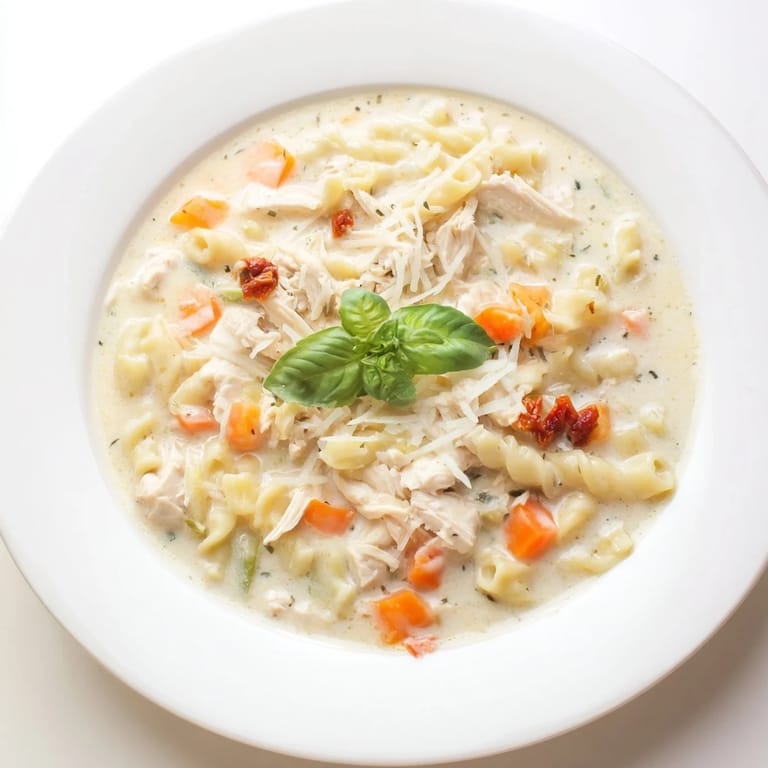
 There's something about a bowl of creamy soup that makes you feel like someone really cares—and that's exactly what happened the first time I tried the original Marry Me Chicken at a small Italian place tucked away on a rainy street. I went home thinking about those sun-dried tomatoes swimming in cream, the way the sauce clung to each piece of chicken, and realized I could capture that magic in soup form. This version keeps all that seductive comfort but trades the pan for a pot, letting the broth do the work instead of the sauce. What surprised me was how the ditalini pasta soaks up every drop of that tomato-cream goodness—it's the kind of dish that makes weeknight dinners feel intentional.
I made this for my sister on a cold evening when she showed up unannounced with stories about a terrible week, and by the time we finished the second bowl, she was laughing again. That's when I knew this recipe wasn't just delicious—it had the kind of gentle power that only soup possesses, the ability to turn a rough day into something manageable by simply sitting at a table together with something warm between you.
Ingredients
- Boneless, skinless chicken breasts: Use about 450 g (1 lb) total—they cook quickly and shred beautifully when simmered gently, absorbing all the savory flavors without drying out if you keep the heat reasonable.
- Olive oil: Just 1 tbsp is enough to get a golden sear on the chicken and create flavor in the pot, a trick that adds depth without heaviness.
- Yellow onion, carrots, and celery: This holy trinity (2 medium carrots, 2 celery stalks, 1 onion) forms the aromatic foundation—dice them small so they soften evenly and disappear into the broth.
- Garlic cloves: Three minced cloves add sharp, pungent notes that balance the richness of the cream beautifully.
- Sun-dried tomatoes in oil: Use about 50 g (1/3 cup), drained and chopped—these are the soul of the dish, providing concentrated sweetness and a slight chew that regular tomatoes can't match.
- Low-sodium chicken broth: Four cups gives you that light, brothy base rather than a heavy cream soup; low-sodium lets you control the salt and lets the other flavors sing.
- Heavy cream: A half-cup (120 ml) stirred in at the end creates that silky, luxurious texture without making the soup feel heavy or one-note.
- Freshly grated Parmesan cheese: A quarter cup melts into the cream, adding saltiness and umami depth—pre-grated versions won't melt as smoothly, so shred it fresh if you can.
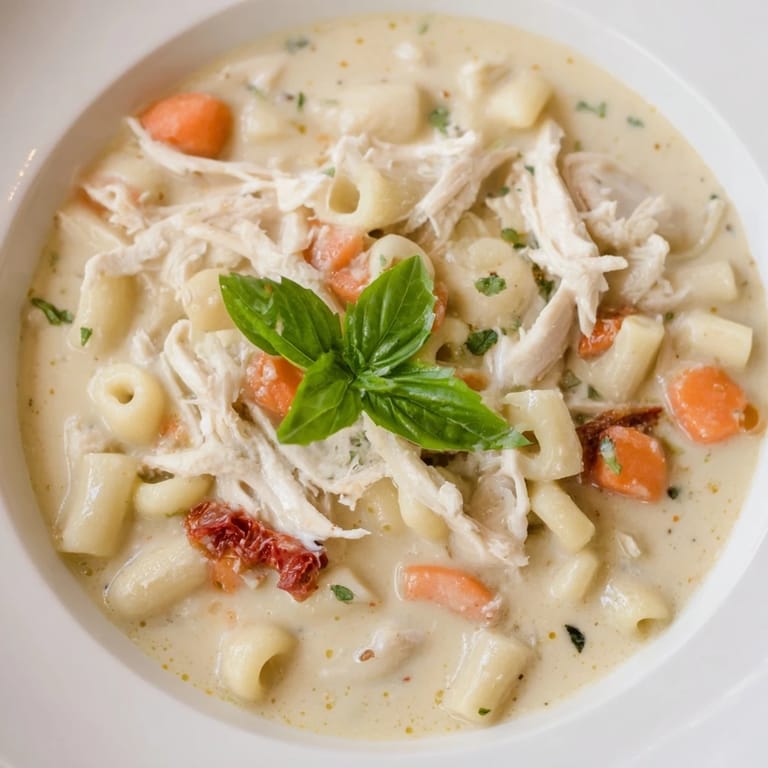
- Ditalini pasta: This tiny tube pasta (3/4 cup) is perfect because it cooks quickly and holds sauce better than larger shapes would.
- Dried oregano, thyme, and bay leaf: These dried herbs infuse the broth slowly over time, creating a warm, Mediterranean backbone to the soup.
Tired of Takeout? 🥡
Get 10 meals you can make faster than delivery arrives. Seriously.
One email. No spam. Unsubscribe anytime.
Instructions
- Season and sear the chicken:
- Pat your chicken breasts dry, season them generously with salt and pepper, then sear them in hot olive oil for 3 to 4 minutes per side until the exterior turns golden. Don't worry about cooking them through—they'll finish in the broth, which keeps them tender.
- Build the flavor base:
- Toss in your diced onion, carrots, and celery, letting them soften and release their sweetness for about 4 to 5 minutes, then add the garlic and cook just until fragrant—this small pause makes a real difference in depth.
- Add the aromatics and sun-dried tomatoes:
- Stir in the sun-dried tomatoes, oregano, thyme, and red pepper flakes if you want a gentle heat, letting the kitchen fill with that warm, herbal smell before you add the liquid.
- Introduce the broth:
- Pour in your chicken broth, water, and bay leaf, then nestle the seared chicken back into the pot—this is where the magic really starts, as the liquid begins pulling all those flavors together.
- Simmer gently:
- Bring everything to a boil, then lower the heat to a simmer for 15 to 20 minutes, allowing the chicken to cook through completely and the vegetables to become truly tender. You'll know it's done when you can easily pierce the chicken with a fork.
- Shred and return the chicken:
- Once cooked, remove the chicken breasts to a cutting board, use two forks to shred them into bite-sized pieces, and stir them back into the pot—this moment is satisfying because you can see exactly what you're working with.
- Cook the pasta:
- Add the ditalini and simmer for 8 to 10 minutes until al dente, tasting a piece to check—the pasta will continue softening slightly after you remove the pot from heat, so stop just before it feels completely soft.
- Finish with cream and cheese:
- Lower the heat, remove the bay leaf, then stir in the heavy cream and grated Parmesan slowly, allowing them to melt and create a silky sauce that coats every noodle and piece of chicken.
- Taste and serve:
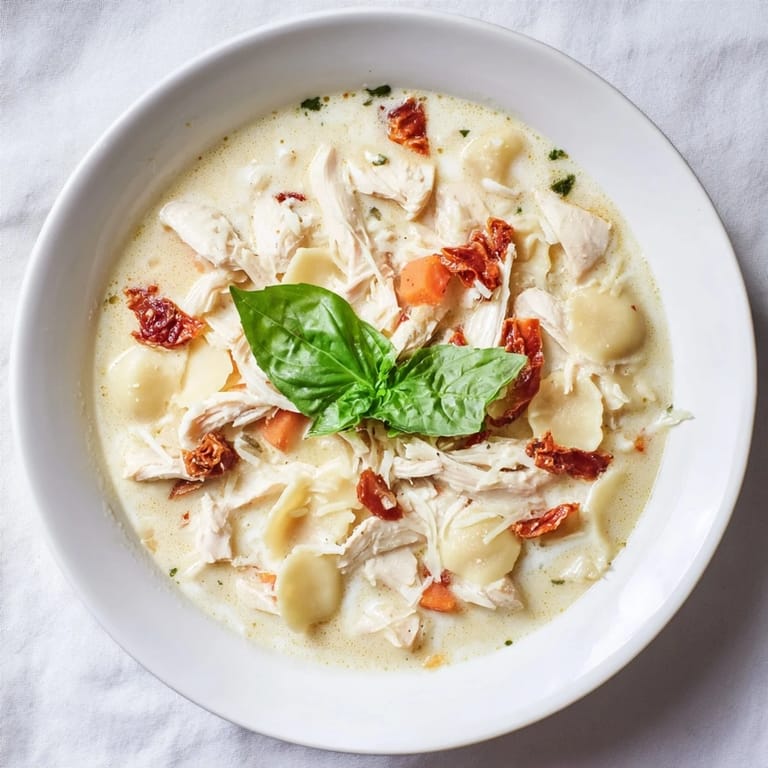
- Season with a pinch more salt or pepper if needed, then ladle into bowls and crown with fresh basil—this final garnish adds a bright, peppery note that wakes up all the warm flavors beneath.
 Save to Pinterest
 I remember standing at the stove one evening, watching the cream swirl into the golden broth, and suddenly understanding why people call certain dishes romantic. There's nothing showy about this soup, but there's something deeply comforting in that restraint, something that says I made this for you because it's the kind of thing that matters when words aren't enough.
How to Adapt This for Your Pantry
Life happens, and you won't always have exactly these ingredients on hand—and that's totally fine. If you're out of sun-dried tomatoes, use fresh diced tomatoes or even a splash of tomato paste, though you'll lose some of that concentrated sweetness. No heavy cream sitting around? Half-and-half works, or even a mixture of whole milk and a bit of butter, though it won't be quite as luxurious. Fresh spinach or kale can be stirred in at the very end for added greens and nutrition, or you can swap the chicken for shredded rotisserie chicken if you're short on time—add it during the last few minutes so it just heats through rather than cooking down further.
What to Serve Alongside
This soup doesn't need much—it's complete on its own—but crusty bread is your best friend for soaking up every last drop. A simple green salad with lemon vinaigrette on the side keeps things balanced, and if wine is your thing, a dry white like Pinot Grigio or Sauvignon Blanc echoes the bright, herbal notes in the soup. I've even served this with garlic bread when I was feeling indulgent, and nobody complained.
Making It Ahead and Storing
This soup actually tastes better the next day once the flavors have had time to mingle and deepen in the refrigerator. Store it in an airtight container for up to 3 days, and when you reheat it, do so gently over low heat, stirring occasionally—high heat can separate the cream or make the pasta mushy if you're not careful. The soup also freezes beautifully for up to 2 months, though the pasta may soften slightly upon thawing, so you might want to freeze the broth and chicken separately and cook fresh pasta when you reheat.
- Cool the soup completely before refrigerating or freezing to avoid condensation and unwanted spoilage.
- Label your container with the date so you remember when you made it and don't accidentally keep it too long.
- Reheat in a pot rather than the microwave for more even warming and to avoid scorching the cream.
 Save to Pinterest
 This soup is proof that the best meals often come from taking something you love and making it your own. Serve it when you want to say I'm thinking of you without using those exact words.
Recipe Q&A
- → What is the best way to cook the chicken for this dish?
Season and sear the chicken breasts first to lock in flavor and color, then simmer gently in the broth until tender and cooked through.
- → Can I substitute a different pasta for ditalini?
Yes, small pasta shapes like orzo or small shells work well and will cook to a similar texture in the broth.
- → How can I make the broth creamier?
Stir in heavy cream and freshly grated Parmesan cheese towards the end of cooking for a rich, velvety texture.
- → What herbs enhance the flavor of this dish?
Dried oregano, thyme, and fresh basil complement the savory broth and ingredients, creating a harmonious flavor profile.
- → Is there a way to add extra vegetables?
Absolutely, spinach or other greens can be stirred in near the end for added color and nutrition without altering the taste significantly.