 Save to Pinterest
 The first time I made this dish, I wasn't thinking about impressing anyone—I just wanted something that felt fancy without the stress. I'd had a long day at work, and there was something about the idea of a creamy, one-pot dinner that made everything feel manageable again. The sizzle of chicken hitting hot oil, the way the sun-dried tomatoes blushed in the pan, the smell of garlic and thyme filling my kitchen—it all came together so naturally that I wondered why I'd been ordering this from restaurants.
I remember cooking this for my partner's parents on a Sunday evening, nervous about whether I'd seasoned the chicken enough or if the sauce would break. But then something magical happened—as everyone twirled their forks through the creamy orzo and took that first bite, the whole table just went quiet for a moment. That's when I knew this wasn't just dinner; it was the kind of dish that makes people feel cared for.
Ingredients
- Boneless, skinless chicken breasts (4): Pat them dry before seasoning—moisture is your enemy when you want a golden crust. They'll finish cooking in the cream sauce, so don't overcook them in the pan.
- Salt, black pepper, Italian seasoning: Don't skip the seasoning step. This is where the chicken gets its backbone of flavor before it even hits the pan.
- Olive oil (2 tablespoons): Medium-high heat is key—you want a sizzle, not a scream, when the chicken meets the pan.
- Yellow onion (1 small, finely chopped) and garlic (3 cloves, minced): These two are the foundation of your sauce's depth. The minced garlic should be fine enough to melt into everything.
- Sun-dried tomatoes (1 cup, oil-packed, drained and sliced): Buy the oil-packed ones and drain them well—their concentrated tang is what keeps this dish from feeling one-dimensional.
- Orzo pasta (1½ cups): This tiny, rice-shaped pasta is essential because it cooks in the same pan as everything else and catches all the sauce.
- Chicken broth (2 cups, low-sodium): Low-sodium is important so you can taste everything else; full-sodium will overpower the delicate cream.
- Heavy cream (1 cup): This is what makes the sauce luxurious. Don't be tempted to skip it or use milk.
- Parmesan cheese (½ cup, freshly grated): Freshly grated makes a difference—pre-shredded cheese has anti-caking agents that can make the sauce grainy.
- Red pepper flakes (1 teaspoon, optional): A small pinch adds a whisper of heat that balances the richness without overwhelming.
- Fresh thyme (1 tablespoon, or 1 teaspoon dried): If using dried, it should smell fragrant, not musty. Fresh thyme is worth hunting down if you can.
- Baby spinach (2 cups): It wilts down dramatically, so don't panic when you add it—there's way more volume than you'd expect.
- Fresh basil and extra parmesan (for garnish): These finishing touches are what elevate it from weeknight dinner to something restaurant-worthy.
Tired of Takeout? 🥡
Get 10 meals you can make faster than delivery arrives. Seriously.
One email. No spam. Unsubscribe anytime.
Instructions
- Season and sear the chicken:
- Pat your chicken breasts completely dry with paper towels—this is the secret to getting them golden instead of steamed. Season generously on both sides, then let them sit for a minute while your skillet heats up with the olive oil until it shimmers.
- Build the base:
- Once the chicken is removed, the pan is your friend. Sauté the onion until it's soft and translucent, then add the garlic and sun-dried tomatoes, letting them bloom in the residual heat for just a minute so their flavors come alive.
- Toast and build:
- When you add the orzo, you'll hear a gentle rattle as the pasta moves around. Toast it for about a minute—this step adds a subtle nuttiness that plain boiled orzo misses entirely.
- Bring it together:
- Pour in the broth and cream, scraping the bottom of the pan with your wooden spoon to release all those golden, flavorful bits. The whole mixture will look loose and soupy, which is exactly right.
- Simmer gently:
- Nestle the chicken back in, cover, and let it all bubble away gently at medium heat. Stir occasionally so the orzo doesn't stick and the chicken stays tender. You'll know it's done when the orzo is soft but still has a whisper of texture, and the chicken is cooked through.
- Finish with finesse:
- Once the chicken is done, remove it to a cutting board for a moment. Stir the parmesan, thyme, and spinach into the pan off the heat—the residual warmth will wilt the spinach and melt the cheese into something silky and luxurious.
- Plate and garnish:
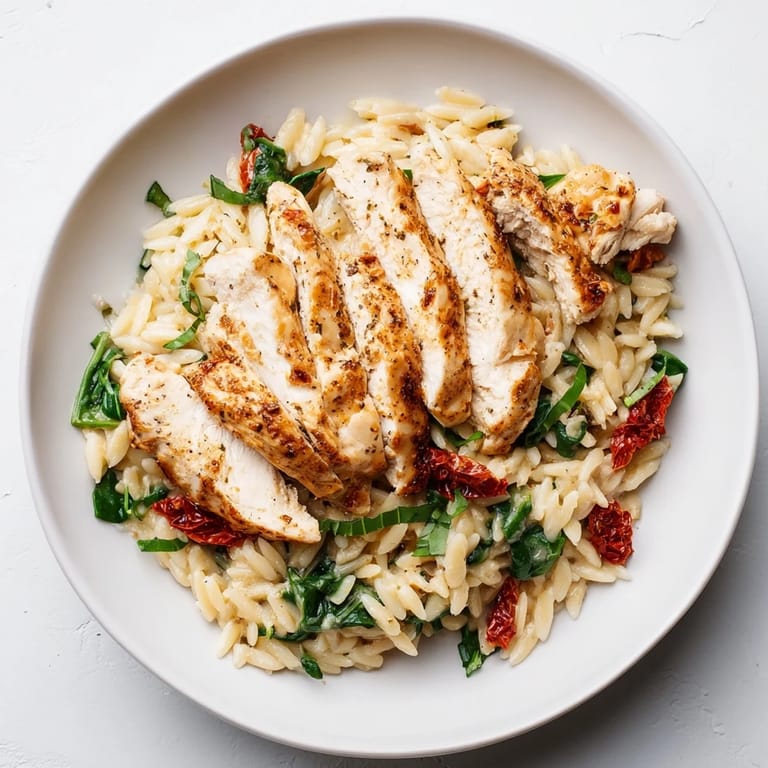
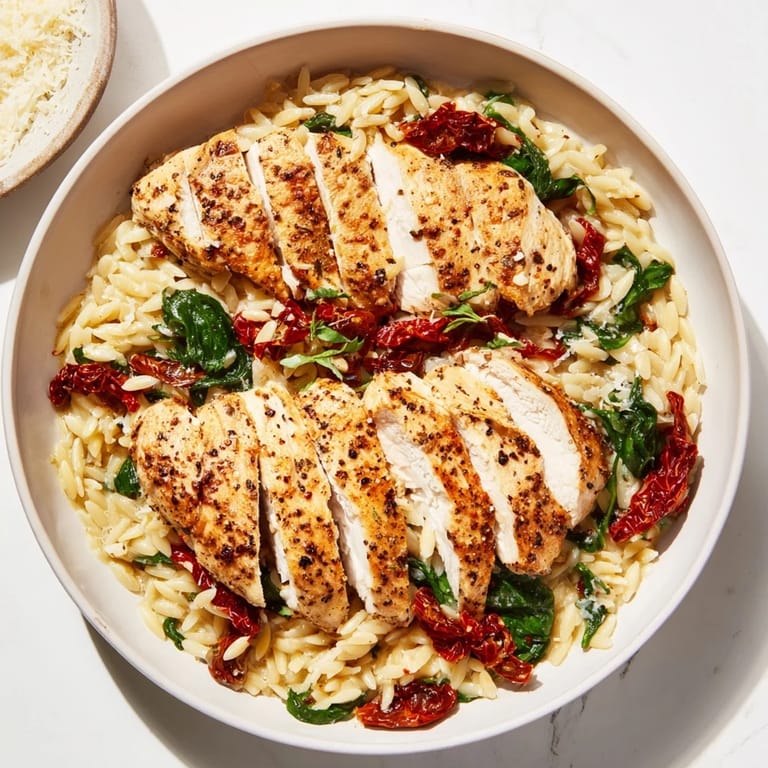
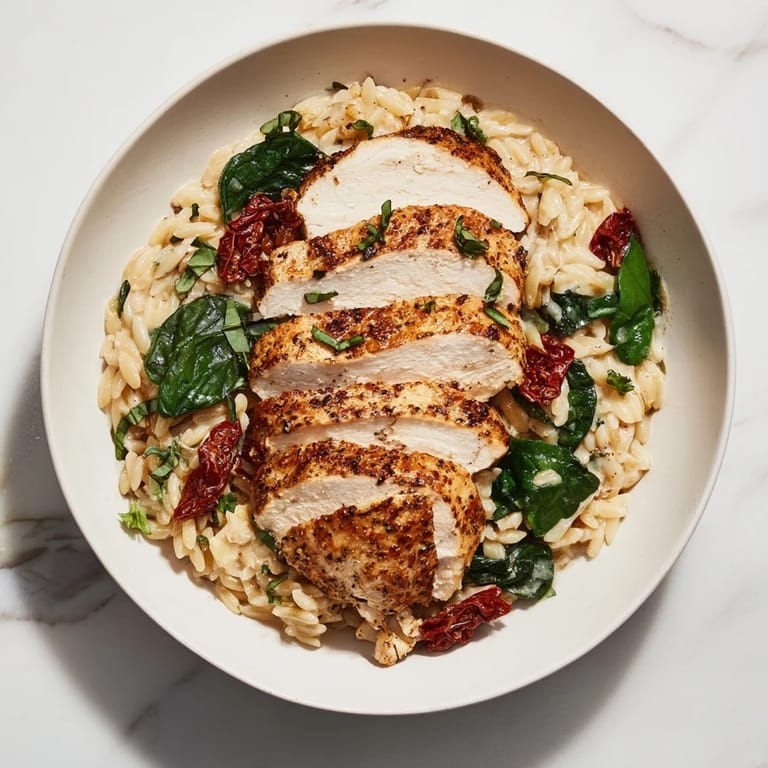
- Slice the chicken and either nestle it back into the pan or serve it over a bed of orzo. A shower of fresh basil and a final drift of parmesan is what ties it all together.
 Save to Pinterest
 What struck me about this dish isn't just how it tastes, but how it shifts the mood of an evening. There's something about creamy, one-pot meals that makes people linger at the table a little longer, talk a little more freely. It became the dish I reach for when I want to cook something that feels both easy and meaningful.
Why This Works as a Weeknight Dinner
The beauty of a one-pot meal is that everything cooks at once, which means you're not juggling multiple pans or timers. The chicken stays tender because it finishes cooking in the creamy sauce rather than getting overcooked on the stovetop. By the time the orzo reaches that perfect al dente texture, everything is ready at the same moment—no awkward timing issues, no cold components sitting around waiting for others to catch up.
The Secret Behind the Sauce
I learned early on that the creaminess comes from the ratio of broth to cream, and from scraping the bottom of the pan where all those caramelized bits live. Those browned, crusty spots aren't mistakes—they're liquid gold. When you deglaze with the broth, you're pulling all that concentrated flavor into the sauce, which is why even simple ingredients feel rich and complex.
Making It Your Own
This recipe is forgiving and adaptable, which is part of why it's become a favorite. I've made it with roasted red peppers instead of sun-dried tomatoes on nights when I wanted something slightly brighter, and it was just as good. Some friends prefer it with a splash of white wine stirred in at the end, and honestly, that's not a bad call. The framework stays the same, but the details are flexible enough to match whatever your kitchen has on hand or what you're craving that particular evening.
- Swap half-and-half for heavy cream if you want something lighter without sacrificing creaminess.
- A tablespoon of butter stirred in at the very end adds an almost silky richness that feels special.
- Finish with a squeeze of fresh lemon juice if the sauce needs a brightness boost.
 Save to Pinterest
 This dish has a way of showing up in your kitchen at exactly the right moments—when you need something quick but feel like cooking, when you want to impress without stress, when you just want dinner to taste like someone cares. That's what keeps me coming back to it.
Recipe Q&A
- → How do I ensure the chicken stays tender?
Start by searing the chicken breasts until golden to seal in moisture, then simmer gently in the creamy sauce until cooked through.
- → Can I substitute orzo with another pasta?
Yes, small pasta shapes like couscous or small shells work well, but cooking times may vary slightly.
- → How can I make the sauce thicker?
Simmer the sauce uncovered for a few extra minutes to reduce and thicken, or stir in a small amount of grated parmesan at the end.
- → Is it possible to add more vegetables to this dish?
Absolutely, adding mushrooms, bell peppers, or zucchini can enhance both flavor and nutrition.
- → What herbs best complement this chicken and orzo combination?
Fresh thyme and basil work beautifully, adding aromatic depth and freshness to the creamy sauce.