 Save to Pinterest
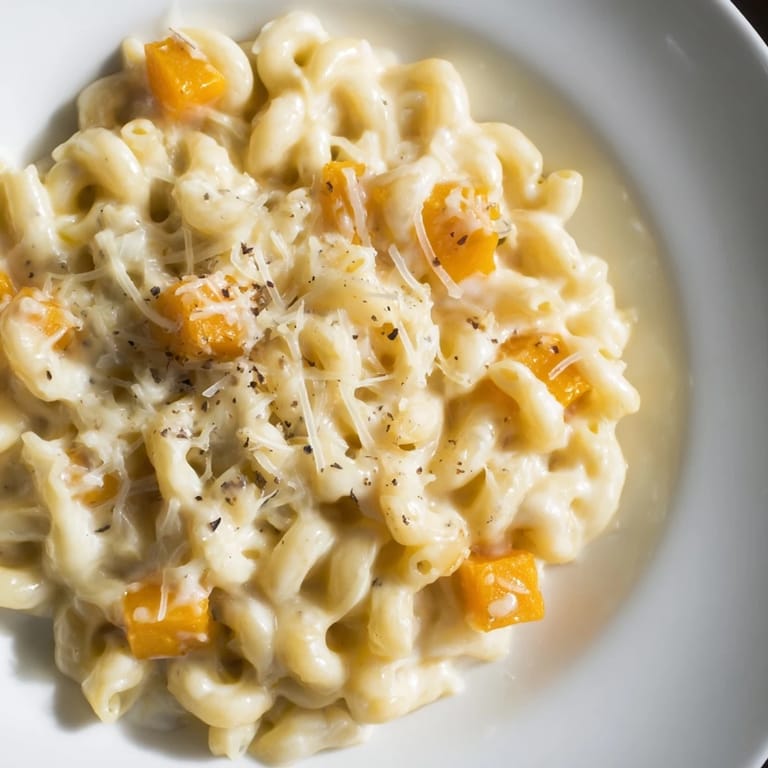
 I discovered butternut squash mac and cheese on a crisp October afternoon when my roommate brought home a farmers market haul and I had a box of pasta calling my name. We were skeptical at first—orange cheese sauce felt risky—but the moment that roasted squash hit the blender and started turning golden and creamy, something clicked. It became the dish I made whenever I wanted comfort food that felt a little bit fancy, a little bit seasonal, and entirely forgiving to cook.
The first time I made this for friends was on a night when everything felt chaotic, and somehow stirring that creamy orange sauce became oddly meditative. One guest asked for the recipe before they'd even finished eating, and I realized that the combination of roasted sweetness and sharp cheddar had somehow become the kind of comfort food people actually ask about.
Ingredients
- Elbow macaroni or small shells, 340 g (12 oz): The shape matters more than you'd think—shells trap the sauce better than you'd expect, but regular elbows work perfectly fine and cook in the time it takes to roast the squash.
- Butternut squash, 500 g (1 lb), peeled and cubed: Don't buy pre-cut squash if you can help it; the difference in flavor after roasting is worth those five minutes with a knife.
- Olive oil, 1 tbsp: This is what coaxes out the squash's natural sweetness when it hits the oven.
- Salt and black pepper for squash, 1/2 tsp and 1/4 tsp: Season generously before roasting so the flavors deepen as the edges caramelize.
- Unsalted butter, 2 tbsp: Use real butter here; it's the foundation of your sauce and tastes noticeably better than margarine.
- All-purpose flour, 2 tbsp: This thickens the milk into something velvety without any lumps if you whisk it in slowly.
- Whole milk, 480 ml (2 cups): Cold milk whisked gradually into your roux prevents those frustrating lumps that ruin an otherwise perfect sauce.
- Sharp cheddar cheese, 120 g (1 cup), grated: Sharp cheddar is the backbone; mild cheddar will make the sauce taste flat and one-dimensional.
- Gruyère or fontina cheese, 60 g (1/2 cup), grated: This adds a subtle nuttiness that makes people wonder what the secret ingredient is.
- Nutmeg, 1/8 tsp: A tiny pinch is all you need to bridge the gap between the squash and the cheese in a way that feels almost magic.
- Dijon mustard, 1/2 tsp: This doesn't make the sauce spicy; instead, it makes the cheese flavor sharper and more defined.
- Panko breadcrumbs, 30 g (1/4 cup) for topping: The crispy top is optional but absolutely worth the extra two minutes under the broiler.
- Melted butter and grated parmesan for topping, 1 tbsp and 2 tbsp: These transform plain breadcrumbs into something golden and irresistible.
Tired of Takeout? 🥡
Get 10 meals you can make faster than delivery arrives. Seriously.
One email. No spam. Unsubscribe anytime.
Instructions
- Heat and prepare:
- Turn your oven to 200°C (400°F) and get a large pot of salted water heating for the pasta. These two things working at the same time are what make this dish come together quickly.
- Roast the squash:
- Toss your cubed butternut squash with olive oil, salt, and pepper, then spread it on a baking sheet in a single layer. Roast for 20–25 minutes until the edges turn golden and the flesh is so tender a fork slides through it easily.
- Cook the pasta:
- While the squash is roasting, drop your pasta into the boiling salted water and cook it just until al dente—it should still have a tiny bit of resistance when you bite it. Drain it but save a cup of the starchy cooking water just in case you need to loosen the sauce later.
- Blend the magic:
- Once the roasted squash is cool enough to handle, scoop it into a blender with 1/2 cup of cold milk and blend until completely smooth and creamy. This is what gives your sauce its distinctive color and silky texture.
- Build your roux:
- Melt your butter in a large saucepan over medium heat, then sprinkle in the flour and stir constantly for about a minute until it smells toasty and lightly golden. This brief cooking step is what keeps your sauce from tasting floury.
- Add the milk slowly:
- Gradually whisk in the remaining 1 1/2 cups of milk, stirring constantly to avoid lumps, until the sauce thickens enough to coat the back of a spoon—this takes about 3–4 minutes. The key is patience and constant stirring.
- Combine everything:
- Stir in the blended squash, both cheeses, the nutmeg, and the Dijon mustard, stirring until the cheese melts completely and disappears into a smooth, creamy sauce. Taste it and adjust salt and pepper until it feels right to you.
- Bring it together:
- Add your cooked pasta to the sauce and mix gently until every noodle is coated in that creamy orange goodness. If the sauce seems too thick, thin it with a splash of that pasta water you saved.
- Optional crispy top:
- Pour the mac and cheese into a lightly greased baking dish, mix panko with melted butter and parmesan, and sprinkle it over the top. Broil for 2–3 minutes, watching carefully, until the topping turns golden and crunchy.
 Save to Pinterest
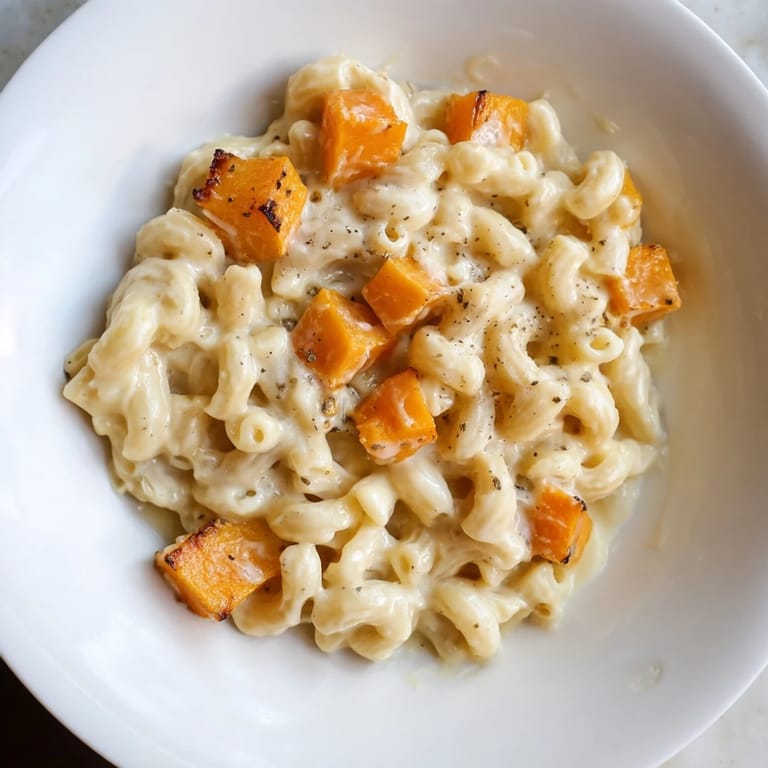
 There's a moment when you're stirring that sauce and the cheese suddenly melts in and it transforms from thin and pale to thick and golden, and you realize this is going to be exactly as good as you imagined. That moment has never gotten old for me, even after making it dozens of times.
The Secret of Roasted Squash
Roasting the squash before blending it is what separates this from any other butternut squash pasta sauce you've ever had. The high heat caramelizes the natural sugars and deepens the flavor from just sweet to something almost nutty and complex. I tried making this once with raw squash that I steamed instead, and it was pale and one-dimensional by comparison—the roasting step is not something to skip.
Two Cheeses Are Better Than One
If you use only cheddar, the sauce will be fine but a bit flat. The Gruyère or fontina adds a subtle nuttiness and complexity that makes people stop mid-bite and wonder what they're tasting. It's a small detail that changes everything, and it's worth keeping both cheeses on hand even if you're only making this once in a while.
Making It Your Own
This recipe is forgiving enough to bend to your preferences, and that's part of why it became such a staple for me. I've added sautéed spinach when I wanted more vegetables, stirred in crispy bacon for guests who wanted something heartier, and even swapped the Gruyère for fontina when that's what I had in the fridge. The base is solid enough that it can handle your creativity.
- Try adding a handful of fresh sage or thyme while the squash roasts to add an herbal note.
- If you prefer a milder flavor, fontina or even fresh mozzarella can replace the sharp cheddar without ruining anything.
- The dish keeps well in the refrigerator for three days and actually tastes better after sitting overnight as the flavors meld together.
 Save to Pinterest
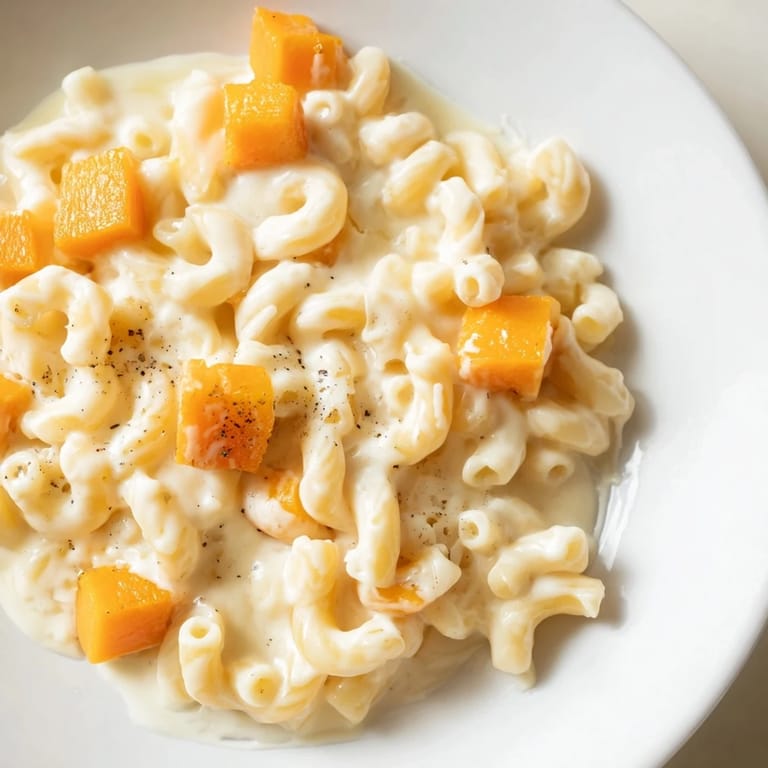
 This dish has become my go-to when I want to cook something that feels special but doesn't require hours in the kitchen. It's the kind of food that makes people feel cared for, and that's really all any recipe should try to do.
Recipe Q&A
- → How do I roast the butternut squash?
Peel and cube the squash, toss with olive oil, salt, and pepper, then roast at 200°C (400°F) for 20–25 minutes until tender and caramelized.
- → Can I substitute the cheeses?
Yes, Gruyère can be swapped with fontina or mozzarella for a milder flavor, adjusting to personal taste.
- → What is the best pasta to use?
Elbow macaroni or small shells work well as they hold the creamy sauce nicely and offer good texture contrast.
- → How to add a crispy topping?
Mix panko breadcrumbs with melted butter and parmesan, sprinkle over the dish, and broil for 2–3 minutes until golden.
- → Can I add greens or protein?
Sautéed spinach or kale can be stirred in for greens, while cooked chicken or bacon can add protein if desired.