 Save to Pinterest
 One weeknight I stood in my kitchen with almost nothing in the pantry—just a box of spaghetti, garlic, olive oil, and half a container of chili flakes—and somehow made the most satisfying dinner in minutes. That dish was aglio e olio, and it taught me that the simplest ingredients, treated with respect and patience, need no apologies. Now it's my go-to when I want something honest and filling without fussing, and I've made it so many times the motions feel like muscle memory.
I made this for my friend Marcus on a cold evening when he'd had a rough day, and watching him twirl that first forkful and actually smile made me realize how powerful such a simple meal can be. There's something about standing together over a warm plate of garlic-scented pasta that feels like care, even when you've barely lifted a finger. He still texts me asking for this recipe when life gets overwhelming.
Ingredients
- Spaghetti: Two hundred grams of dried spaghetti gives you two generous portions, though you can always stretch it with extra oil and garlic if you're feeling generous.
- Extra-virgin olive oil: The soul of this dish—use something you genuinely like to taste, because four tablespoons is going to shine through loud and clear.
- Garlic cloves: Four large ones, sliced thin so they soften into the oil without turning bitter and harsh.
- Red chili flakes: One teaspoon is my starting point, but I've learned that your heat tolerance matters more than following rules, so adjust boldly.
- Fresh parsley: Two tablespoons chopped brings color and a bright, fresh lift that plain spaghetti can't provide on its own.
- Black pepper and sea salt: Season as you taste, not before—your pasta water adds saltiness, so go gentle.
- Parmesan cheese: Optional at two tablespoons grated, but it's the velvet touch if you're not keeping this strictly vegan.
Tired of Takeout? 🥡
Get 10 meals you can make faster than delivery arrives. Seriously.
One email. No spam. Unsubscribe anytime.
Instructions
- Boil the pasta:
- Fill a large pot with salted water and bring it to a rolling boil, then add spaghetti and cook until it's just tender with a tiny bite to it, usually about eight minutes. Before you drain it, scoop out half a cup of that starchy pasta water—you'll need it to make the sauce silky.
- Toast the garlic gently:
- While pasta cooks, warm your four tablespoons of olive oil in a large skillet over medium-low heat and add the sliced garlic, stirring often so it turns golden and fragrant without burning to dark, bitter bits. This takes only a minute or two, and that patience changes everything.
- Add the heat:
- Sprinkle in your red chili flakes and stir for just ten seconds to bloom them in the warm oil, releasing their spicy warmth.
- Bring it together:
- Tip the hot, drained spaghetti right into the skillet and toss everything together with your tongs or a wooden spoon, adding splashes of that reserved pasta water until the pasta feels loose and coated, not clumpy. This is where the magic happens.
- Season and finish:
- Taste as you go, seasoning with salt and black pepper, then remove from heat and toss in your chopped parsley. A gentle stir keeps the oil from cooling too fast.
- Serve with joy:
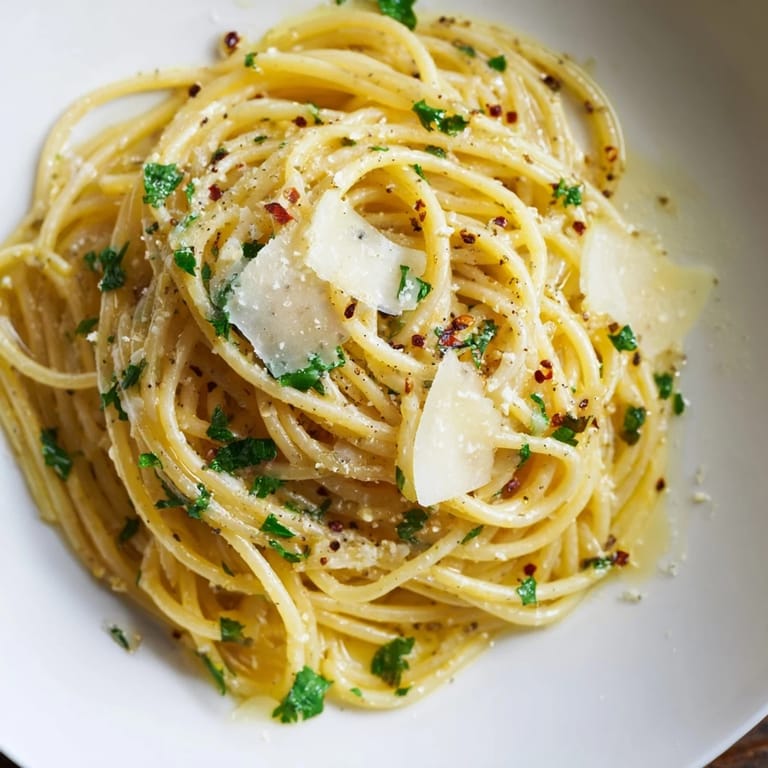
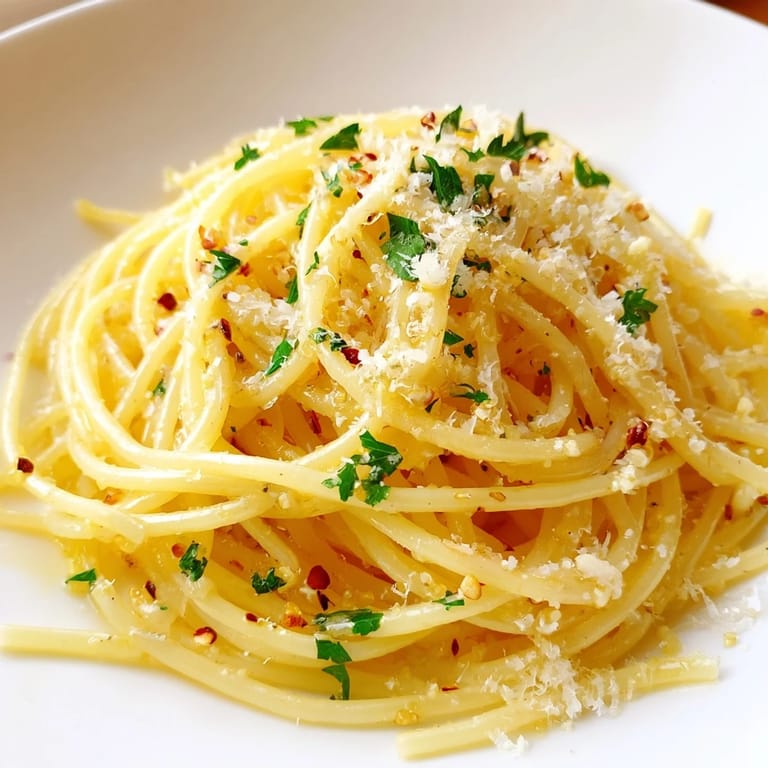
- Divide between plates or bowls and top with grated Parmesan if you like, then eat while it's still steaming and the garlic aroma is at its peak.
 Save to Pinterest
 There was a moment last winter when my nephew, who usually picks at everything, asked for seconds of this pasta and then thirds, and I realized he wasn't eating because I'd added fancy ingredients or impressed him with technique—he was eating because it tasted like someone cared enough to make him something real and delicious. Food doesn't always need to be complicated to matter.
The Magic of Simplicity
Every time I make this, I'm reminded that sometimes less truly is more. There's nowhere to hide when you're working with four ingredients—no cream sauce to mask burnt garlic, no fancy garnish to distract from bad pasta. You're standing there with just oil, garlic, heat, and timing, and somehow that's enough to create something that tastes like it took hours. That's the lesson I keep coming back to in my kitchen, and in life.
Variations That Work
Once you nail the basic formula, this dish becomes a jumping-off point rather than a fixed thing. I've stretched it with lemon juice squeezed over at the end, added toasted breadcrumbs for crunch, tossed in white beans for extra substance, or crumbled anchovies into the oil for an umami punch that stops people mid-chew. Each version still feels like aglio e olio, but with its own personality.
Quick Variations and Serving Ideas
Beyond the classic version, there's so much room to play without changing what makes this dish sing. A splash of white wine added to the garlic oil adds sophistication, fresh lemon zest brings brightness, crispy sage leaves scattered on top feel luxurious, and a handful of toasted breadcrumbs add texture when you want something a little less plain. Serve it as a side to roasted fish or chicken, pile it into a bowl with a fried egg on top for breakfast, or eat it straight from the skillet when no one's looking.
- Lemon juice and zest brighten everything and cut through the richness in the best way.
- A single fried egg on top turns this from side dish into a full meal that feels indulgent.
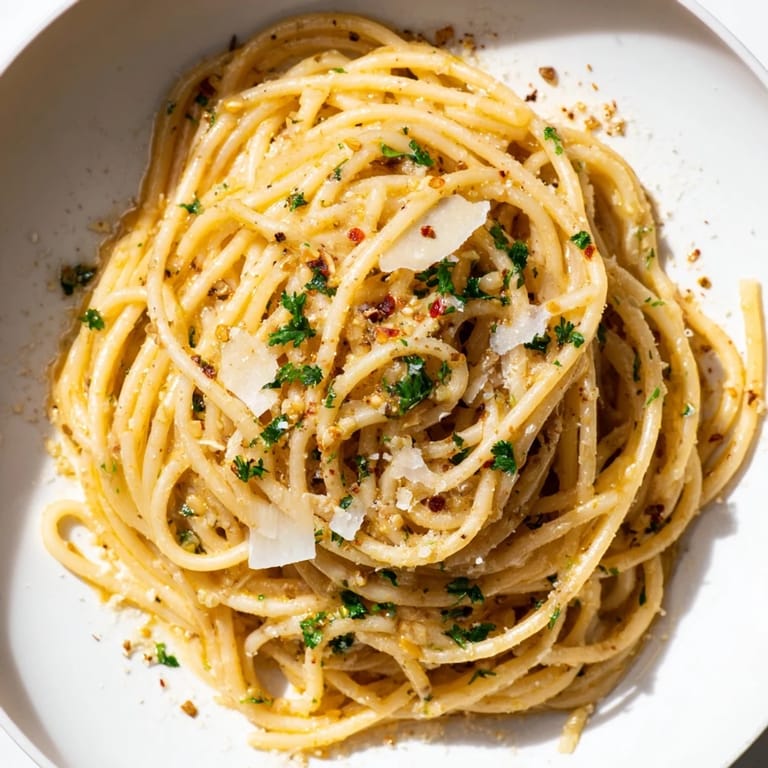
- Don't skip the parmesan unless you're keeping it vegan—those salty, umami-rich curls are the finishing touch that matters.
 Save to Pinterest
 This is the pasta I make when I want to feel capable and generous without stress, when I want to feed someone quickly but thoughtfully. It's honest food that asks you to pay attention and trust the process, and that's why, ten minutes and a handful of ingredients later, it tastes like something more.
Recipe Q&A
- → How do I prevent garlic from burning?
Sauté garlic over medium-low heat and stir frequently. Remove from heat once it starts turning golden to avoid bitterness.
- → Can I adjust the spiciness?
Yes, modify the amount of red chili flakes to control the heat level to your preference.
- → What pasta type works best?
Traditional dried spaghetti is ideal, but gluten-free alternatives can be used as needed.
- → How does reserved pasta water help?
Adding pasta water loosens the sauce and helps it cling smoothly to the pasta, enhancing texture.
- → Is Parmesan necessary?
Parmesan adds a rich finish but is optional; omit or substitute with vegan cheese for dietary needs.