 Save to Pinterest
 The sizzle of ginger hitting hot oil triggers memories of crowded Chinese takeout spots from my college days, when budget dinners meant cheap fried rice. That same sound in my kitchen now signals something infinitely better - my own vegetable fried rice with whatever produce is brightening my refrigerator. Something about the fragrant steam billowing from freshly sautéed vegetables mixed with day-old rice feels like kitchen alchemy at its most practical.
Last weekend, I made this for my sister who unexpectedly dropped by with news about her promotion. We sat cross-legged on the living room floor with steaming bowls balanced on our laps, chopsticks clicking as we discussed her new role. Something about the casual comfort of this colorful dish matched the easy conversation and turned an impromptu visit into an impromptu celebration.
Ingredients
- Day-old rice: I discovered that freshly cooked rice turns mushy in stir-fries, but rice thats been refrigerated overnight develops the perfect texture that separates beautifully when fried.
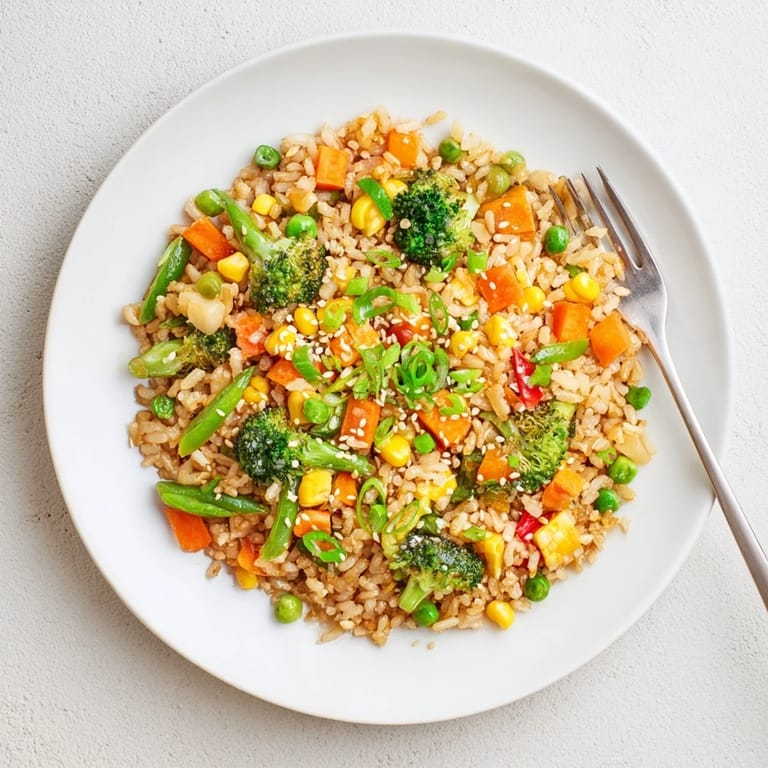
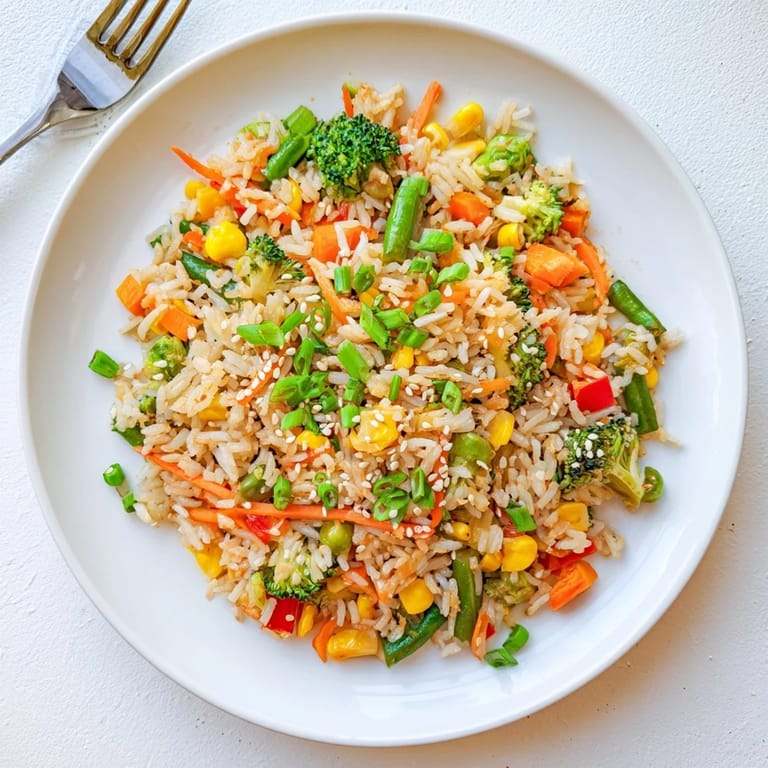
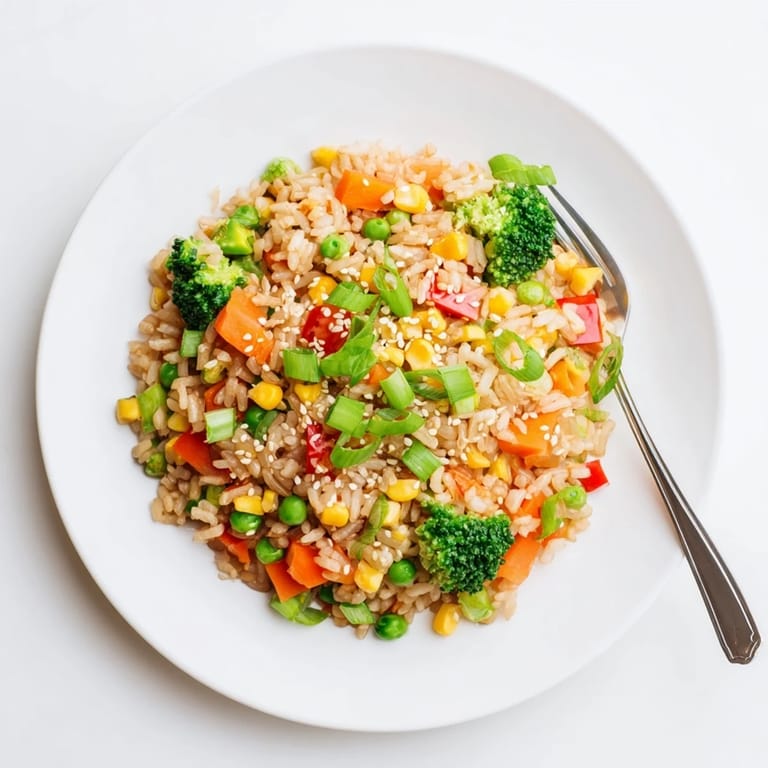
- Mixed vegetables: The rainbow of carrots, peppers, peas and broccoli isnt just for visual appeal - each vegetable adds its own texture and releases moisture at different rates, creating layers of flavor.
- Sesame oil: Just a tablespoon transforms the entire dish with its nutty aroma, but I learned to add it at the end so the delicate flavor doesnt burn away.
- Ginger and garlic: Fresh is non-negotiable here - the oils released when these hit the hot pan create the aromatic foundation that makes your kitchen smell like your favorite restaurant.
- Soy sauce: The umami backbone that brings everything together, I splash it directly onto the rice rather than the vegetables to ensure it coats everything evenly.
Tired of Takeout? 🥡
Get 10 meals you can make faster than delivery arrives. Seriously.
One email. No spam. Unsubscribe anytime.
Instructions
- Prep your workstation:
- Have all ingredients chopped and arranged before heating your wok, because once you start, the process moves quickly. Youll thank yourself for this bit of organization.
- Wake up the aromatics:
- Heat your oil until it shimmers, then add minced ginger and garlic just until fragrant. Watch them carefully - the difference between golden and burnt is mere seconds.
- Layer in vegetables strategically:
- Add firmer vegetables like carrots and broccoli first, followed by quicker-cooking ones. The sizzle and pop as each vegetable hits the hot surface is your sensory guide.
- Rice revival technique:
- Break cold rice clumps with your fingers before adding to the wok, then use a pressing and folding motion rather than stirring. This maintains the integrity of each grain and prevents mushiness.
- Season with restraint:
- Drizzle soy sauce around the edges of the wok so it hits the hot surface first, creating that distinctive wok hei flavor. The rice should be coated, not swimming.
- Rest before serving:
- Let the finished dish sit off heat for one minute before garnishing. This allows flavors to settle and excess moisture to evaporate.
 Save to Pinterest
 One winter evening when the power went out during a snowstorm, this became the emergency dinner I could make on our gas stove by flashlight. The whole family gathered around the table with candles, steam rising from colorful bowls into the darkness. My daughter declared it the most magical dinner ever, proving sometimes the best meals come from necessity rather than planning.
The Heat Factor
Most restaurants use industrial-strength burners that get much hotter than home stoves, which is why their fried rice has that characteristic smoky flavor. I compensate by cooking in smaller batches and letting my wok get screaming hot before adding ingredients. The sizzle should be loud enough to briefly pause conversation - thats when you know youve got the right temperature.
Vegetable Variations
Over dozens of versions, Ive discovered that almost any vegetable works in this recipe if you consider its water content and cooking time. Mushrooms release significant moisture, so I cook them separately and add them back at the end. Zucchini tends to get soggy unless cut larger, while snap peas maintain delightful crispness even with longer cooking. The vegetable matrix keeps evolving in my kitchen based on seasonal availability and personal cravings.
Making It a Complete Meal
While wonderfully satisfying on its own, this vegetable fried rice transforms into countless variations with just one or two additions. Sometimes I make a well in the center of the rice to scramble an egg or two right in the wok, watching as the golden streaks blend through the vegetables.
- Cubed tofu marinated in soy sauce for 10 minutes before cooking adds protein without competing flavors.
- A handful of cashews or peanuts introduced in the last minute of cooking provides delightful texture contrast and healthy fats.
- Thinly sliced fresh chili or a spoonful of chili oil transforms the dish for those who appreciate heat.
 Save to Pinterest
 This vegetable fried rice has become my culinary blank canvas, reflecting whatever season, mood or pantry situation Im navigating. Its the dish that reminds me that good cooking isnt always about following exact instructions but about understanding principles and adapting with confidence.
Recipe Q&A
- → Why should I use day-old rice?
Day-old rice that has been refrigerated is drier and less starchy than freshly cooked rice. This prevents the fried rice from becoming mushy or clumpy during stir-frying, resulting in a light, fluffy texture with each grain separate.
- → Can I make this with fresh vegetables instead of frozen?
Yes, fresh vegetables work wonderfully. Cut them into small, uniform pieces so they cook evenly and quickly. Harder vegetables like carrots and broccoli may need an extra minute or two to become tender-crisp compared to frozen versions.
- → How do I prevent my fried rice from being soggy?
Use cold, day-old rice and keep the heat high while stir-frying. Don't overcrowd the pan, which lowers the temperature and releases moisture. Stir frequently to allow excess moisture to evaporate and to achieve that desirable slightly crispy texture.
- → What proteins can I add?
Scrambled eggs are a classic addition. Crispy tofu cubes work well for keeping it vegan. You can also add cooked shrimp, diced chicken, or cashews for variety. Add protein during the final toss, or cook separately and fold in at the end.
- → Is this gluten-free?
Standard soy sauce contains gluten. To make this dish gluten-free, substitute with tamari or certified gluten-free soy sauce. Check all other ingredients and seasonings for hidden gluten, especially if using pre-made sauces or seasonings.
- → Can I make this ahead?
Fried rice is best served fresh and hot, but you can prepare components ahead. Cook and chill rice the day before, wash and chop vegetables, and measure sauces. Stir-fry everything together just before serving for optimal flavor and texture.