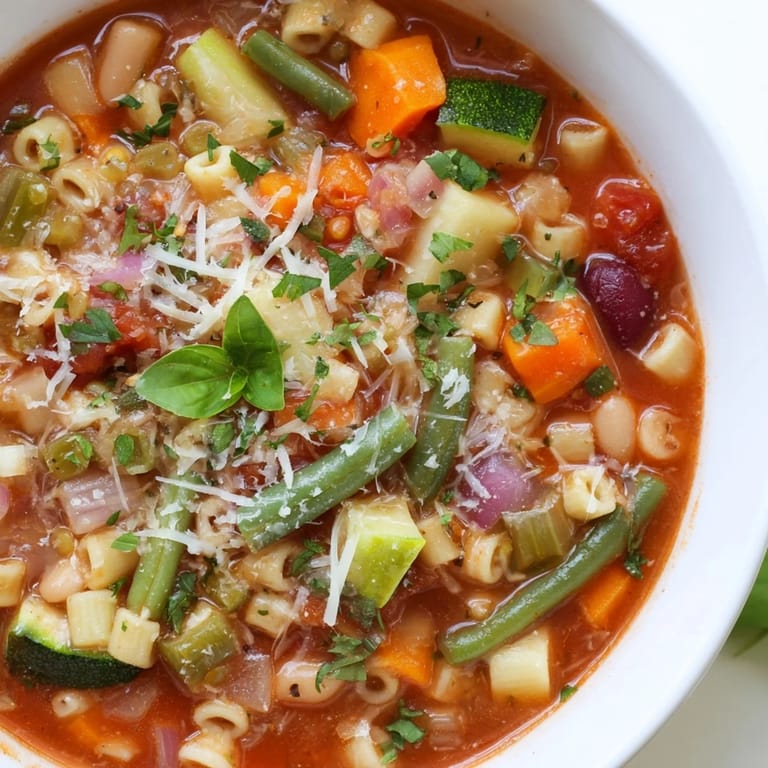
 Save to Pinterest
 There's something about a simmering pot of minestrone that turns a random Tuesday afternoon into something worth remembering. I discovered this version years ago when I was genuinely tired of eating the same salads over and over, and a neighbor mentioned hers was ready in under an hour. The first time I made it, my kitchen smelled incredible within minutes—that combination of sautéed vegetables and tomatoes hitting the pot created something I didn't expect to love this much. Now it's become one of those recipes I make without thinking, the kind where my hands know exactly what to do.
I made this for my sister one winter when she was going through a rough patch, and she asked for the recipe before finishing her bowl. That moment—when someone wants to recreate something you've made for them—is when you know a recipe has staying power. Now whenever she's feeling worn down, she texts me saying she's making "the soup," and I know things are about to feel a little better on her end.
Ingredients
- Olive oil: Use a decent one that you actually like tasting, not the cheapest bottle—it makes a noticeable difference in the broth.
- Onion, carrots, and celery: This trio (soffritto) is the foundation that makes the soup taste right, so don't skip any of them.
- Garlic: Mince it fresh; the flavor shift is worth the thirty seconds.
- Zucchini and green beans: These add texture and keep the soup from feeling heavy.
- Diced and crushed tomatoes: The combination of both gives you body and brightness—one alone isn't quite the same.
- Vegetable broth: Quality matters here since it's your liquid base; a good broth makes the whole soup taste intentional.
- Oregano and thyme: Dried herbs work fine, but add them to the pot before the broth so they bloom properly.
- Tomato paste: This concentrated bit adds depth that you'll taste but won't identify—people always ask what makes it so good.
- Cannellini beans: They soften into the broth gently and add protein without changing the soup's character.
- Fresh basil and parsley: Stir these in at the very end; heat kills their bright flavor.
- Parmesan cheese: Optional but honestly makes the moment feel complete when you sprinkle it on top.
Tired of Takeout? 🥡
Get 10 meals you can make faster than delivery arrives. Seriously.
One email. No spam. Unsubscribe anytime.
Instructions
- Get your base going:
- Heat the olive oil in a large pot over medium heat, then add the diced onion, carrots, and celery. You'll know it's ready when the vegetables start to soften and smell sweet, usually around 5 minutes—they should be tender but not brown.
- Build the layers:
- Stir in the minced garlic, diced zucchini, and green beans, cooking for another 3 minutes until fragrant. This is where your kitchen starts to smell like something real is happening.
- Make it a soup:
- Add both cans of tomatoes, the vegetable broth, oregano, thyme, salt, pepper, red pepper flakes if you want heat, and that tomato paste. Stir everything together and bring it to a boil—you'll see the surface get active and bubbly.
- Let it simmer:
- Reduce the heat and let it bubble gently for 15 minutes without a lid, which lets flavors concentrate and meld into something cohesive.
- Add the pasta and beans:
- Stir in your small pasta and drained cannellini beans, then simmer for another 10 to 12 minutes until the pasta is tender—taste a piece to check, and stop cooking when it has just a bit of resistance.
- Finish with brightness:
- Take it off the heat and stir in your fresh basil and parsley—this final step is what makes people pause and actually taste what's in front of them.
- Serve and season:
- Ladle it into bowls, taste it once more to adjust the salt or pepper, and top with grated Parmesan if you want that savory finish.
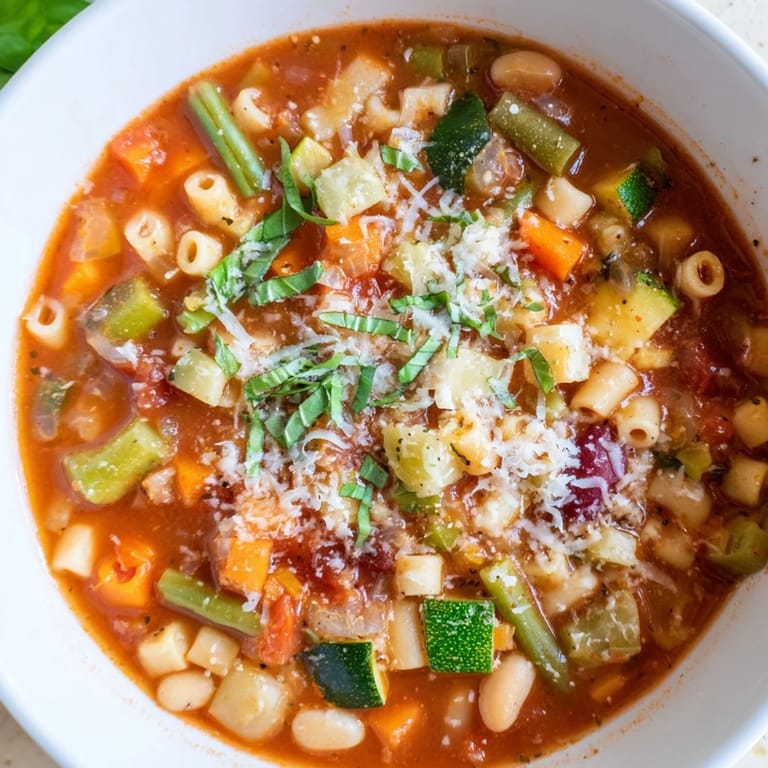 Save to Pinterest
 I once made this soup for a cooking class my friend dragged me to, and watching people's faces light up when they tasted it for the first time made me understand why she'd been asking me to teach. That's when I realized a good minestrone isn't really about perfection—it's about showing up and feeding people something warm that makes them feel noticed.
Why This Soup Works Every Time
The beauty of minestrone is that it doesn't require any fancy technique or hard-to-find ingredients, which means you can focus on tasting as you go and making it your own. The combination of sautéed vegetables, two types of tomatoes, and that tomato paste creates layers that feel intentional without being complicated. I've learned that rushing through the initial sauté step is where most people go wrong—those five minutes of letting the onion, carrot, and celery get soft and sweet is what separates a good bowl of soup from one that tastes one-dimensional.
Making It Yours
One of the best things about minestrone is how forgiving it is when you want to improvise. I've added spinach or kale at the end when I had it on hand, swapped the green beans for whatever other vegetables needed using up, and even added a splash of balsamic vinegar once when I felt like it needed something unexpected. The core of the soup stays solid no matter what you change, so you can be flexible without worrying about ruining it.
Serving and Storage Secrets
This soup actually improves when it sits overnight, and the flavors deepen in a way that's almost suspicious—as if the ingredients kept getting to know each other in the fridge. I always serve it with crusty bread on the side, both for soaking up every spoonful and because there's something about bread and soup together that feels like actual comfort. If you're storing it, keep it in an airtight container and it'll stay good for about four days, though I've never had leftovers last that long.
- Reheat gently on the stove rather than the microwave so the flavors warm evenly.
- If the soup thickens up from pasta absorption, thin it with a splash of broth or water when you reheat.
- Add fresh herbs again when you serve leftovers so they taste bright instead of tired.
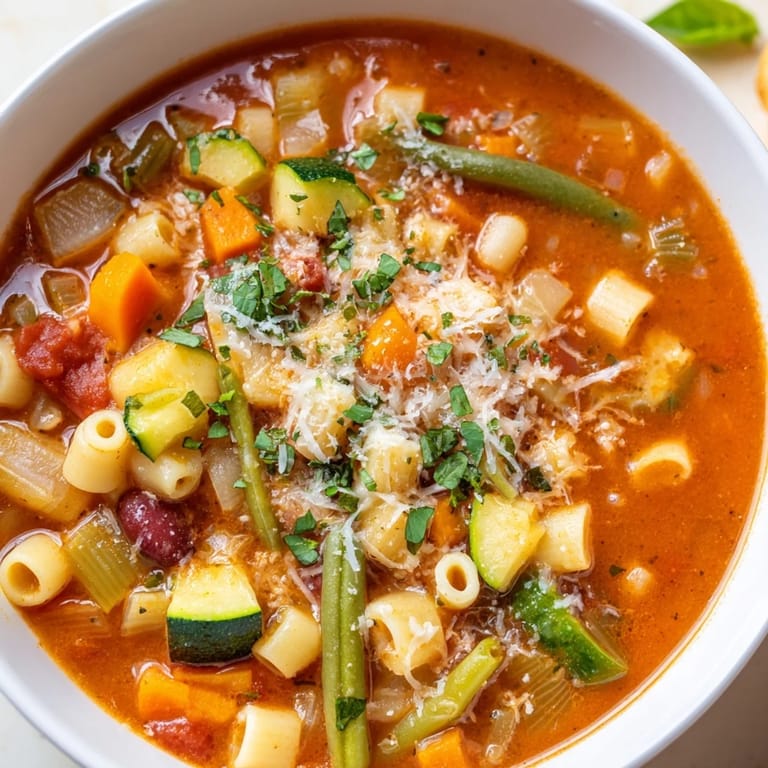 Save to Pinterest
 This is the kind of recipe that reminds you why cooking matters—it's simple, it feeds people, and it somehow makes everything feel a little warmer. Make it, share it, and let it become the soup you turn to when things need to feel normal again.
Recipe Q&A
- → What type of pasta works best in this soup?
Small pasta shapes like ditalini or elbow macaroni are ideal as they cook quickly and blend well with the soup's texture.
- → Can I add extra vegetables to this dish?
Yes, spinach or kale can be added near the end of cooking for additional greens and nutrients.
- → Is this suitable for a gluten-free diet?
Using gluten-free pasta substitutes ensures the dish remains gluten-free while maintaining its comforting texture.
- → How do I adjust the spice level in this soup?
Crushed red pepper flakes add heat if desired. Adjust the amount or omit according to your preference.
- → What herbs contribute to the flavor profile?
Dried oregano, thyme, fresh basil, and parsley combine to create a fragrant and balanced herbal aroma.