 Save to Pinterest
 The first time I made Thai green curry soup, I was stuck in my apartment on a rainy Tuesday with a craving I couldn't shake. I'd just come back from a tiny restaurant in Bangkok where the cook handed me a steaming bowl, and the aroma alone transported me somewhere else entirely. That night, I dug through my pantry, found a jar of green curry paste I'd been saving, and decided to recreate that magic at home. What emerged from my pot wasn't an exact replica, but something deeply personal—a soup that tasted like a memory and a promise all at once. Now it's the first thing I make when I want to feel both grounded and adventurous.
I remember ladling this soup into bowls for my roommate on a particularly stressful work day. She took one spoonful, closed her eyes, and just breathed. That's when I realized this wasn't just soup—it was a moment of pause, of care, of something warm that asked nothing of you except to slow down. Now whenever someone needs comfort food that also happens to taste spectacular, this is what I reach for.
Ingredients
- Firm tofu or chicken breast: Tofu soaks up the curry and coconut so beautifully, while chicken adds richness; both cook gently in the soup's warmth.
- Green curry paste: This is your flavor anchor—use a quality brand or make it yourself if you're feeling adventurous, and store any leftover paste in the fridge for weeks.
- Coconut milk: Full-fat creates that luxurious mouthfeel, but light coconut milk works if you prefer something gentler.
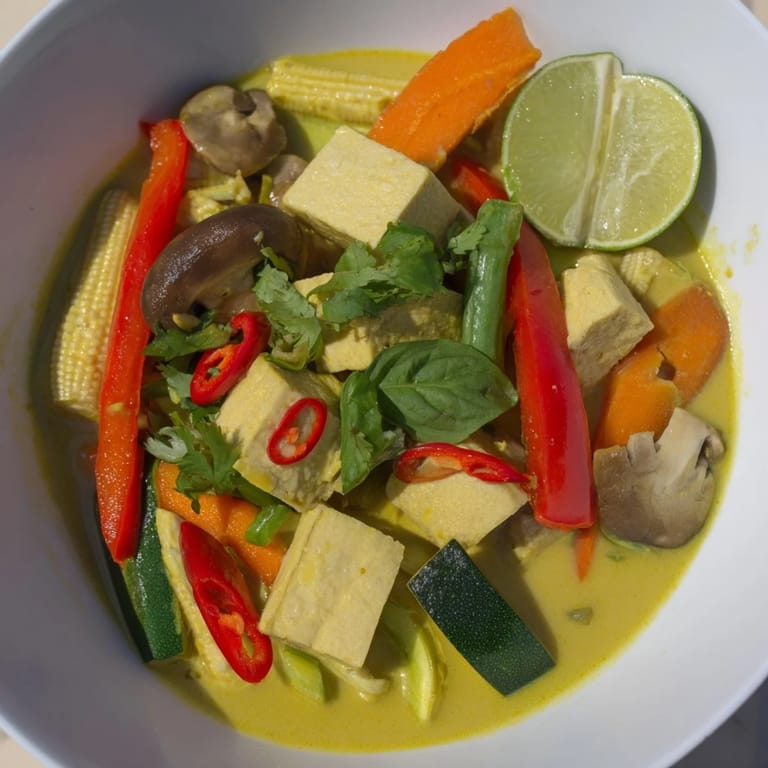
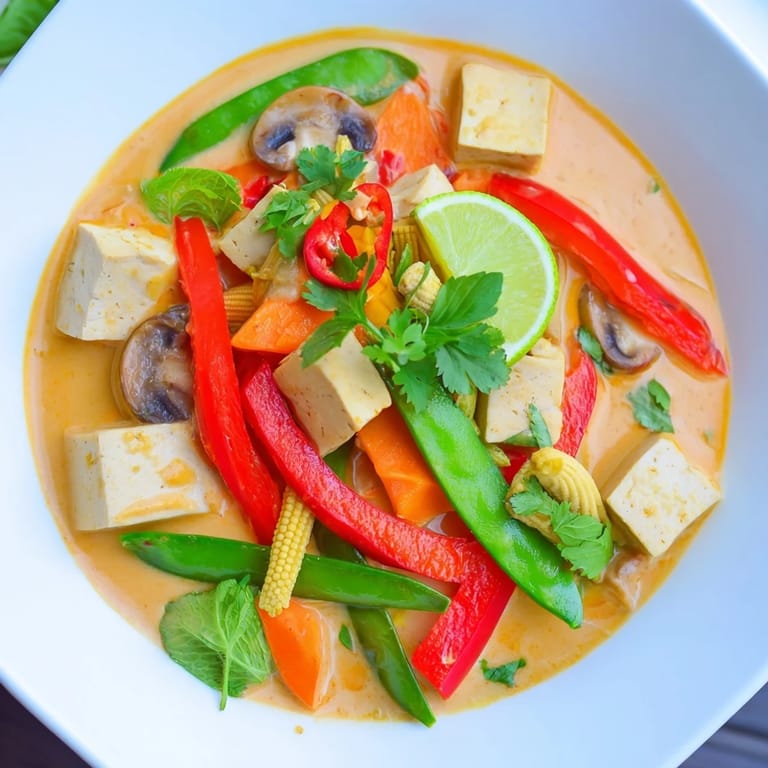
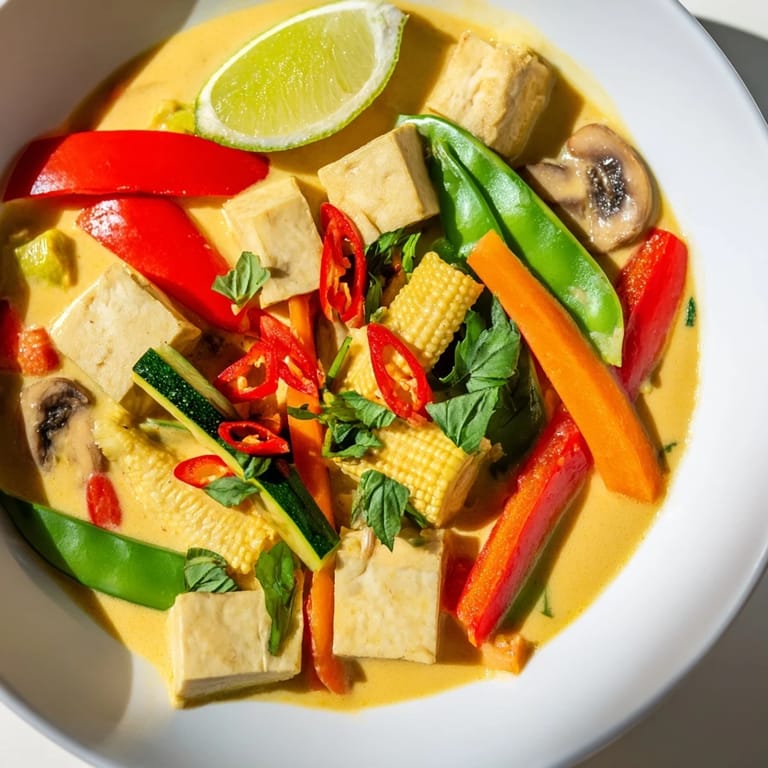
- Fresh vegetables: Bell pepper, zucchini, baby corn, snap peas, mushrooms, and carrot add texture and keep things vibrant—use whatever's in season or what makes you happy.
- Fish sauce or soy sauce: Just a tablespoon deepens everything; it's not about tasting fishy, it's about depth.
- Vegetable or chicken broth: This balances the richness of the coconut, so don't skip it.
- Fresh cilantro, Thai basil, and lime: These aren't garnishes—they're the final conversation your soup has with your palate.
Tired of Takeout? 🥡
Get 10 meals you can make faster than delivery arrives. Seriously.
One email. No spam. Unsubscribe anytime.
Instructions
- Toast the curry paste:
- Heat oil in a large pot and let the curry paste sit for a minute or two, stirring gently. You'll smell it before you see it—that's when you know it's alive and ready.
- Soften the onion:
- Add sliced onion and give it a couple minutes to turn translucent and tender, breathing in that warm, aromatic beginning.
- Start your protein:
- Add chicken or tofu and let it cook just until the edges start changing color. You're not finishing it here; the soup will do that gently.
- Build your broth:
- Pour in coconut milk and broth, then bring everything to a gentle simmer—low and slow is the way.
- Add the vegetables:
- Stir in your bell pepper, zucchini, baby corn, snap peas, mushrooms, and carrot. Watch them soften and brighten over 8–10 minutes; this is where the soup finds its full voice.
- Season and taste:
- Stir in fish sauce and sugar, then taste and adjust—more curry paste for heat, more lime for brightness, more broth if you want it looser.
- Finish with grace:
- Ladle into bowls and scatter cilantro, Thai basil, and lime wedges on top, letting people finish their own soup exactly how they want it.
 Save to Pinterest
 The magic moment always comes when someone who thought they didn't like spice tastes this soup and realizes the heat is balanced by sweetness and creaminess. I've watched people slow down mid-conversation, fork suspended, just tasting. That's when you know you've made something worth making.
Building Layers of Flavor
Thai cuisine is all about balance—spicy, sour, salty, sweet—and this soup is no exception. When you taste after adding the fish sauce and sugar, you're not trying to make it taste fishy or sugary; you're creating harmony. I learned this from watching a cooking show where a Thai chef tasted her curry three times before serving, adjusting each element until it sang. Now I do the same, and it's become my favorite part of the process.
Protein and Substitution Philosophy
Tofu and chicken behave differently in this soup, and both are worth trying. Tofu absorbs the curry and coconut like a sponge, becoming almost luxurious, while chicken adds a subtle richness that makes the broth feel more substantial. I've also stirred in shrimp when I'm feeling fancy, though that changes the cooking time slightly. The point isn't to follow one path rigidly—it's to understand that this soup is flexible enough to meet you where you are.
Seasonal Vegetables and Variations
Summer brings snap peas and zucchini; winter asks for carrots and mushrooms; spring whispers for asparagus and peas. I treat the vegetable list as a suggestion, not a mandate, and I've never had a version that wasn't delicious. The structure of the soup—the curry, the coconut, the broth—stays steady while the vegetables shift with the seasons. It's like cooking the same song with different instruments.
- Fresh vegetables keep this soup bright; frozen ones work too, but add them slightly later since they thaw quickly.
- If you love heat, keep some sliced fresh chili on the side and let people control their own spice level.
- A squeeze of lime at the very end, after it hits the bowl, makes all the difference—don't skip this step.
 Save to Pinterest
 This soup has become my kitchen sanctuary—the thing I make when I want to feel capable and creative without much fuss. I hope it becomes that for you too.
Recipe Q&A
- → What protein options work best in this dish?
Firm tofu or skinless chicken breast are excellent choices, both absorbing flavors beautifully and cooking evenly within the broth.
- → Can I adjust the spiciness of this curry?
Yes, increase or decrease the amount of green curry paste or add sliced fresh chili to control the heat level.
- → What vegetables complement the curry flavors well?
Bell peppers, zucchini, baby corn, snap peas, mushrooms, carrots, and onions contribute texture and freshness that balance the creamy base.
- → Is there a substitute for fish sauce to keep it vegetarian?
Soy sauce can be used as a flavorful alternative for vegetarians or those avoiding fish ingredients.
- → How should I serve this dish for a complete meal?
Serve alongside steamed jasmine rice or rice noodles to complement the flavorful broth and provide satisfying balance.
- → Can I make this soup ahead of time?
Yes, flavors deepen when refrigerated overnight; reheat gently before serving to preserve texture and taste.