 Save to Pinterest
 There's something about a mezze platter that stops conversations mid-sentence. I discovered this years ago when a friend brought one to a summer gathering, and I watched people actually pause what they were doing to admire it before eating. The arrangement mattered as much as the flavors—generous white space between jewel-toned vegetables and creamy cheeses created this almost artistic appeal. That day, I realized a good mezze wasn't just appetizer logistics; it was an invitation to slow down and share something beautiful.
I still remember hosting a small dinner party on my first balcony with actual sunlight. I was nervous about the cooking, so I built an entire meal around this platter as the centerpiece. By the time everyone arrived, they were already gathered around it, plucking olives and cucumber slices before we'd even sat down. It became the whole evening—everything else was just sides to the conversation happening over feta and wine.
Ingredients
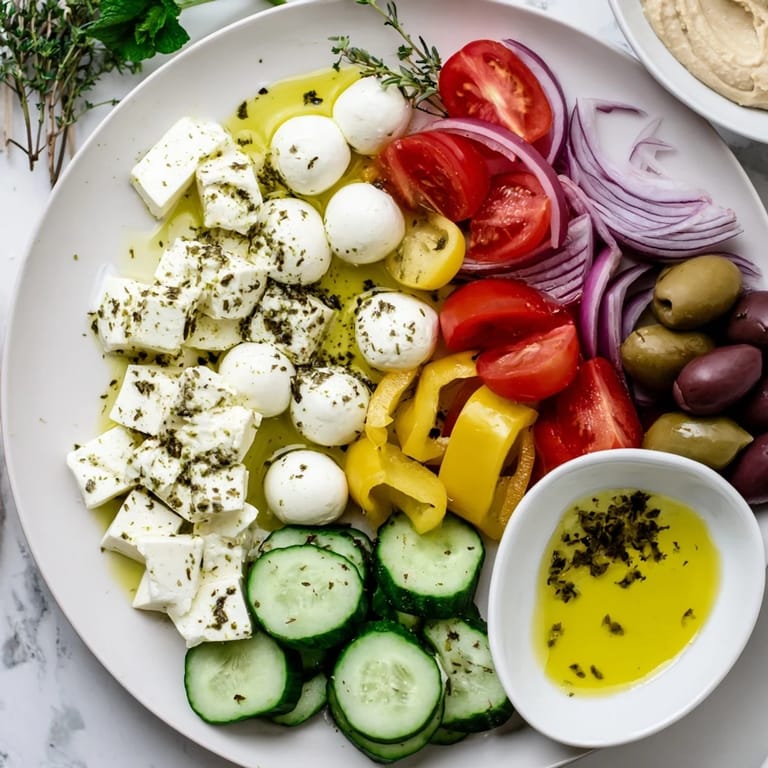
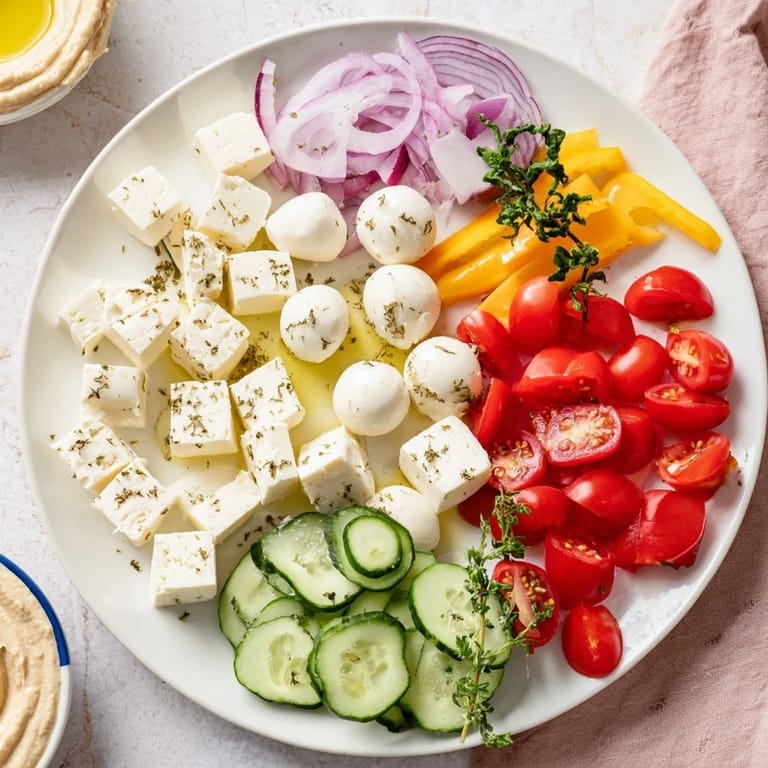
- Feta cheese: Cube it yourself rather than buying pre-crumbled; the chunks stay more defined and look intentional on the board.
- Fresh mozzarella balls: Pat them dry before arranging so they don't weep liquid and make the board soggy.
- Cucumber: Slice on a slight bias for more visual interest than straight rounds.
- Cherry tomatoes: Halving them lets people pop them whole but also exposes the jewel-like interior.
- Yellow bell pepper: The color contrast against red olives and white cheese is what makes this board photograph so well.
- Red onion: Thin slices add a sharp, honest bite that nobody expects.
- Radishes: They stay crisp for hours and their peppery snap is essential for balance.
- Kalamata olives: The brine flavor anchors everything—don't skip them or use sad pale ones.
- Hummus and tzatziki: Make your own if you can, but store-bought works; they're the reason people keep coming back for more cucumber.
- Extra virgin olive oil: Use your best bottle; this isn't the time for the bargain stuff.
- Fresh mint and dill: These aren't garnish afterthoughts—they're flavor and fragrance that makes the platter feel alive.
Tired of Takeout? 🥡
Get 10 meals you can make faster than delivery arrives. Seriously.
One email. No spam. Unsubscribe anytime.
Instructions
- Create anchor points with cheese:
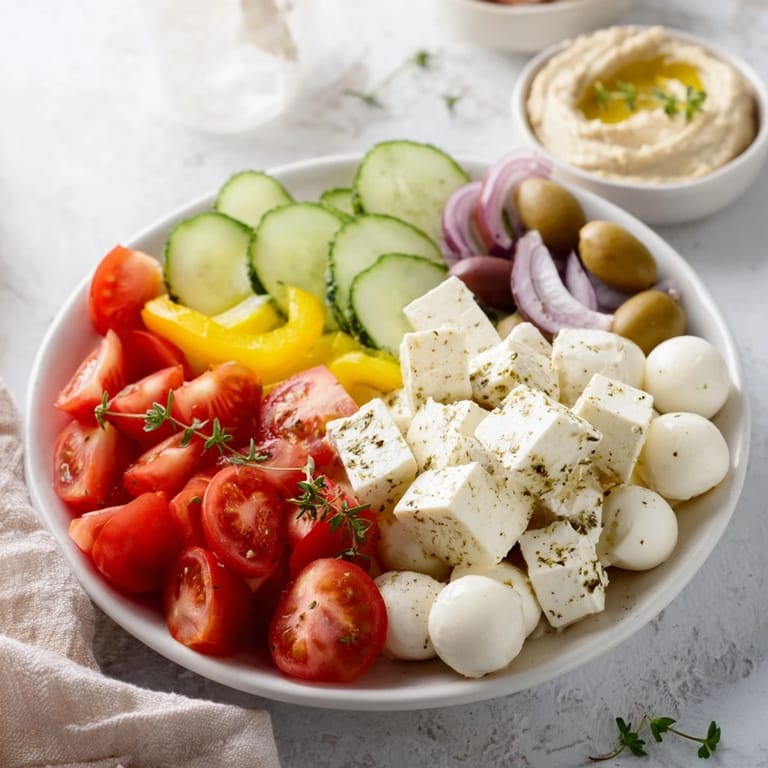
- Position your feta cubes and mozzarella balls first in distinct clusters on opposite corners of your board. This gives the eye a starting point and makes the arrangement feel intentional rather than random.
- Build in clusters, not lines:
- Fan out vegetables in small groups with breathing room between them. Think of it like a landscape with clearings, not a tightly packed garden.
- Honor the olives:
- Pile them in a small bowl or heap rather than scattering them; they deserve their own territory and it keeps the brine from spreading.
- Cradle your dips:
- Set hummus and tzatziki in small bowls so people can dip without double-dipping and so they stay cool and contained.
- Oil and season with intention:
- Drizzle olive oil over the cheeses and a few vegetable clusters rather than everywhere; you want shine, not slickness. Finish with sea salt and pepper scattered visibly so it looks luxurious.
- Finish with green:
- Tuck fresh mint and dill sprigs into crevices and across the top at the last possible moment so they stay bright and fragrant.
 Save to Pinterest
 The best moment with this platter came when my mom visited and we built it together on the kitchen counter, arguing playfully about color placement like we were artists. She arranged the radishes in a perfect spiral, and when guests saw it, they almost didn't want to disturb it. By the end of the evening, the board was beautiful in a different way—the gaps where food had been taken, the trails of oil, the crumbs of feta—it told the story of a good gathering.
The Art of Arrangement
A mezze board is less recipe and more conversation starter. The magic isn't in complexity; it's in thoughtfulness. I've learned that color contrast—the way that yellow pepper pops against white cheese against dark olives—matters more than any technique. Odd numbers work better than even; five radish slices feel more intentional than four. The platter doesn't need to be symmetrical, but it does need to feel balanced, like someone cared about how it looked.
Building Flavor Layers
What surprised me after making this dozens of times is how the flavors build as people graze. A bite of feta with a radish, then hummus on a crisp, then the cool relief of tzatziki with cucumber—it's a progression. The sharp red onion cuts through richness, the mint adds brightness, the olives ground everything in Mediterranean depth. This isn't a platter that reaches a peak and then stays flat; it evolves depending on how someone chooses to eat it.
Occasions and Seasons
I've made this platter for everything from casual weeknight hangouts to proper dinner parties. It works equally well in summer when you want something that feels light and in winter when you need an appetizer that won't make you feel heavy before the main course. The beauty is that you can adjust it to whatever you have on hand—roasted chickpeas, grapes, different cheeses, cured meats if you eat meat—without losing its essential character.
- Serve it on wood for warmth or slate for sophistication; the board itself sets the tone.
- If entertaining, arrange it 30 minutes before guests arrive so vegetables stay crisp but cheese reaches room temperature.
- Pair it with wine or sparkling water with lemon; let the platter be the star, not the opener to something heavier.
 Save to Pinterest
 This platter taught me that sometimes the most memorable meals aren't about complicated cooking—they're about creating space for people to connect. Every time I arrange one now, I remember that summer gathering and aim to recreate that feeling of abundance and care.
Recipe Q&A
- → What cheeses are used in this mezze platter?
Feta cheese cubes and fresh mozzarella balls (bocconcini) are the primary cheeses, providing creamy and tangy flavors.
- → How should the vegetables be prepared for the platter?
Vegetables like cucumber, cherry tomatoes, bell pepper, red onion, and radishes should be sliced or halved neatly and arranged in small clusters to maintain a light, airy look.
- → What dips accompany the mezze board?
Hummus and tzatziki are served in small bowls alongside the platter, adding smooth, creamy textures and bright flavors.
- → Are there suggestions for garnishing the platter?
Fresh mint and dill sprigs are ideal garnishes that enhance the sun-kissed, refreshing look and provide aromatic accents.
- → Can this dish accommodate gluten-free or vegan diets?
Use gluten-free crispbreads or pita wedges to keep it gluten-free. For a vegan version, substitute plant-based cheeses and omit mozzarella.
- → What finishing touches enhance the flavor?
Drizzling extra virgin olive oil and sprinkling sea salt and cracked black pepper lightly ties the flavors together beautifully.