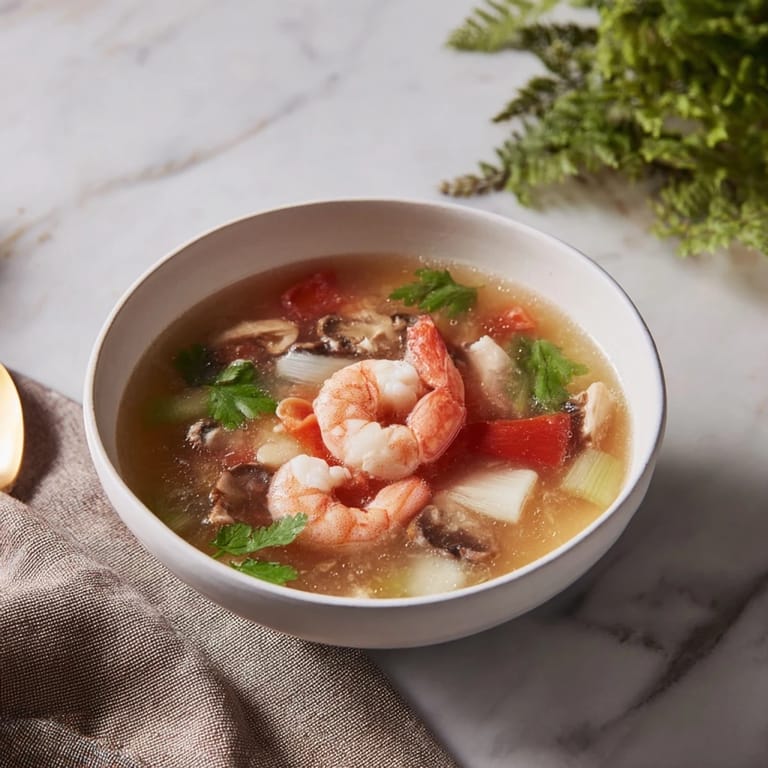
 Save to Pinterest
 The first time I tasted genuine tom yum was in a cramped Bangkok street stall, watching a vendor throw ingredients into a pot with the kind of casual confidence that only comes from making the same soup a thousand times. Years later, I found myself in my own kitchen at midnight, craving that exact balance of heat and brightness, and I realized I could recreate it. That night taught me that tom yum isn't about perfection—it's about understanding how each element plays off the others, how the lemongrass whispers beneath the chili's shout, and how a squeeze of lime can transform everything.
I remember making this for a friend who'd just returned from Thailand, and I was nervous—would it measure up to the real thing? When she took that first spoonful and closed her eyes, I knew the balance was right. She asked for seconds, then thirds, and by the end we were both a little sweaty and completely happy, laughing about how such a simple soup could be so satisfying.
Ingredients
- Chicken or vegetable stock (4 cups): This is your canvas, so use good stock if you can—it becomes the foundation that everything else builds on.
- Fresh lemongrass (2 stalks): Smash it hard before adding; that's where the magic lives, in those bruised fibers releasing their fragrant oils.
- Kaffir lime leaves (4 leaves): These give tom yum its distinctive perfume, and tearing them releases more flavor than leaving them whole.
- Fresh galangal (3 slices): Ginger works if that's all you have, but galangal's warm spice is subtly different and worth seeking out.
- Thai bird's eye chilies (2, sliced): These are small but fierce; start with one if you're unsure about your heat tolerance.
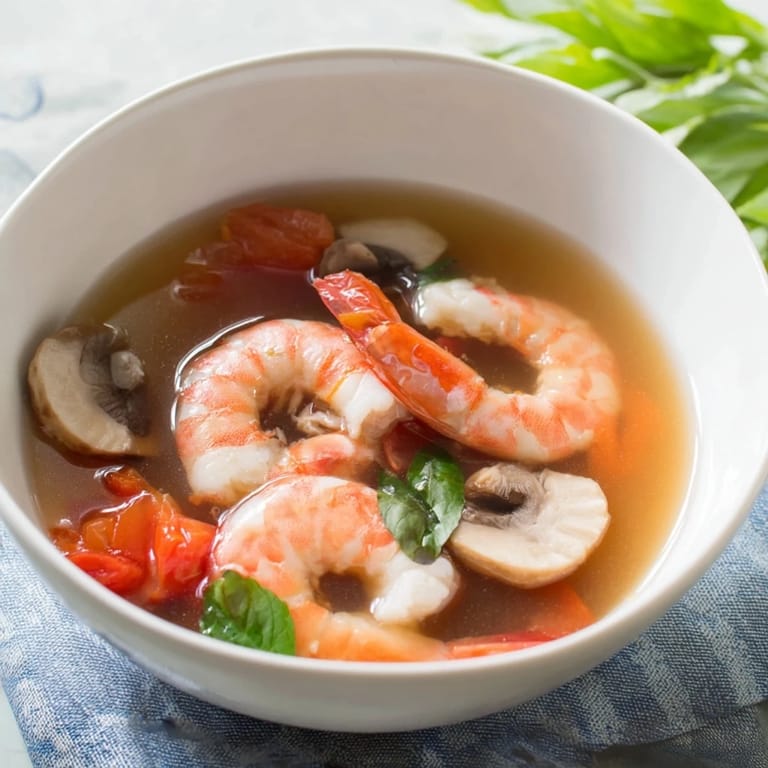
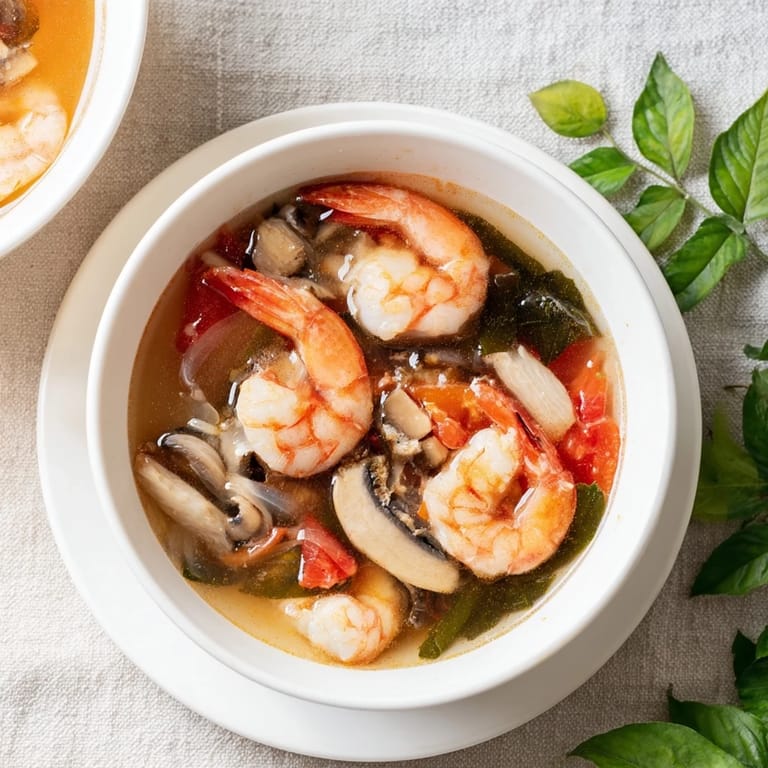
- Large shrimp (250 g): They cook in minutes, so watch carefully—overcooked shrimp becomes rubbery, and nobody wants that.
- White mushrooms (150 g): Slice them fairly thin so they soften into the broth rather than staying chewy.
- Tomatoes (2 medium): Cut them into wedges rather than chunks; they'll soften into the soup and add subtle sweetness and acidity.
- Fish sauce (2 tablespoons): It smells strong in the bottle, but trust the process—it's what makes this taste authentically tom yum.
- Lime juice (1 tablespoon, plus more): Fresh lime is crucial; bottle juice won't give you that bright finish.
- Sugar (1 teaspoon): This balances the heat and sourness, creating harmony rather than a one-note soup.
- Chili paste (1 teaspoon, optional): It adds depth and a subtle fermented note if you want to go deeper.
- Fresh cilantro and green onions: These aren't just garnish—they're the final punctuation that lifts everything.
Tired of Takeout? 🥡
Get 10 meals you can make faster than delivery arrives. Seriously.
One email. No spam. Unsubscribe anytime.
Instructions
- Build your aromatic base:
- Pour stock into a medium pot and bring it to a gentle simmer, then add lemongrass, kaffir lime leaves, galangal, and chilies. Let these steep for 5 to 7 minutes—your kitchen will smell incredible, and that's the signal that the broth is becoming something special.
- Add the vegetables:
- Drop in mushrooms, tomatoes, and onion, then let them cook for 3 to 4 minutes until just tender. They'll release their own flavors into the broth.
- Cook the shrimp:
- Add shrimp and watch closely for that moment when they turn pink and opaque—usually 2 to 3 minutes, no more. They'll keep cooking slightly even after you remove the pot from heat.
- Season to taste:
- Stir in fish sauce, lime juice, sugar, and chili paste, then taste and adjust. This is where you make it yours—more lime if you want brightness, more fish sauce if you want depth.
- Finish and serve:
- Remove from heat and discard lemongrass and galangal if you prefer a cleaner presentation. Ladle into bowls and scatter with cilantro, green onions, and lime wedges.
 Save to Pinterest
 One evening, a neighbor stopped by just as the soup was finishing, and the aroma pulled her into the kitchen. She stayed for a bowl, then another, and we ended up talking until the pot was empty. That's when I knew this recipe had become something more than dinner—it was an invitation to slow down together.
The Soul of Balance
Tom yum is a lesson in harmony—no single flavor should overpower the others. The heat from the chilies, the sourness from the lime, the subtle sweetness from the sugar, and the umami depth from the fish sauce all need each other to shine. If your soup tastes too harsh, add a pinch more sugar. Too bland, add more fish sauce. Too mellow, add more lime. This isn't about following rules; it's about understanding how these flavors dance together.
Customizing Your Bowl
The beauty of tom yum is that it welcomes improvisation. Swap shrimp for tofu and soy sauce if you're vegetarian, or use whatever vegetables you have on hand—bell peppers, snap peas, baby corn all work beautifully. Some cooks add coconut milk for richness, though traditionalists would argue against it. The important thing is understanding the core flavors so you can adjust without losing the soul of the dish.
Serving and Pairing
Tom yum is best served piping hot in warm bowls, the steam carrying all those aromatic flavors straight to your nose. Some people enjoy it as a standalone course, while others ladle it over jasmine rice to soak up every drop of broth. A crisp Riesling cuts through the heat beautifully, or reach for a cold lager if you want something more casual.
- Squeeze fresh lime into your bowl just before eating—it's the final layer that brings everything into focus.
- Don't be shy with the cilantro and green onions; they're not just decoration, they're part of the flavor profile.
- If you make extra, the soup keeps for a few days but tastes best fresh, when the broth still sparkles.
 Save to Pinterest
 This soup reminds me why I cook in the first place—to create moments of warmth and connection, one bowl at a time. Make it tonight and see what it becomes for you.
Recipe Q&A
- → What key ingredients create the distinctive flavor?
Lemongrass, kaffir lime leaves, galangal, Thai chilies, and lime juice provide the soup’s signature hot and sour flavor.
- → Can I use alternatives to shrimp?
Tofu can replace shrimp for a vegetarian-friendly dish, and soy sauce can substitute fish sauce to keep flavors balanced.
- → How can I adjust the spiciness level?
Modify the amount of Thai birds eye chilies or omit chili paste to reduce heat according to your preference.
- → What is the best way to serve this dish?
Serve hot, garnished with fresh cilantro and green onions, alongside steamed jasmine rice for a complete meal.
- → Which beverages pair well with this soup?
A crisp Riesling or a chilled lager complements the bold and zesty flavors perfectly.