 Save to Pinterest
 I was arranging vegetables on a plate one afternoon when sunlight streamed through the kitchen window and hit a glass of water, casting a rainbow across the counter. That moment sparked something—what if I could build a salad that captured those same colors, arranged like nature's most perfect spectrum? The Prism Burst was born from that single observation, a dish that transforms simple, fresh ingredients into edible art that somehow tastes even better when it looks this stunning.
I made this for a dinner party last spring when a friend mentioned she'd been craving something that felt both sophisticated and joyful. Watching everyone's faces light up as I unveiled it—that moment when a dish stops being food and becomes a conversation piece—reminded me why I cook in the first place.
Ingredients
- Ricotta cheese: The creamy, milky-white base that anchors the entire composition and provides a cool, luxurious contrast to the crisp vegetables; Greek yogurt works beautifully if you want something lighter.
- Extra-virgin olive oil: The best quality you can find makes a difference here—drizzle it generously into the ricotta base and the dressing.
- Lemon zest and juice: These bright notes tie everything together and prevent the ricotta from tasting flat.
- Cherry tomatoes: Halve them just before assembling so they stay plump and juicy rather than weeping into the other ingredients.
- Bell peppers (red, orange, yellow): Slice them thin enough that they're pliable but thick enough to hold their shape; a sharp knife makes this surprisingly meditative.
- Carrots: Shred them on a box grater for that delicate, feathery texture that catches light beautifully.
- Sweet corn: Use fresh or frozen kernels; if you use frozen, thaw and drain them thoroughly.
- Cucumber: Slice paper-thin and pat dry so it doesn't introduce unwanted moisture to the arrangement.
- Edamame: These little green gems add protein and a satisfying pop when you bite into them.
- Fresh herbs: Parsley, basil, or mint—use whatever feels right in the moment; they're the finishing flourish.
- Blueberries: They'll stain your fingers slightly, but that's part of their charm and proof they're packed with color.
- Purple cabbage: Shred it finely so it reads as blue-violet in the arrangement and adds a peppery snap.
- Red grapes: Halve them so they nestle among the other components and create a cohesive violet-pink stripe.
- Radishes: Slice them thin enough to be delicate; they bring a peppery bite and pale pink hue that completes the spectrum.
Tired of Takeout? 🥡
Get 10 meals you can make faster than delivery arrives. Seriously.
One email. No spam. Unsubscribe anytime.
Instructions
- Build your anchor:
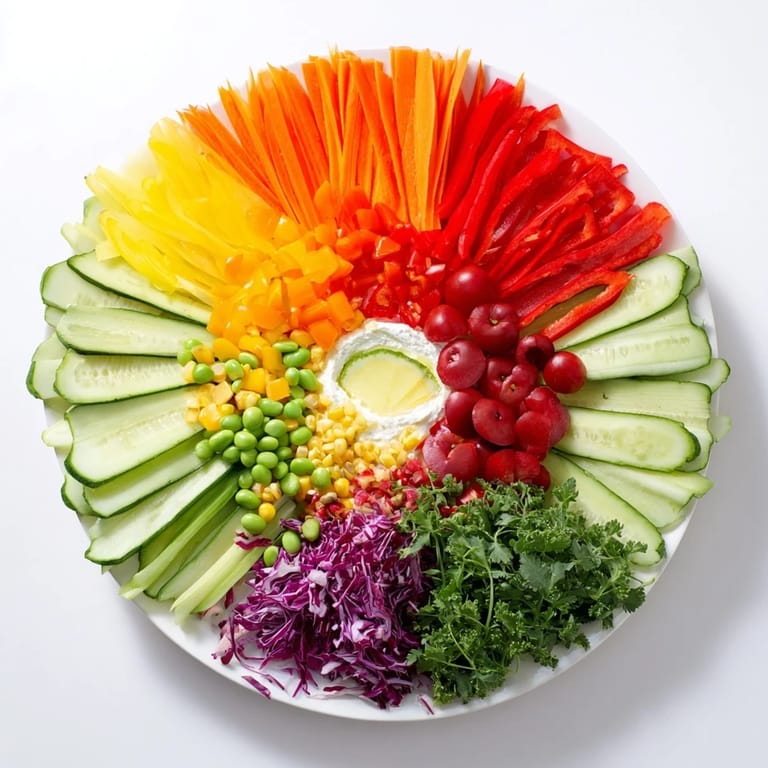
- Combine ricotta, olive oil, lemon zest, salt, and pepper in a small bowl, then spread it into a small, creamy circle in the center of your serving platter. This white base is your canvas, so take a moment to make it look intentional and beautiful.
- Organize your colors:
- Place each ingredient group in its own small bowl so you're not scrambling to locate the green layer while holding the red. This step feels simple but saves you from frustrated rummaging mid-assembly.
- Fan out your spectrum:
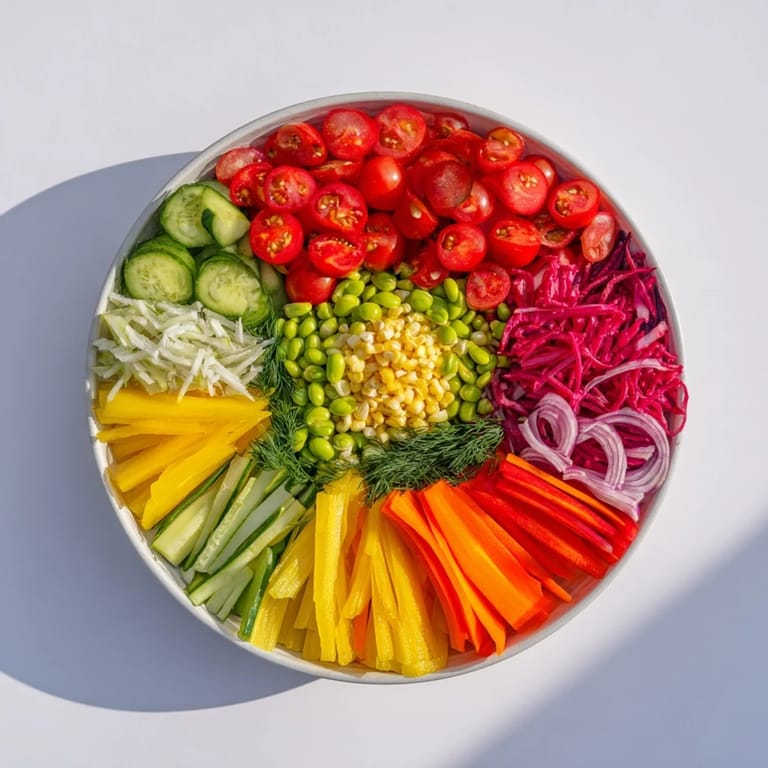
- Starting with red ingredients closest to the ricotta, layer each color group outward in stripes—red, orange, yellow, green, blue, violet—like a rainbow radiating from a bright center. Use your hands or the back of a spoon to keep the colors distinct and neat.
- Make the dressing:
- Whisk olive oil, lemon juice, honey, salt, and pepper together in a small bowl until emulsified. The honey dissolves into the lemon juice and mellows everything out beautifully.
- Finish with intention:
- Drizzle the dressing lightly over the salad just before serving, or pass it on the side so people can control how much they use. Garnish with fresh herbs and a final grind of black pepper, then serve while everything is still crisp and vibrant.
 Save to Pinterest
 What started as a visual experiment became one of those dishes that reminds me that food speaks a language beyond taste. There's something almost meditative about arranging each color intentionally, knowing that the care you put into the plating is part of what makes it special.
The Art of Color and Flavor Pairing
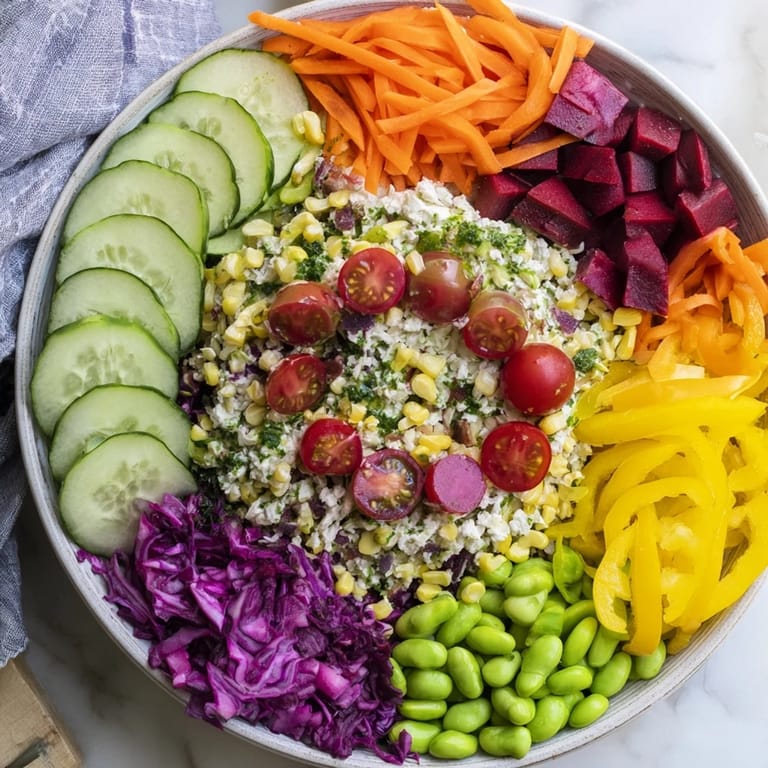
Each stripe in this salad wasn't chosen for color alone—every layer also represents a different flavor profile and texture that works in harmony. The red tomatoes bring acidity and juiciness, the orange peppers add sweetness and crunch, the yellows bring earthiness and starch, the greens offer freshness and bitterness, and the blues and violets round everything out with tartness and peppery notes. When you eat across all the colors in one forkful, you're experiencing a carefully balanced composition, not just a pretty pile of vegetables.
Making It Your Own
This recipe is an outline, not a rulebook. If you don't have edamame, use green peas or sliced green beans. If blueberries aren't in season, blackberries work just as well for the blue layer. The magic isn't in rigid perfection—it's in the intention behind every choice. I've seen people add roasted chickpeas for extra protein, scatter pomegranate seeds through the reds, or use vibrant microgreens to deepen the green section. Your kitchen, your preferences, your prism.
From Kitchen to Table
This salad thrives in moments when presentation matters as much as nourishment—dinner parties, potlucks, celebrations, or simply a Tuesday night when you want to remind yourself that eating well can also be eating beautifully. The ricotta base keeps it substantial enough to serve as a light main course, though it also pairs beautifully alongside grilled fish or roasted chicken for those who want something heartier.
- Make-ahead tip: Prep and arrange everything on the platter a few hours ahead, then cover it loosely with plastic wrap and refrigerate until guests arrive.
- Dressing flexibility: If you prefer something richer, whisk a tiny bit of Dijon mustard or whole-grain mustard into the dressing for depth.
- Wine pairing: A crisp Sauvignon Blanc or light Pinot Grigio echoes the brightness of the lemon and lets all those delicate flavors shine without competing.
 Save to Pinterest
 This salad is proof that sometimes the most memorable dishes come from the simplest moments—a play of light, a flash of inspiration, and the willingness to spend twenty-five minutes arranging vegetables like they're art. Serve it, watch people smile, and know that you've done something right.
Recipe Q&A
- → What can be used as an alternative to ricotta in the base?
Greek yogurt provides a lighter option, and vegan cream cheese can be used for a dairy-free alternative while maintaining a creamy texture.
- → How should the colorful layers be arranged?
The vegetables and fruits are fanned out from the central white base in the order of red, orange, yellow, green, blue, and violet to create a visually appealing spectrum.
- → Can this dish be prepared ahead of time?
It’s best served fresh to keep the vegetables crisp, but ingredients can be prepped in advance and arranged just before serving.
- → What dressing complements this salad?
A simple dressing made from olive oil, lemon juice, honey (or agave), salt, and pepper enhances the fresh flavors without overpowering the layers.
- → Are there optional additions to add texture?
Toasted nuts or seeds like pumpkin, sunflower, or pine nuts can be sprinkled on top for extra crunch and flavor.