 Save to Pinterest
 I discovered this dish during a foggy autumn morning in Oregon, wandering through a farmer's market where an elderly vendor was selling the most magnificent wild mushrooms I'd ever seen. She told me about the forest floor near her cabin, and I became obsessed with recreating that feeling on a plate. That conversation sparked something in me, and I spent the next season learning to cook with intention, layer by layer, until I could capture the essence of that Pacific Northwest woodland in every bite.
I'll never forget serving this to my partner on our anniversary, plating it at the last possible second so everything was still at perfect room temperature. They looked at it, then at me, and said 'you made this?' That simple moment of pride changed how I approached cooking forever. Now every time I make it, I think about that question and smile.
Ingredients
- Mixed wild mushrooms (chanterelle, shiitake, oyster), 200g: These three varieties give you earthy complexity that regular button mushrooms simply can't match. Chanterelles bring a subtle sweetness, shiitakes add umami depth, and oysters give you a delicate texture. Buy them from farmers' markets if you can find them, as they seem to carry more of that woodland flavor.
- Olive oil and unsalted butter, 1 tbsp each: The combination matters more than you'd think. The butter gives richness while the olive oil prevents the butter from burning and adds its own fruity note.
- Garlic clove, 1 minced: Just one clove, because you want it as a whisper, not a shout. More garlic will overpower the delicate mushroom flavors you've worked to develop.
- Salt and freshly ground black pepper: Always taste as you go. The mushrooms will release water as they cook, so you'll need to season in stages.
- Toasted hazelnuts and walnuts, 50g and 30g: Toast them yourself if possible. The aroma that fills your kitchen tells you exactly when they're ready. Store-bought toasted nuts work, but they lose something by the time they reach you.
- Fresh blackberries and blueberries, 80g and 60g: Choose berries that are firm but not hard. They should roll slightly when you press them gently. The tartness of blackberries against the sweetness of blueberries creates balance on the palate.
- Fresh herbs (parsley, dill, chervil, chives), 20g-1 tbsp total: This is your herb moss, and it's the magic. Use what you can find fresh. These herbs together create that forest floor effect that makes the dish sing.
- Lemon zest, 1 small lemon: Zest it fresh just before mixing the herbs. Bottled zest loses the brightness that makes this dish come alive.
- Edible flowers and microgreens, optional: These aren't garnish for decoration. They complete the woodland story and add unexpected flavor notes.
Tired of Takeout? 🥡
Get 10 meals you can make faster than delivery arrives. Seriously.
One email. No spam. Unsubscribe anytime.
Instructions
- Clean and prepare your mushrooms with purpose:
- Use a damp paper towel to gently wipe each mushroom rather than rinsing them. Mushrooms are like sponges with water, and you want them to brown, not steam. Slice them into pieces about the size of a coin, keeping them relatively uniform so they cook at the same speed.
- Sear the mushrooms until they turn golden:
- Heat your skillet over medium heat and let it warm for a full minute. Add the olive oil and butter together, and listen for that gentle sizzle. Add your minced garlic and let it perfume the oil for just 30 seconds before the mushrooms go in. You'll know the pan is right when the garlic smells sweet, not sharp. Add mushrooms and resist the urge to stir constantly. Let them sit for a minute or two so they develop color and develop that nutty flavor. Stir occasionally until they're golden brown and any liquid they've released has mostly evaporated, about 6 to 8 minutes. Season with salt and pepper near the end, then transfer to a plate and let them cool slightly.
- Create your herb moss with a light hand:
- Finely chop all your fresh herbs on a cutting board, gathering them into a small pile as you go. In a small bowl, toss the chopped herbs with olive oil, fresh lemon zest, and just a pinch of flaky sea salt. Mix gently until the herbs begin to clump slightly and glisten with oil. The texture should feel alive and somehow mossy.
- Toast nuts until your kitchen smells like autumn:
- Spread your nuts on a baking tray in a single layer and slide them into a 180°C oven. Set a timer for 8 to 10 minutes, but start checking around the 7-minute mark. You'll smell when they're ready before you see it. They should be golden and fragrant. Let them cool on the tray for a few minutes, then roughly chop them. There's no need for precision here. The imperfect shapes look more natural.
- Arrange your woodland scene:
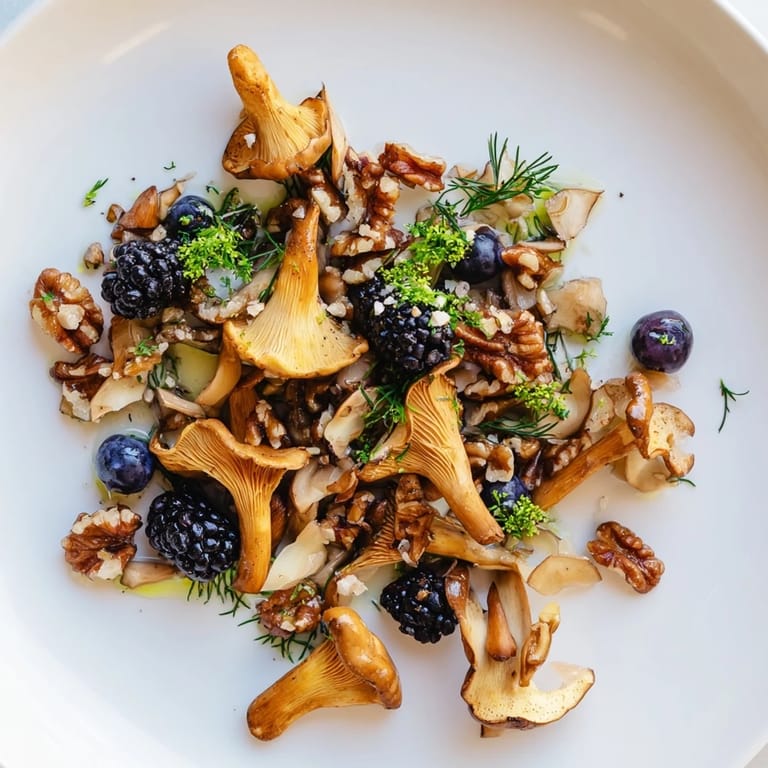
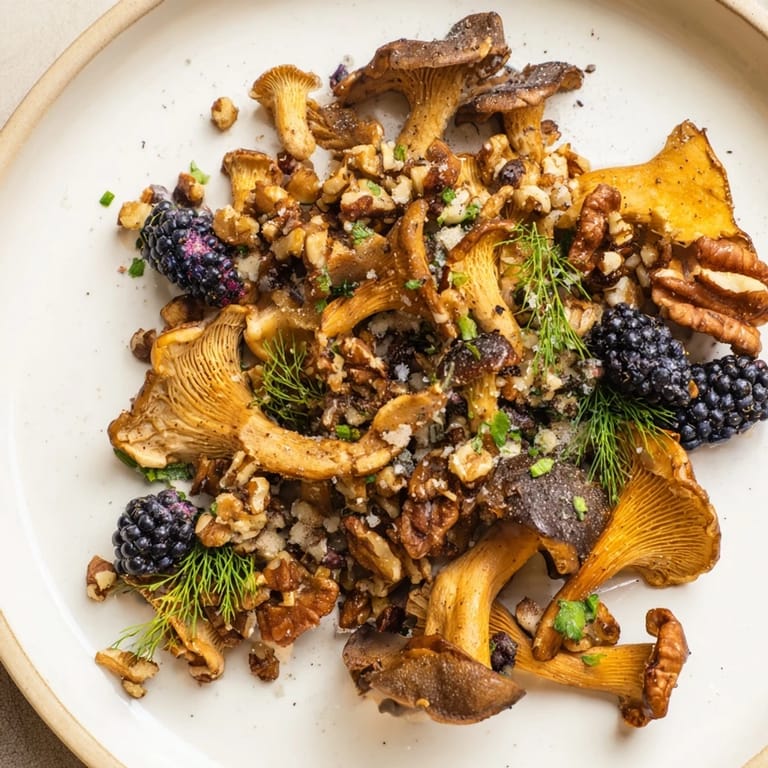
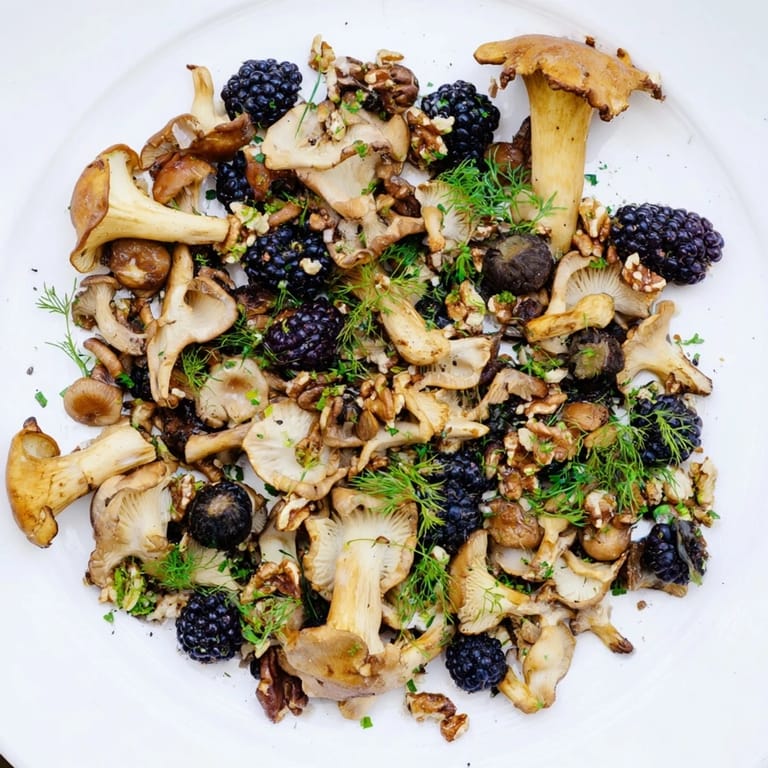
- This is where cooking becomes art. On your serving platter or individual plates, scatter clusters of mushrooms, nuts, and berries in loose, organic groupings. Don't arrange them in lines or patterns. Think about how nature scatters things. Generously spoon your herb moss between and around these clusters, letting it pool in some places and scatter in others. The herbs should feel abundant, like they're taking over the plate.
- Finish with intention:
- If using edible flowers, scatter them sparingly among the clusters. A few microgreens or baby sorrel leaves complete the woodland effect. Serve at room temperature, ideally right after plating so everything maintains its fresh, just-assembled quality.
 Save to Pinterest
 I made this dish for my sister the day she got her dream job, and I remember her crying over a plate of mushrooms and herbs. Later she told me it wasn't the flavors that moved her, though they were beautiful. It was the care I'd taken to make something that looked like the natural world we both loved. Food became more than sustenance that afternoon.
The Secret of Sourcing
Finding the right ingredients elevates this dish from good to unforgettable. Visit your local farmers' market in autumn if you can, when wild mushrooms are at their peak. The vendors there often have stories about where their mushrooms came from, and those stories somehow make the food taste better. If farmers' markets aren't available to you, quality grocery store mushrooms work perfectly fine. What matters more is that you're intentional about your choices. Buy berries that are in season where you live. Toasted nuts from specialty shops often have more character than supermarket versions, but honestly, any toasted nut you can find is better than raw.
Building Flavor Through Technique
This dish teaches a valuable lesson about letting ingredients speak for themselves. Rather than adding heavy sauces or complex techniques, we cook the mushrooms just until they're golden, toast the nuts until fragrant, and keep the herbs fresh and vibrant. Each component gets only the technique it needs, nothing more. This restraint is what makes the dish sing. It's the difference between cooking at someone and cooking for someone.
Variations and Inspiration
Once you've made this recipe a few times and it feels natural to you, start playing. This is where the real magic happens. Try adding roasted root vegetables like beets or carrots cut into small pieces for earthiness. Pickled shallots add a bright acidity that's stunning. Some people add a drizzle of truffle oil at the very end, though I prefer to keep it pure. The base stays the same, but the variations reflect where you are and what you love. You could even add grilled or raw vegetable ribbons, or swap in different seasonal berries. The important thing is that it still feels like you're looking at the forest floor.
- Pecans or pine nuts work beautifully if you can't find hazelnuts and walnuts, bringing their own toasted richness
- For a vegan version, simply omit the butter or use a plant-based alternative that browns well
- A crisp dry cider or light Pinot Noir pairs perfectly, echoing the wine-like flavors in the mushrooms and earthiness of the nuts
 Save to Pinterest
 This dish reminds me why I cook. It takes simple things from the earth and arranges them so they tell a story. Every time you make it, you're creating something beautiful that nourishes both body and soul. That's the real recipe.
Recipe Q&A
- → What types of mushrooms are best for this dish?
Mixed wild mushrooms such as chanterelle, shiitake, and oyster work well, providing varied textures and deep earthy flavors.
- → Can the nuts be substituted?
Yes, pecans or pine nuts can replace hazelnuts and walnuts while maintaining the dish's earthy crunch.
- → How is the herb moss prepared?
Finely chop fresh parsley, dill, chervil or tarragon, and chives, then toss with olive oil, lemon zest, and a pinch of flaky sea salt until slightly clumped.
- → Is this dish suitable for vegans?
Omit the butter or use a plant-based alternative to create a vegan-friendly version without affecting flavor.
- → What beverages pair well with this dish?
Light Pinot Noir or a crisp dry cider complements the earthy and fruity elements harmoniously.
- → How should the nuts be prepared?
Toast hazelnuts and walnuts in the oven at 180°C (350°F) for 8–10 minutes until golden and fragrant, then roughly chop.