 Save to Pinterest
 The first time I tasted real New England clam chowder wasn't in a restaurant—it was ladled into a chipped ceramic bowl by a fisherman's wife who barely knew me, offered on a foggy October morning when my car broke down near her driveway. That bowl changed what I thought soup could be: it wasn't delicate or refined, but deeply honest, with chunks of potato that still held their shape and clams that tasted like the ocean itself. I've been chasing that moment ever since, and this recipe is as close as I've gotten.
I made this for my partner during our first winter in an old house with a terrible kitchen, and somehow the broth bubbling away made the space feel less lonely and more like a home. He stood at the stove while I chopped vegetables, asking questions about why we were steaming the clams first, and by the time we sat down, the whole apartment smelled like salt and butter and possibility. That bowl was the moment I knew we'd made the right decision about that house.
Ingredients
- Fresh littleneck clams (2 lbs): These are sturdy enough to handle the cooking process and release enough briny liquid to build the foundation of the chowder, so don't skip getting them fresh if you can.
- Clam juice (1 cup): This is your backup plan if your clams don't give you enough liquid, and it keeps the flavor consistent no matter what.
- Russet potatoes (2 medium): They break down just enough to thicken the broth while keeping their shape, which matters more than people realize.
- Yellow onion, celery, carrot (one each, finely chopped): This is the holy trinity that makes the base taste complete, so don't rush the chopping.
- Garlic (2 cloves, minced): A small amount adds depth without overpowering the clam flavor.
- Heavy cream and whole milk (1½ cups and 1 cup): The combination gives you richness without being overwhelming, and the milk keeps it from feeling too heavy.
- Butter (2 tbsp) and bacon (2 slices): These aren't garnishes—they're the backbone of the savory flavor that makes people close their eyes when they taste it.
- All-purpose flour (2 tbsp): This creates the roux that thickens everything without making it feel starchy.
- Bay leaf and dried thyme (1 and ½ tsp): These quiet aromatics anchor the whole pot, reminding you that this is a dish with roots.
- Salt, pepper, and fresh parsley: Season carefully as you go since the clam juice already brings its own saltiness.
Tired of Takeout? 🥡
Get 10 meals you can make faster than delivery arrives. Seriously.
One email. No spam. Unsubscribe anytime.
Instructions
- Prepare the clams:
- Rinse them under cold water and scrub the shells gently—you're removing sand, not their personality. In a large pot, cover them with water and bring everything to a rolling boil, then cover and let them steam for about 5 to 7 minutes until they crack open like they're ready to tell you a secret.
- Extract the meat:
- Once they cool enough to handle, pry them open and chop the clams into rough pieces, keeping all that liquid they released in the bottom of the pot. Strain that cooking liquid through a fine sieve so it's clean and ready to go into your chowder.
- Render the bacon:
- In your Dutch oven, cook the diced bacon over medium heat until it's genuinely crisp and the kitchen smells impossibly good. Scoop it out with a slotted spoon, leaving behind all that rendered fat because that's where the flavor lives.
- Build the base:
- Melt butter into that bacon fat, then add your chopped onion, celery, carrot, and garlic, stirring gently until everything softens and becomes almost translucent. This should take about 5 minutes, and you'll know it's right when the kitchen smells like a proper seafood kitchen instead of raw vegetables.
- Make the roux:
- Sprinkle flour over the vegetables and stir constantly for about a minute—this cooks out the raw flour taste and creates the base for thickening. You're looking for a paste that smells toasty, not raw.
- Add the liquid:
- Slowly pour in your reserved clam cooking liquid and the bottled clam juice, stirring steadily to prevent lumps from forming. Scrape the bottom of the pot as you go, bringing up all those browned bits that taste like pure umami.
- Cook the potatoes:
- Add your diced potatoes along with the bay leaf and thyme, then bring everything to a gentle simmer. Let them cook for 10 to 12 minutes until they're fork-tender but not falling apart into the broth.
- Finish with the clams and cream:
- Reduce the heat to low and stir in your chopped clams, bacon, cream, and milk, moving slowly and gently so the chowder heats through without boiling. This should take 5 to 10 minutes, and you want to stir occasionally so everything stays integrated.
- Season and serve:
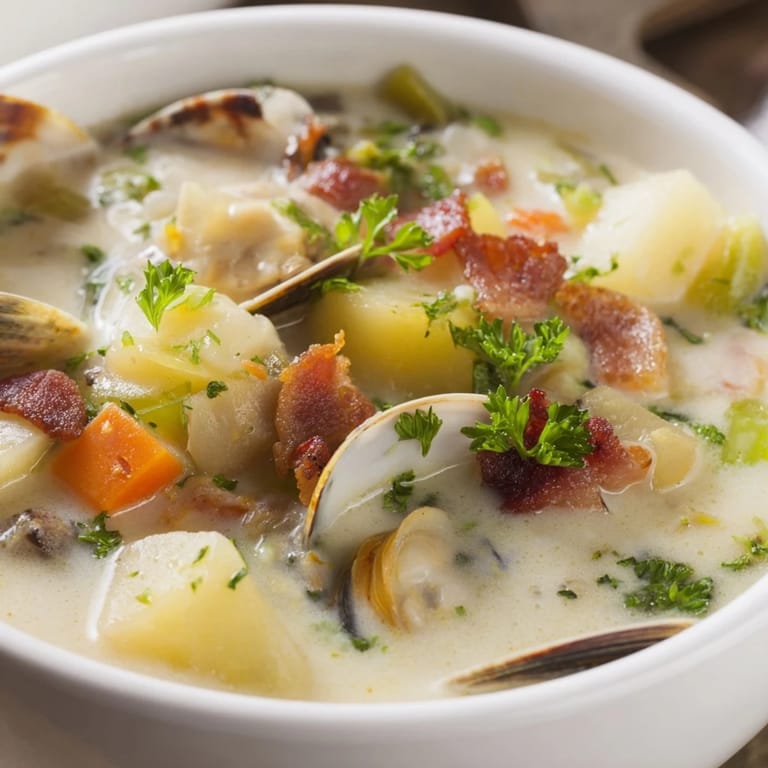
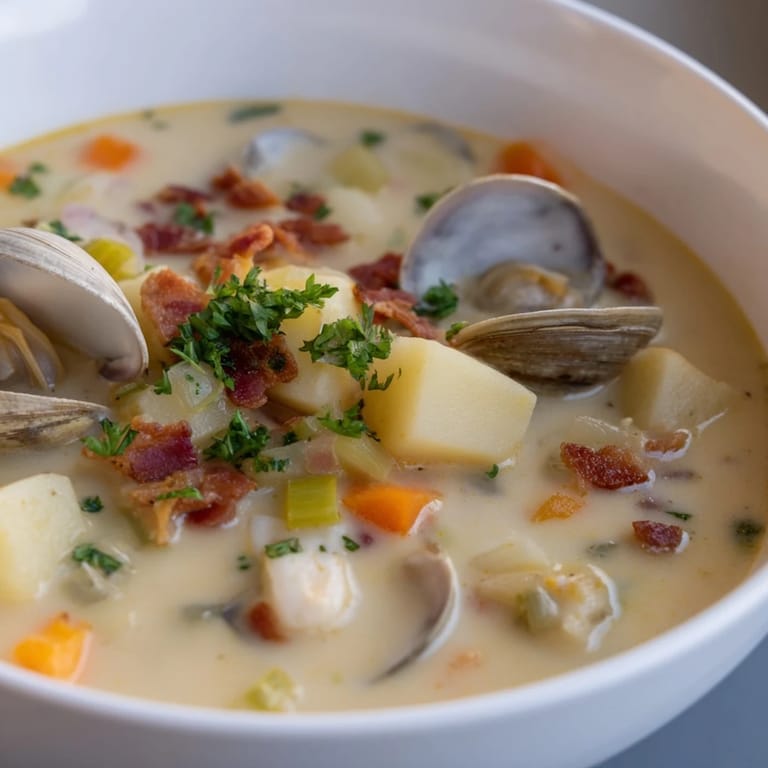
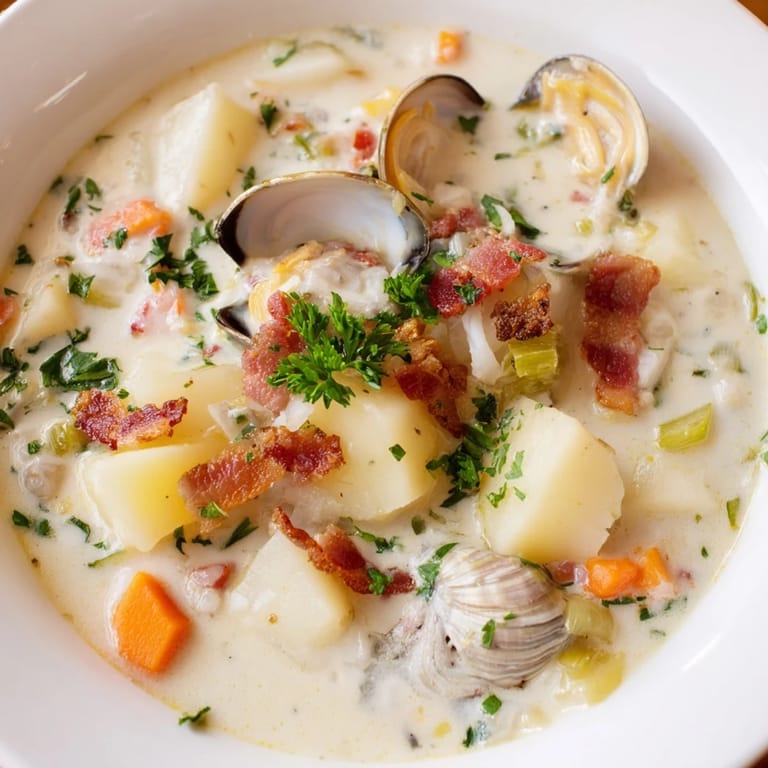
- Taste it, then add salt and pepper bit by bit until it tastes like the ocean decided to become creamy and warm. Remove the bay leaf, ladle into bowls, and top with fresh parsley and maybe some oyster crackers if you're feeling traditional.
 Save to Pinterest
 There's a moment, about halfway through making this chowder, when everything looks a little rough—the roux is gloppy, the broth looks thin, and you wonder if you've made a mistake. Then you add the cream, and it transforms into something elegant and whole, and that's when I'm reminded that some of the best things in life just need patience and faith. This soup has taught me more about cooking than almost anything else I've made.
The Story of New England Clam Chowder
This isn't a soup that apologizes or tries to be something it's not—it's the food of working boats and working people, of early mornings on the water and coming home to something warm. New England cooks perfected this centuries ago because they had clams, potatoes, cream, and the good sense not to overcomplicate things. When you make it, you're not just cooking dinner; you're connecting to a kitchen tradition that's been feeding people honestly for generations.
How to Make It Thicker or Lighter
If you like your chowder thick enough to stand a spoon in, grab a potato masher and gently crush a few of the cooked potatoes right in the pot—they'll release their starch and thicken everything naturally without making it feel floury or heavy. On the flip side, if you're looking for something a little lighter, swap the cream and milk for half-and-half, or even go three-quarters milk and one-quarter cream, and it'll taste almost as rich but feel a bit more elegant on the palate.
Flavoring and Pairing Suggestions
The beauty of this chowder is that it's a blank canvas for your own kitchen personality—I've added a dash of hot sauce for brightness, a sprinkle of smoked paprika for depth, or even a pinch of Old Bay when I wanted to lean into the coastal vibe. A crisp white wine like Sauvignon Blanc cuts through the richness perfectly, and if you're serving it for lunch, a simple green salad with lemon dressing alongside makes everything feel balanced and complete.
- Try a tiny splash of sherry or white wine at the very end for complexity.
- Fresh thyme leaves scattered on top right before serving taste so much better than dried.
- Make it the day before and reheat it gently—the flavors get even deeper as it sits.
 Save to Pinterest
 This chowder is the kind of food that reminds you why cooking matters—not for Instagram or perfection, but because it brings people together in a way that plain nourishment never could. Make it once, and it becomes your own.
Recipe Q&A
- → How do I prepare fresh littleneck clams for this dish?
Rinse clams thoroughly under cold water, scrubbing any debris from shells. Steam in boiling water until shells open, then remove clam meat and reserve cooking liquid for the chowder base.
- → Can I make the chowder thicker?
Yes, mashing a few cooked potatoes into the broth before adding cream will create a thicker, heartier texture.
- → What is the purpose of the roux in the recipe?
The roux, made from butter and flour, thickens the chowder and creates a smooth, velvety consistency.
- → Can I substitute heavy cream and milk in the recipe?
For a lighter version, half-and-half can replace heavy cream and milk, maintaining creaminess with fewer calories.
- → What garnishes complement this chowder best?
Fresh parsley adds color and freshness, while oyster crackers provide a classic crunchy accompaniment.
- → Is it necessary to discard clams that do not open?
Yes, clams that remain closed after steaming should be discarded as they might be unsafe to eat.