 Save to Pinterest
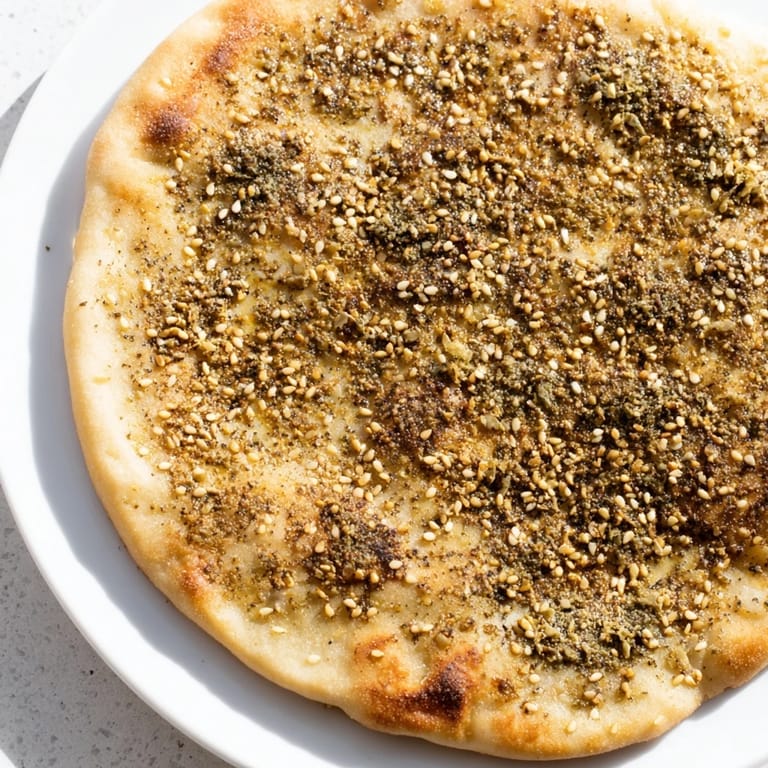
 My neighbor Fatima brought a warm zaatar bread to my door one morning, and the smell alone made me understand why this simple Levantine flatbread has traveled across continents. She laughed at how quickly I devoured it, then handed me her family recipe—five ingredients for the dough, three for the topping, and somehow everything I needed to feel like I was standing in her kitchen. Now when I make it, that golden-brown crust with its herbal, nutty surface takes me right back to that conversation in the hallway.
I once made this for a dinner party where everyone was running late, and I panicked thinking the dough would overproof while we waited. Instead, it gave me a full ninety minutes to set the table and actually feel calm before guests arrived—a lesson in how this bread works with your schedule, not against it. When they walked in and smelled that zaatar toasting in the oven, three people asked for the recipe before even sitting down.
Ingredients
- All-purpose flour (2 cups): The foundation that should feel like soft sand between your fingers; I learned to measure by spooning and leveling rather than scooping, which changed everything about my bread's texture.
- Instant dry yeast (1 teaspoon): This is the gentle awakening for your dough—make sure it's fresh and store it in a cool place, or your bread will stubbornly refuse to rise.
- Sugar (1 teaspoon): A tiny sweetener for the yeast that seems insignificant until you forget it and the dough feels sluggish and sad.
- Salt (3/4 teaspoon): Essential for flavor, but too much mutes the yeast; I learned this by nearly killing a batch and tasting the bitter regret.
- Olive oil (2 tablespoons for dough, plus 1/3 cup for topping): Use a good quality extra virgin for the topping—it's where the flavor lives and where shortcuts show immediately.
- Warm water (2/3 cup): Warm like a bath for your hand, not hot like a shower; temperature matters more than you'd think.
- Zaatar spice blend (1/4 cup): The soul of this bread, a herbaceous mix of thyme, sumac, and sesame that smells like memory itself.
- Toasted sesame seeds (2 tablespoons): Already toasted so they bring crunch and nuttiness; raw ones disappear into blandness.
Tired of Takeout? 🥡
Get 10 meals you can make faster than delivery arrives. Seriously.
One email. No spam. Unsubscribe anytime.
Instructions
- Mix your dry base:
- In a large bowl, whisk together flour, yeast, sugar, and salt, letting your hands do the work so you can feel when everything's evenly distributed. This dull moment is actually where consistency begins.
- Bring it together:
- Drizzle in olive oil and slowly pour warm water while stirring with one hand, watching the shaggy mess gradually surrender into dough. Stop when it pulls away from the bowl sides—you'll feel the moment.
- Knead it smooth:
- On a lightly floured surface, push the dough away from you with the heel of your hand, fold it back, turn it slightly, and repeat for five to seven minutes until it's silky and springs back when you poke it. Your shoulders will know when you're done.
- Let it breathe:
- Oil a bowl lightly, nestle the dough inside, cover with a damp cloth, and place it somewhere warm—I use a turned-off oven with the light on. One hour, and it should double in volume like magic you created yourself.
- Shape with confidence:
- Preheat the oven to 220°C (425°F) and line two baking sheets with parchment paper. Divide dough into four pieces, roll each into a ball, then gently flatten with your fingers into a round about six to seven inches across—imperfect is better because it shows character.
- Create the zaatar paste:
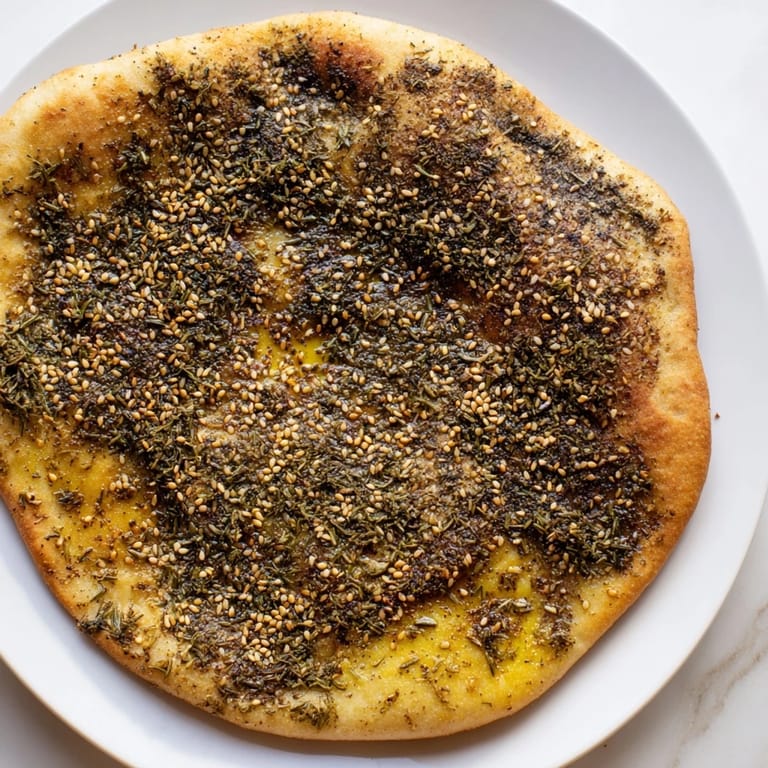
- In a small bowl, stir together zaatar, toasted sesame seeds, and extra virgin olive oil until it becomes a thick, fragrant spread. Smell it deeply; this is where the magic happens.
- Top with intention:
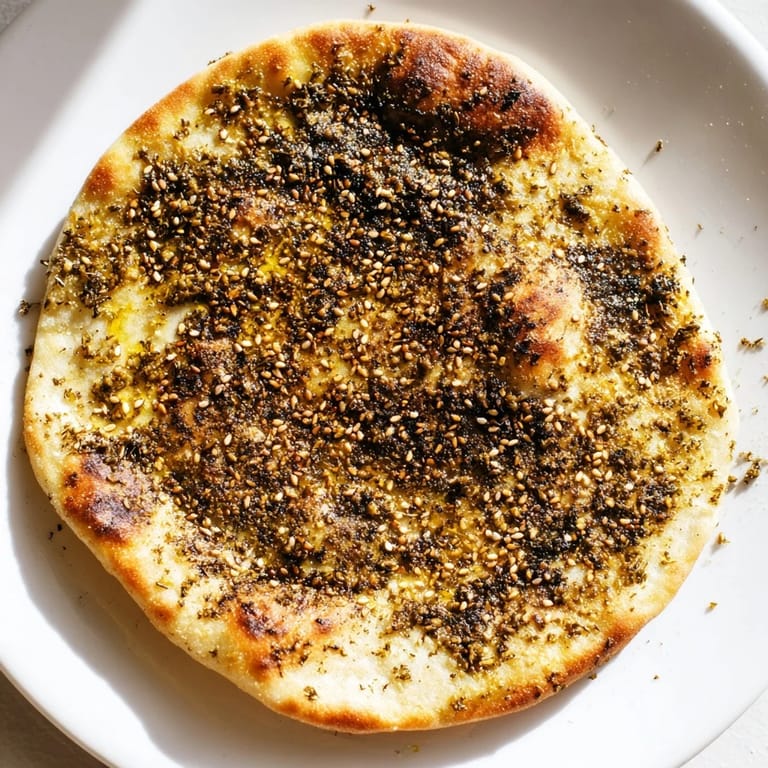
- Spread the zaatar mixture evenly over each dough round, leaving a small naked border so the edges can brown without burning. Use the back of a spoon and press gently so the topping adheres.
- Bake until golden:
- Slide the sheets into the oven for twelve to fifteen minutes, watching as the edges deepen to golden brown and the kitchen fills with an aroma that makes you forget you were ever waiting. They're done when you can't resist any longer.
- Finish and serve:
- Transfer to a wire rack or serve directly warm, still steaming. Pair with labneh, fresh olives, or raw vegetables, and watch people's faces change.
 Save to Pinterest
 There was an afternoon when my daughter came home and found these cooling on the counter, and instead of going to her room she sat at the kitchen table eating one slowly, asking about every ingredient like she'd never seen me cook before. That small moment—her curiosity, the bread still warm—reminded me that feeding people isn't about perfection, it's about showing up with something made by your own hands.
The Rising Window
That first hour when the dough rises is a gift disguised as waiting time. I've stopped fussing over the dough during this phase and instead use it to prep my topping, set the table, or simply sit with a cup of tea. The dough doesn't need you hovering—it needs warmth and patience, two things I've learned taste better when you're calm.
Texture and Temperature
I discovered by accident that letting the shaped dough rest for ten minutes before topping makes the bread fluffier and gives you time to get the oven truly hot. Warm bread is transcendent, but room temperature zaatar bread is equally good the next day, pulled straight from a paper bag and eaten with your fingers like an adult should be allowed to do.
Variations and Personal Touches
Once you understand this bread, it becomes a canvas for small experiments. Some days I add a pinch of chili flakes to the topping for a gentle heat, other times I sprinkle sumac alone to let that lemony brightness shine. The recipe is forgiving enough that your failures taste good and your successes feel like small victories.
- A light hand with the chili flakes transforms this from mild to memorable without overwhelming the delicate zaatar herbs.
- If your zaatar blend is heavy on sesame already, reduce the extra sesame seeds to avoid it becoming too dense or nutty.
- Serve warm with hummus, baba ganoush, or soft cheese to let the bread play its supporting role perfectly.
 Save to Pinterest
 This bread is the kind that makes you feel like a baker without requiring you to be one. Every time it emerges from the oven golden and fragrant, you'll remember why simple food made from whole ingredients never goes out of style.
Recipe Q&A
- → What is zaatar and how does it affect the bread?
Zaatar is a savory Middle Eastern spice blend combining herbs like thyme, sumac, and sesame seeds. It adds a fragrant, tangy, and nutty flavor to the bread, enhancing its aromatic profile.
- → Can I substitute ingredients in the dough?
You can swap all-purpose flour for whole wheat or a blend, but it may affect the texture and rise of the dough slightly.
- → How do I achieve a fluffier crust?
Allowing the shaped dough to rest for 10 minutes before adding the topping helps develop a lighter, airier crumb.
- → What are good accompaniments for this flatbread?
It pairs well with labneh, hummus, baba ganoush, olives, or fresh vegetables, complementing a variety of dishes.
- → Is this bread suitable for a vegan diet?
Yes, it contains no animal-derived ingredients, making it suitable for vegan and dairy-free diets.
- → How should the bread be stored?
Store cooled flatbreads in an airtight container at room temperature for up to two days or freeze for longer freshness.