 Save to Pinterest
 The first time I made labneh, I wasn't even trying to. I'd left a container of yogurt in the back of my fridge so long that it had separated into this deliciously tangy layer on top and cloudy whey below, and instead of throwing it out, I thought, why not see what happens? That accident taught me something that took me years to fully appreciate: sometimes the best foods in the world are born from patience and simple neglect. When I finally learned the proper way to strain yogurt with cheesecloth, I realized I'd been stumbling toward one of the Levantine kitchen's most elegant secrets.
I served labneh for the first time at a small dinner party, and I watched my friend tear off a piece of warm pita, scoop up a generous dollop, and close her eyes for a moment. She asked if I'd bought it from somewhere special, and when I told her I'd made it by straining yogurt for a day, she laughed like I'd told her a magic trick. That look on her face—genuine delight mixed with disbelief that something so luxurious came from patience rather than complexity—is why I keep making it.
Ingredients
- Full-fat plain yogurt (1 kg / 4 cups): The foundation of everything; Greek yogurt works beautifully, but honestly, any thick yogurt will reward your patience with creaminess.
- Fine sea salt (½ tsp): Not just seasoning—it wakes up the tang and draws out subtle flavors that live dormant in plain yogurt.
- Extra-virgin olive oil (2 tbsp): The final flourish that transforms labneh from simple to something you'd serve to people you want to impress.
- Dried mint or zaatar (1 tsp, optional): A whisper of these brings the whole thing into focus, adding complexity that feels intentional.
- Aleppo pepper or sumac (pinch, optional): These finish it with a gentle heat or brightness that makes people ask what you did differently.
Tired of Takeout? 🥡
Get 10 meals you can make faster than delivery arrives. Seriously.
One email. No spam. Unsubscribe anytime.
Instructions
- Salt your yogurt:
- Stir the salt into the yogurt until completely even—this seems small, but it anchors the flavor and helps the whey separate more readily as it drains.
- Set up your strainer:
- Double-layer cheesecloth or a clean thin kitchen towel in a sieve, then nestle the sieve over a deep bowl. This setup is deceptively important; a single layer can tear, and you need that bowl to actually catch what drains out.
- Transfer and cover:
- Spoon the salted yogurt into the cloth and gather the edges to cover it gently. You're not squeezing; you're just keeping the yogurt contained while air and time do their work.
- Let time and cold do everything:
- Refrigerate and wait—twelve hours gives you something soft and spreadable, while twenty-four hours yields a firmer cheese that's closer to cream cheese. The longer it sits, the more dramatic the transformation.
- Transfer and dress:
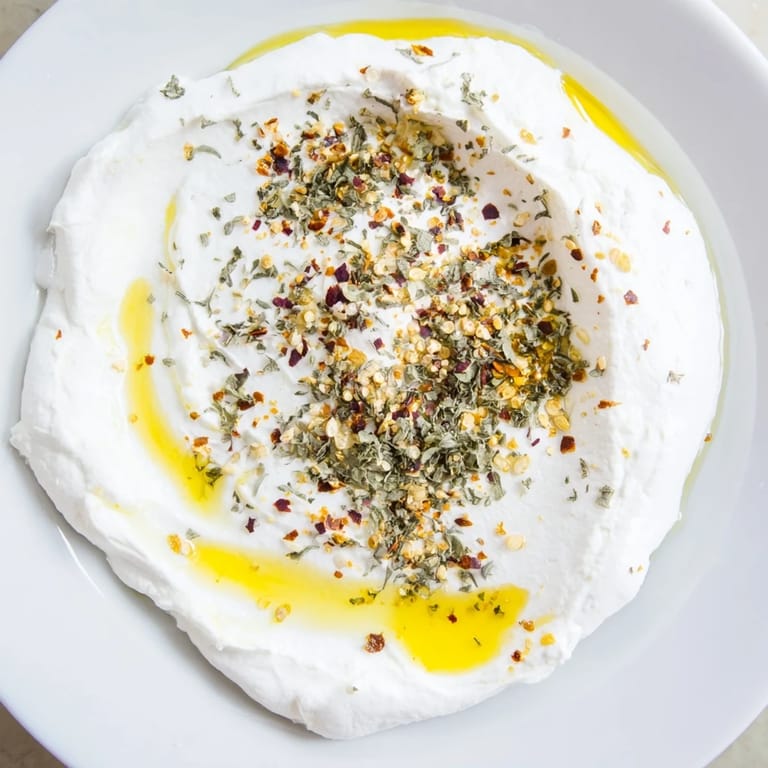
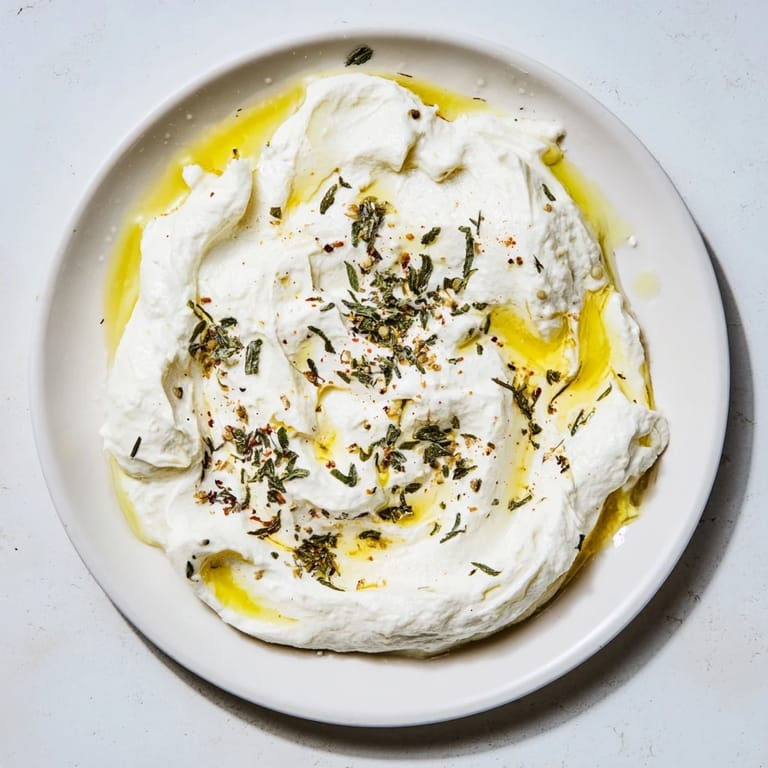
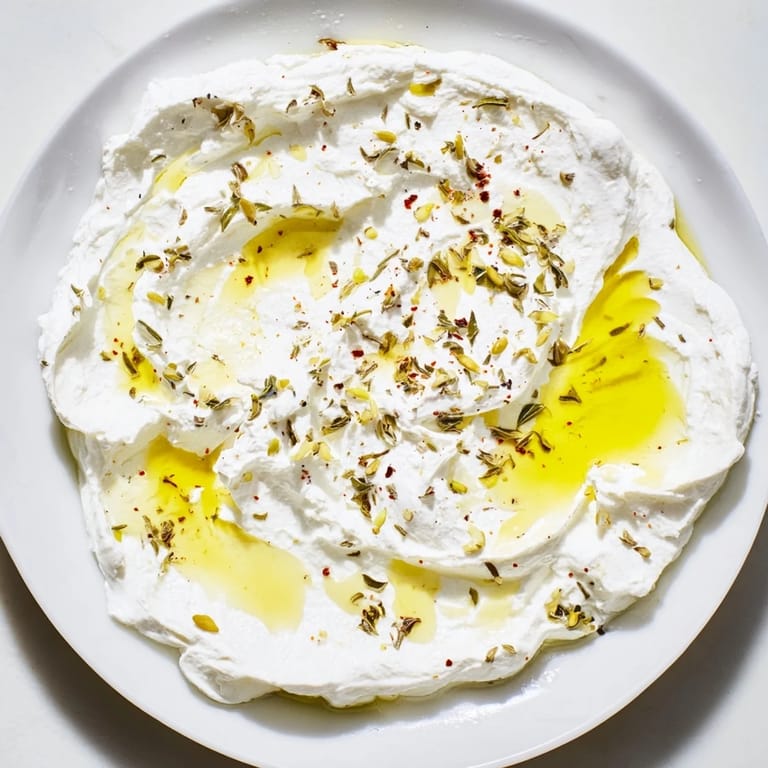
- When it's ready, scoop the labneh into a shallow serving dish and create a small well in the center with the back of a spoon. Drizzle olive oil over and around it, letting it pool slightly.
- Garnish and serve:
- Sprinkle mint, zaatar, or sumac across the top if you're using them, then bring it to the table chilled alongside warm pita and whatever raw vegetables you have on hand.
 Save to Pinterest
 There's something almost meditative about opening the fridge after a full day and seeing the yogurt transformed into something entirely different. What went in liquid and pourable comes out thick and spoonable, and the smell hits you first—tangy, clean, somehow both rich and bright at the same time. It's one of those rare moments in cooking where you do almost nothing, yet the result feels like actual alchemy.
The Art of Knowing When It's Ready
Timing labneh is less about precision and more about texture preference, which I learned by making it three times in a row and comparing. At twelve hours, it's silky and spreadable, almost like soft butter. At eighteen hours, it develops more structure and personality. By twenty-four hours, you've got something close to Greek yogurt's thicker cousin. I usually start checking around the twelve-hour mark, lifting the cloth gently and feeling the weight of the yogurt—when it's almost gelatinous but still holds a slight wobble, that's when I know it's close. The whey below tells a story too; if it's still flowing steadily, give it more time.
Why Olive Oil Is Not Optional
I made labneh once without the olive oil topping, thinking it was purely decorative, and served it to a friend who said it tasted flat. I pulled out a bottle of good olive oil and drizzled it over a fresh batch, and suddenly everything clicked—the oil doesn't just add richness, it brings the creaminess forward and mellows the tang in the most elegant way. A good olive oil is doing actual flavor work here, not just sitting on top looking pretty. Now I see the oil less as garnish and more as a crucial ingredient that bridges yogurt's sharpness with its buttery side.
Creative Ways to Serve and Store Labneh
Labneh has this wonderful quality of being equally at home at breakfast, as a snack, or as part of a sprawling mezze spread. I've spooned it onto crunchy vegetables, used it as a base for shakshuka, even stirred it into soups at the last moment for sudden richness. One afternoon, I rolled strained labneh into walnut-sized balls, packed them into jars with olive oil and dried herbs, and kept them in the fridge for weeks—each one became a ready-made elegant bite. Stored in the refrigerator in an airtight container, labneh keeps for about five days, though honestly, it rarely lasts that long once people know it's there.
- Roll firm labneh into balls and preserve them in herb-infused oil for a stunning cheese you can serve straight from the jar.
- Swirl it into soups just before serving, or use it as an unexpected sandwich spread that outperforms mayo without question.
- Make extra whey and use it in baking or cooking grains for subtle tang and nutritional depth.
 Save to Pinterest
 Making labneh taught me that some of the world's greatest foods ask almost nothing of you except patience and attention. There's something deeply satisfying about transforming one simple ingredient into something entirely new, using only time and gravity as your tools.
Recipe Q&A
- → What type of yogurt is best for labneh?
Full-fat plain yogurt, preferably Greek or already strained, works best for achieving the creamy and thick consistency of labneh.
- → How long should the yogurt strain?
Strain the yogurt between 12 and 24 hours depending on preferred thickness: 12 for soft spread, 24 for firmer texture.
- → Can labneh be flavored?
Yes, it can be enhanced with garnishes like extra-virgin olive oil, dried mint, zaatar, Aleppo pepper, or sumac.
- → Is labneh suitable for vegetarians?
Yes, labneh is vegetarian and gluten-free, made simply from yogurt and salt.
- → How should labneh be stored?
Keep it refrigerated for up to 5 days in an airtight container to maintain freshness and texture.
- → Are there vegan alternatives?
Using thick plant-based yogurt can create a vegan-friendly version with a similar texture and tang.