 Save to Pinterest
 There's a particular warmth that fills a kitchen when you crack open a can of chickpeas and know exactly what's coming next—that moment before blending when the tahini catches the light and you realize you're about to make something that tastes like it took hours, even though your hands have barely moved. My first real hummus was nothing like the bright, airy clouds I'd tasted at family gatherings; it was thick and grainy until someone whispered the secret of cold water and patience. Now, whenever I make this Levantine plate, I'm transported back to that lesson, to the sound of the food processor hitting that perfect frequency where everything transforms into silk.
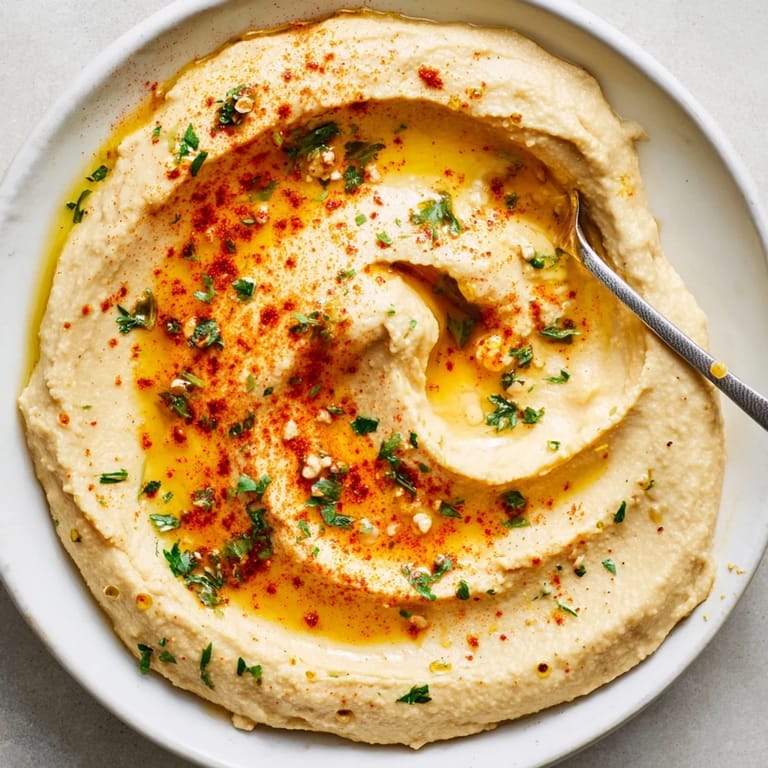
I made this for a potluck once where I arrived last, when the table was already crowded with store-bought dips and tired-looking spreads. I set down my shallow bowl with its golden olive oil pooling in that careful swirl, and within minutes it was surrounded by torn pita and curious hands. Someone asked if it was homemade, and the way their face lit up when I said yes—that's when I understood that hummus isn't just food, it's permission to slow down.
Ingredients
- Chickpeas: Use 1½ cups cooked or one drained can—the canned ones blend just as beautifully, though I've learned that rinsing them thoroughly makes a surprising difference in the final silkiness.
- Tahini: That ⅓ cup of sesame paste is the soul of hummus; stir your tahini well before measuring because the oil separates, and this affects how creamy your result becomes.
- Lemon juice: Fresh squeezed only—it's the brightness that prevents hummus from tasting one-dimensional and heavy.
- Garlic clove: One small clove minced fine, because too much garlic will overpower the delicate tahini, something I learned by accident once.
- Cold water: Start with 3 tablespoons, but keep more nearby; this is your magic ingredient for reaching that cloud-like texture.
- Cumin: ½ teaspoon ground cumin adds a whisper of warmth without announcing itself.
- Sea salt: ½ teaspoon to start, though you'll taste and adjust—fine salt dissolves better than coarse.
- Olive oil: 2 tablespoons of extra virgin for drizzling on top, where it becomes both luxury and flavor.
- Paprika or sumac: ½ teaspoon of either dusted on top adds color and a subtle tang that makes people wonder what the secret ingredient is.
- Fresh parsley: 2 tablespoons chopped, scattered across like confetti just before serving.
Tired of Takeout? 🥡
Get 10 meals you can make faster than delivery arrives. Seriously.
One email. No spam. Unsubscribe anytime.
Instructions
- Gather and measure:
- Assemble your chickpeas, tahini, lemon juice, minced garlic, water, cumin, and salt within arm's reach of your food processor—this small act of preparation means you won't have to hunt for anything once the blending begins.
- Build the foundation:
- Pour everything into your food processor and pulse a few times to combine, then let the blade run steady and true, listening to the sound shift from chunky to creamy.
- Blend with intention:
- Stop every 20 seconds or so to scrape down the sides with a spatula, pressing the mixture back toward the blade—this ensures every chickpea gets incorporated evenly and nothing hides in the corners.
- Reach for silk:
- When the hummus begins to look smooth, add water 1 tablespoon at a time, blending between additions, until you reach that signature creamy texture that falls from a spoon in ribbons.
- Taste and trust yourself:
- Taste a small spoonful and adjust with more salt or lemon juice as needed—this is where your palate becomes the recipe's final ingredient.
- Plate with care:
- Transfer to a shallow serving dish and use the back of a spoon to create a gentle swirl or well in the center, which looks beautiful and holds the olive oil like a promise.
- Finish and serve:
- Drizzle with olive oil, dust with paprika or sumac, scatter the parsley across the top, and serve immediately with warm pita, fresh vegetables, or as part of a mezze platter.
 Save to Pinterest
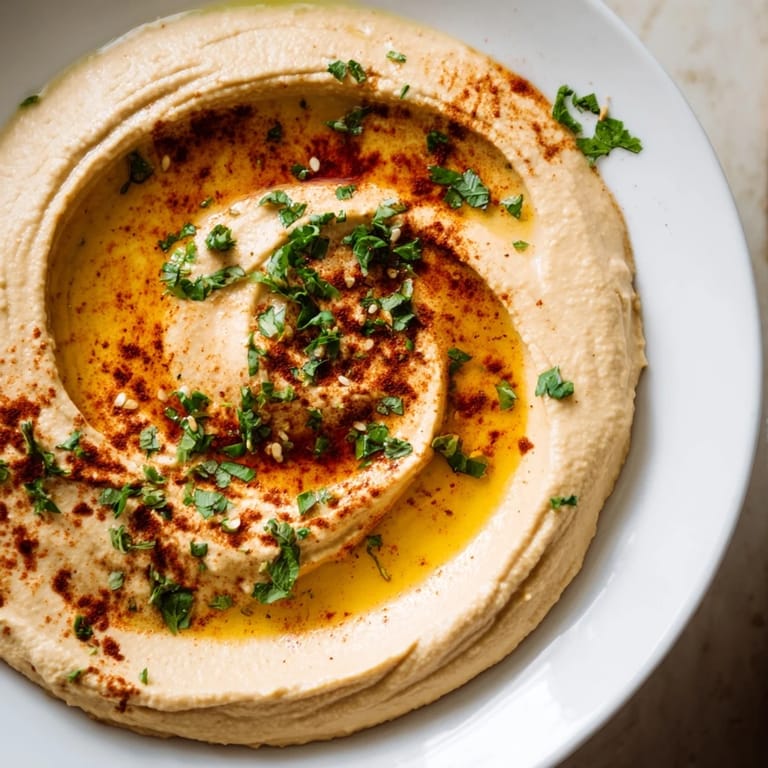
 Years ago at a family dinner, my grandmother watched me make hummus and nodded in that quiet way that means approval, then showed me how she'd always created that perfect swirl with the spoon handle, a gesture passed down through hands and kitchens I'll never fully know. That moment transformed hummus from a recipe I made into something I carry forward.
The Art of the Perfect Swirl
The shallow serving dish isn't just about presentation—it's functional. When you spread the hummus out thin and create that gentle well in the center, you're giving the olive oil a place to pool, and it actually changes how people eat the dish, swirling their pita through both the creamy hummus and that golden oil. I've noticed that a swirl signals care, signals that this came from your hands and your kitchen, not a store shelf.
Water and Texture: The Secrets Nobody Mentions
The difference between hummus that feels luxurious and hummus that feels grainy often comes down to how you introduce water. Too much at once and you've created something thin; too little and it's paste. I've found that adding it gradually while the processor runs keeps you in control, letting you watch the transformation happen, which also means you learn to recognize that exact moment when it's perfect. Some cooks add ice water instead of cold water, believing the temperature keeps everything smooth, and there's something to that philosophy.
Storing and Serving Like You Know What You're Doing
Hummus keeps beautifully in an airtight container for up to four days, though it's always best on the day it's made, when it still has that fresh brightness. If you're making it ahead for a gathering, wait to add the olive oil and garnish until just before serving—it keeps the presentation sharp and the flavors sharp too. A small detail that matters: let refrigerated hummus sit at room temperature for about 15 minutes before serving, which allows the flavors to wake up and the texture to soften slightly.
- Try adding a pinch of cayenne pepper if you want heat, or a touch of smoked paprika for depth.
- For extra-smooth hummus, peel the chickpeas after cooking or draining, using a wet cloth to rub away the thin skins—tedious but transformative.
- Serve with warm pita bread, fresh cucumber sticks, carrot sticks, or as the heart of a mezze platter where it belongs.
 Save to Pinterest
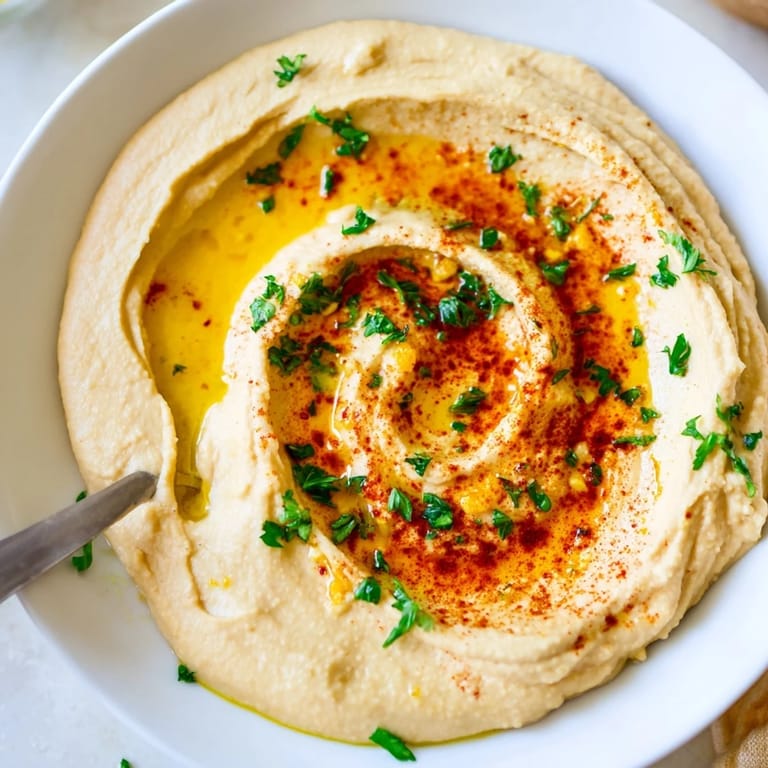
 This hummus tastes like home tastes like generosity. Serve it whenever you want to say something kind without using words.
Recipe Q&A
- → What gives the spread its creamy texture?
The creamy texture comes from blending cooked chickpeas with tahini and cold water, creating a silky, smooth consistency.
- → Can I adjust the flavor profile?
Yes, adding more lemon juice or salt can brighten the flavor, and a pinch of cayenne adds a gentle heat.
- → How should I serve this dish?
It’s served with a drizzle of olive oil, a sprinkle of paprika or sumac, and fresh parsley garnish, perfect alongside pita bread or fresh vegetables.
- → Is peeling chickpeas necessary?
Peeling chickpeas before blending enhances smoothness but is optional depending on texture preference.
- → How long can leftovers be stored?
Store in an airtight container in the refrigerator for up to 4 days to maintain freshness.