 Save to Pinterest
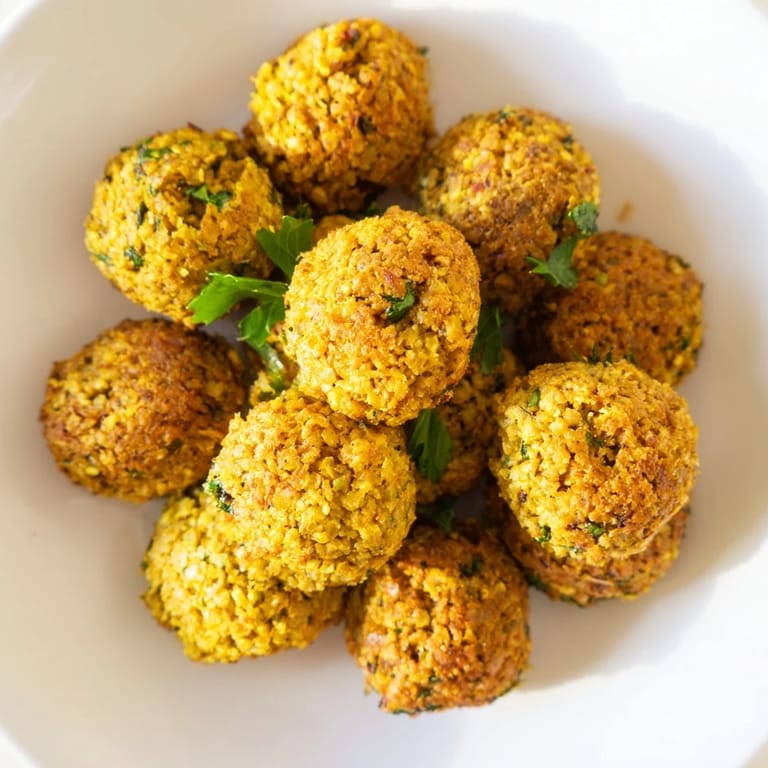
 My first proper batch of falafel came together on a Tuesday evening when my neighbor stopped by with a bag of dried chickpeas from her family's pantry. She mentioned her grandmother made them every Thursday, and somehow that detail stuck with me—the rhythm of it, the tradition baked into the routine. I soaked those chickpeas overnight, and the next day when I opened the food processor, the green herbs and warm spices filled my kitchen with a smell I didn't know I was missing. That first golden ball that emerged from the hot oil tasted like a small victory, crispy outside and herbaceous within.
I made these for a dinner party on a rainy Saturday, and my friend Sarah arrived with her own tahini to make the sauce while I fried. We stood at the stove together, laughing at how the oil popped, debating whether they needed ten more seconds or were already perfect. When we finally sat down with warm pita and plates piled high, everyone went quiet for a moment—the kind of quiet that means the food did what it was supposed to do.
Ingredients
- Dried chickpeas (1 cup): Must be dried, not canned—the texture is everything, and canned versions fall apart. Soak them fully until tender but not mushy, and drain them well so the mixture doesn't get too wet.
- Fresh parsley (1 cup, packed): This is non-negotiable for authentic flavor; it should be the main herb by volume, bright and green when you tear the leaves.
- Fresh cilantro (1/2 cup, packed): Adds a subtle sharpness that balances the earthiness of the spices without overwhelming the mix.
- Onion and garlic (1 small onion, 3 cloves): Roughly chop both—they break down in the processor and distribute flavor throughout rather than create distinct chunks.
- Ground cumin (2 tsp) and coriander (1 tsp): Toast these lightly in a dry pan before adding if you have time; it deepens their warmth and makes the whole batch taste more intentional.
- Cayenne pepper (1/2 tsp, optional): Start conservative and taste the raw mixture if you're unsure; you can always add more, but you can't take it back.
- Baking powder (1 tsp): This tiny amount creates the lift that makes them light and fluffy rather than dense and heavy.
- All-purpose flour or chickpea flour (3 tbsp): Acts as a binder; too much and they become gluey, too little and they fall apart in the oil.
- Vegetable oil for frying: Use something neutral—neutral oil, not olive oil, which burns at frying temperatures.
Tired of Takeout? 🥡
Get 10 meals you can make faster than delivery arrives. Seriously.
One email. No spam. Unsubscribe anytime.
Instructions
- Soak the chickpeas overnight:
- Place dried chickpeas in a bowl, cover with cold water by a few inches, and let them sit for 8 to 12 hours until they're tender enough to break easily between your fingers but still whole. Drain them well and pat them completely dry—any excess moisture will make the mixture too wet to hold together.
- Build the mixture:
- Put soaked chickpeas, onion, garlic, parsley, and cilantro into the food processor and pulse until everything is coarse and textured, like wet sand that holds together when you squeeze it. You're looking for a rough, chunky consistency, not a purée; the herbs should still look like bits of green throughout.
- Add the seasonings:
- Sprinkle cumin, coriander, cayenne, baking powder, salt, pepper, and flour over the mixture and pulse a few more times until everything is evenly distributed. Scrape down the sides of the bowl and do a final hand mix to ensure nothing is hiding in the corners.
- Shape into balls:
- Wet your hands slightly and roll the mixture into 1½-inch balls, placing each one on a tray. If the mixture feels too loose and won't hold together, add another tablespoon of flour and mix again; if it's too tight and crumbly, add a teaspoon of water.
- Heat the oil:
- Pour 2 inches of neutral oil into a deep pot and bring it to 350°F (175°C), checking the temperature with a thermometer or testing it with a small pinch of mixture—it should sizzle immediately and turn golden in about 3 seconds.
- Fry in batches:
- Gently lower falafel balls into the hot oil, frying only a few at a time so the temperature stays steady and they cook evenly. They should take 3 to 4 minutes total, turning once halfway through, until they're deep golden brown all over and sound hollow when tapped.
- Drain and serve:
- Transfer finished falafel to a plate lined with paper towels to absorb excess oil. Serve them warm in pita bread with tahini sauce, fresh vegetables, pickles, and greens, or arrange them on a mezze platter alongside hummus and other small bites.
 Save to Pinterest
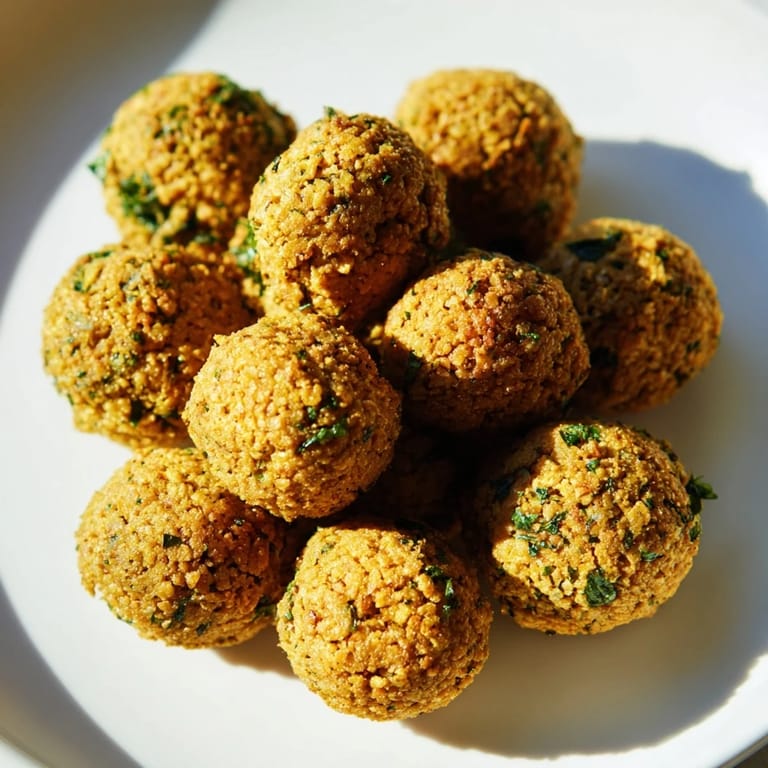
 There's a moment when you lift that first falafel from the oil and it's still sizzling, still hot enough to burn your fingers if you're not careful, and you know immediately whether you've gotten it right. My friend Marcus bit into one at that dinner party and closed his eyes—not dramatically, just a quiet moment of contentment—and that's when I realized this dish had become something I wanted to make again and again.
The Art of the Texture
The magic of falafel lives in that contrast: a crisp, shattering shell that gives way to a warm, herb-filled interior that's light rather than heavy. Too many home cooks end up with dense, oil-logged balls, and it usually comes down to two things—either the mixture was too wet from not draining the chickpeas properly, or the oil wasn't hot enough. I learned this the hard way on my second batch, when I was trying to be economical with ingredients and skipped the thorough drying step. The difference between mediocre and memorable falafel is genuinely just that attention to detail in those early stages.
Serving Beyond the Pita
While pita wraps with tahini sauce are the classic presentation, I've found these work beautifully in unexpected places. I've served them on a bed of tabbouleh salad, tucked into a grain bowl with roasted vegetables, even crumbled and stirred into a creamy hummus as a textural element. One of my favorite experiments was arranging them on a mezze platter with olives, cheese, roasted vegetables, and various dips—suddenly they're not the main event but one player in a larger spread, which somehow makes the meal feel more generous and celebratory.
Flavor Customization and Variations
The base recipe is herbaceous and warm, but there's real room to play depending on your mood or what you have on hand. A half teaspoon of sumac adds a bright, lemony note that feels almost magical; cardamom brings an unexpected warmth that's particularly nice if you're serving them at a gathering where people expect something a bit fancier. I've also added fresh mint when I had it, ground ginger for an unexpected kick, and even a pinch of smoked paprika when I wanted something with a bit more depth.
- If you want them less spicy, simply omit the cayenne or use just a pinch—the cumin and coriander provide plenty of warmth.
- For a baked version that's slightly less indulgent, brush the balls with oil and bake at 400°F for 20 to 25 minutes, turning halfway through, though they won't achieve quite the same golden crispness.
- Always taste a tiny pinch of the raw mixture before frying to adjust the salt and spices to your preference; raw chickpeas won't hurt you and it's the best way to check the seasoning.
 Save to Pinterest
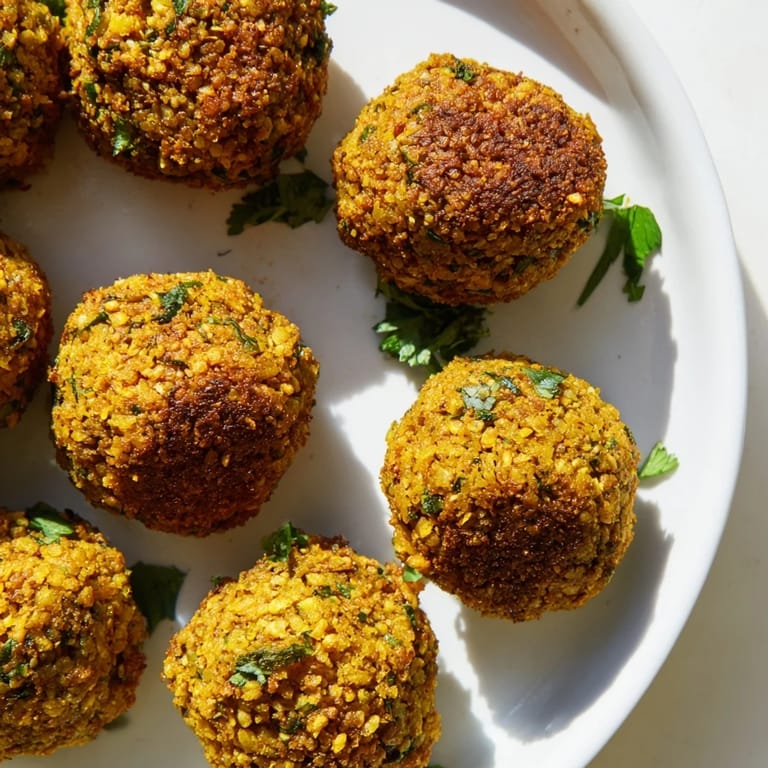
 These falafel balls have become the kind of dish I make when I want to feel like I'm cooking something with intention, something that matters a little bit more than a weeknight meal. They're not complicated, but they ask you to pay attention, and somehow that small act of care makes them taste better.
Recipe Q&A
- → What is the best chickpea preparation method?
Soaking dried chickpeas overnight softens them without cooking, preserving texture essential for shaping falafel balls.
- → How do fresh herbs enhance the flavor?
Parsley and cilantro add brightness and freshness, balancing the earthiness of chickpeas and spices.
- → Can these balls be baked instead of fried?
Yes, brushing with oil and baking at 400°F for 20–25 minutes yields a crisp exterior with less oil.
- → What oil is recommended for frying?
Use a neutral vegetable oil with a high smoke point to achieve crispy, evenly cooked balls.
- → How do I adjust spice levels?
Cayenne pepper is optional; modifying its amount or omitting it controls the heat intensity.
- → What dips complement these chickpea balls?
Tahini sauce, hummus, and yogurt-based sauces make excellent accompaniments enhancing the taste.