 Save to Pinterest
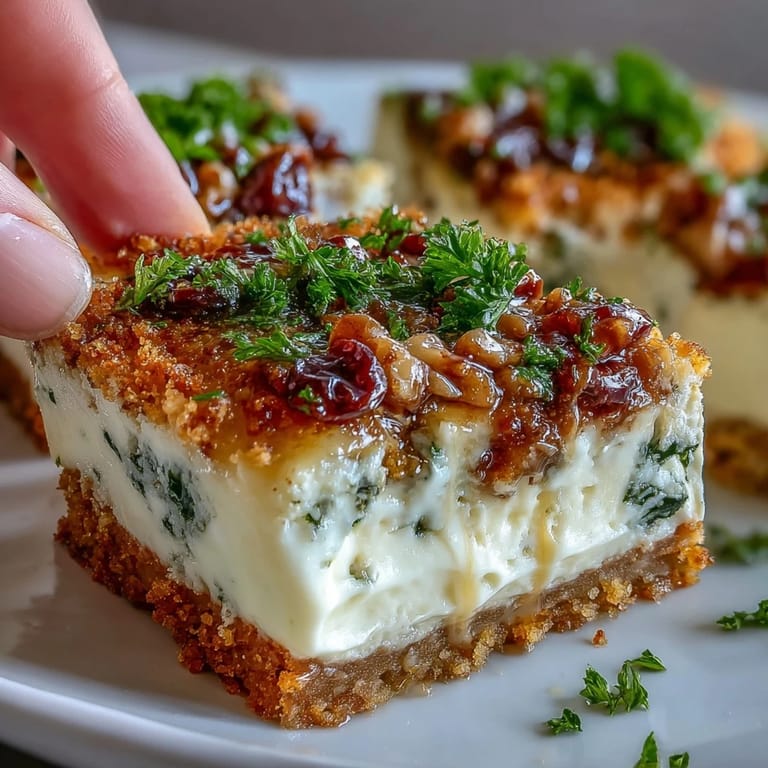
 My neighbor Stella brought this to a potluck three summers ago, and I spent the entire evening hovering near the appetizer table. The salty bite of Kalamata olives against the creamy, herb-flecked filling was unlike any cheesecake I'd ever tasted. When she finally told me it was savory, not sweet, I laughed at myself for not guessing sooner. I asked for the recipe that night, scribbled it on a napkin, and have been making it ever since.
The first time I served this at a dinner party, my friend Michael stood in the kitchen and ate three slices before the guests even sat down. He kept saying he couldn't believe it was a cheesecake, that it tasted like something from a Greek island cafe. I had to hide the pan in the fridge just to make sure there was enough left for everyone else. Now, every time he comes over, he asks if I'm making the olive cheesecake.
Ingredients
- Plain breadcrumbs: These form the savory crust and toast up beautifully with butter and oregano, giving a sturdy base that won't get soggy.
- Unsalted butter: Melted butter binds the breadcrumbs together and adds richness without overwhelming the herbs.
- Dried oregano: A little goes a long way in the crust, lending that warm Mediterranean aroma.
- Ground black pepper: Just a pinch in the crust adds subtle warmth and depth.
- Cream cheese: Softened to room temperature, this is the creamy heart of the filling, so let it sit out for at least an hour.
- Ricotta cheese: It lightens the texture and adds a mild, slightly sweet contrast to the tangy olives.
- Grated Parmesan cheese: Adds a nutty, salty backbone that ties all the flavors together.
- Large eggs: They set the filling and give it that classic cheesecake structure.
- Dried thyme: Earthy and floral, thyme is perfect with olives and lemon.
- Lemon zest: Brightens everything up and cuts through the richness with a fresh citrus note.
- Whole milk: A splash makes the filling smooth and easier to pour.
- Pitted Kalamata olives, chopped: The star of the show, briny and bold, they add bursts of flavor in every bite.
- Fresh chives: Finely chopped, they bring a mild onion flavor and lovely green flecks.
- Salt and black pepper: Season the filling to balance the richness and acidity.
- Kalamata olives for garnish: Sliced thin, they make the top look polished and professional.
- Fresh parsley: Chopped parsley adds color and a clean, herbaceous finish.
- Extra virgin olive oil: A drizzle before serving ties the whole dish back to its Greek roots.
Tired of Takeout? 🥡
Get 10 meals you can make faster than delivery arrives. Seriously.
One email. No spam. Unsubscribe anytime.
Instructions
- Prep Your Pan:
- Preheat your oven to 325°F and lightly grease a 9-inch springform pan or line the bottom with parchment paper. This makes removing the cheesecake so much easier later on.
- Build the Crust:
- In a small bowl, mix breadcrumbs, melted butter, oregano, and pepper until the crumbs are evenly coated and slightly clumpy. Press the mixture firmly into the bottom of the pan, using the back of a spoon or your fingers to pack it down.
- Bake the Base:
- Slide the pan into the oven and bake the crust for 8 minutes until it smells toasty and starts to set. Remove it and let it cool while you make the filling.
- Blend the Cheese:
- In a large bowl, beat the cream cheese, ricotta, and Parmesan with an electric mixer or whisk until smooth and fluffy. Add the eggs one at a time, mixing well after each addition so everything stays creamy.
- Fold in the Flavors:
- Stir in thyme, lemon zest, milk, chopped olives, chives, salt, and pepper until the filling is evenly speckled with green and purple. The mixture should smell bright and savory.
- Assemble and Bake:
- Pour the filling over the cooled crust and smooth the top with a spatula. Bake for 25 to 28 minutes, until the center is set but still has a gentle wobble when you tap the pan.
- Cool It Down:
- Remove the cheesecake from the oven and let it cool to room temperature on the counter. Once cooled, cover it and refrigerate for at least 2 hours, though overnight is even better.
- Garnish and Serve:
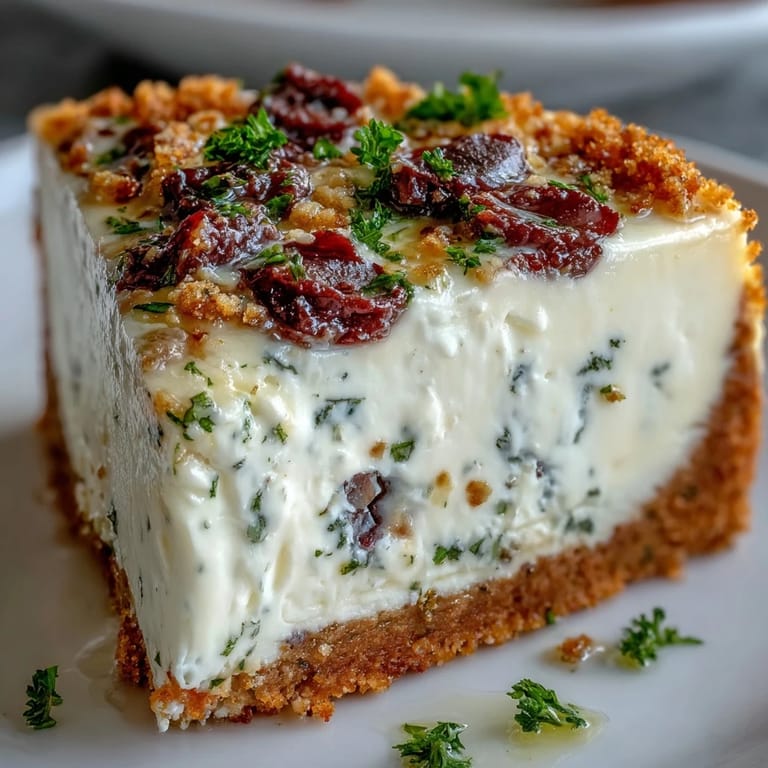
- Before serving, scatter sliced olives and chopped parsley over the top and drizzle with a little olive oil. Slice into small wedges or squares and watch them disappear.
 Save to Pinterest
 One evening, I brought this to a book club meeting where everyone usually brings cookies or brownies. When I set it down and said it was a cheesecake, the room went quiet. Then someone took a bite, and suddenly everyone was reaching for the platter. We ended up talking more about the recipe than the book, and I went home with an empty pan and half a dozen requests to make it again.
Make It Your Own
If you want to add more color and flavor, fold in a few tablespoons of chopped sun-dried tomatoes or diced roasted red peppers along with the olives. I have also swapped the chives for fresh dill when I want a more pronounced herby note. For a little heat, a pinch of red pepper flakes in the filling works beautifully without overpowering the other flavors.
Serving Suggestions
This cheesecake is incredible served with crisp crackers, toasted baguette slices, or homemade crostini. I have also put it out alongside a platter of fresh vegetables like cucumber rounds and cherry tomatoes. It holds up well on a buffet table and does not need to be kept piping hot, which makes it perfect for parties where food sits out for a while.
Storage and Timing
You can make this up to two days ahead and keep it covered in the fridge, which actually improves the flavor as everything melds together. Leftovers stay fresh for up to four days, though in my house they rarely last that long. If you are taking it to a gathering, transport it in the springform pan and release it just before serving so it stays neat.
- Let the cheesecake come to room temperature for about 15 minutes before serving for the best texture.
- Use a sharp, thin knife dipped in hot water and wiped dry between cuts for clean slices.
- If you have any left over, it makes a surprisingly good breakfast with a piece of toast.
 Save to Pinterest
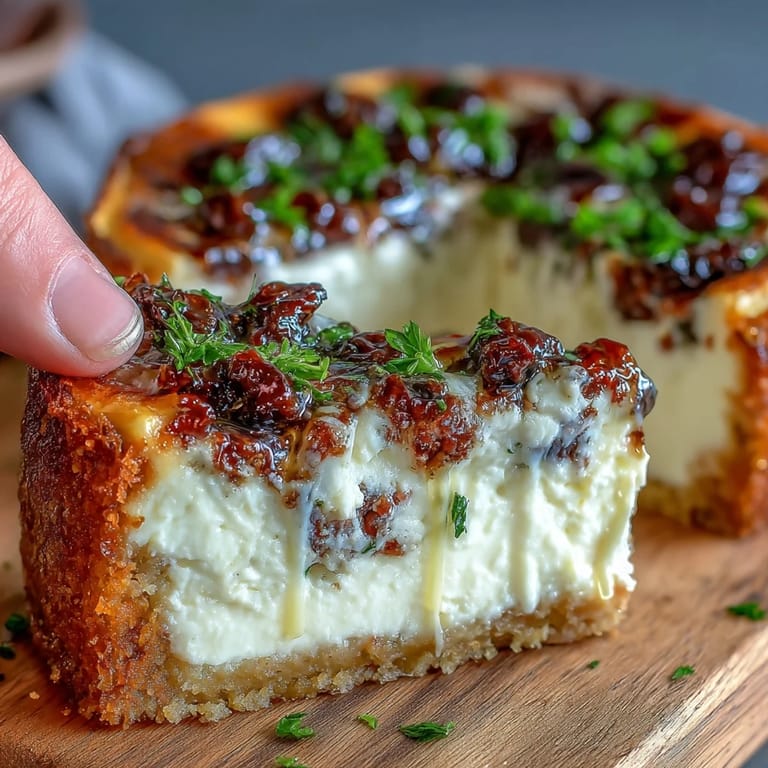
 This savory cheesecake has become one of those recipes I reach for whenever I want to impress without spending all day in the kitchen. It is elegant, unexpected, and always starts a conversation.
Recipe Q&A
- → Can I make this ahead of time?
Yes, this savory cheesecake is ideal for advance preparation. You can make it up to 2 days ahead and store it covered in the refrigerator. Add the garnish just before serving for the freshest presentation.
- → What can I substitute for Kalamata olives?
You can use other brined olives like Castelvetrano or black olives. Each variety will bring a slightly different flavor profile, but all work well with the creamy cheese base and herbs.
- → How do I prevent cracks in the cheesecake?
Bake at the lower temperature of 325°F and avoid overmixing the batter once eggs are added. The center should be slightly wobbly when done. Cooling gradually at room temperature before refrigerating also helps prevent cracking.
- → Can I freeze this appetizer?
While you can freeze it for up to 1 month, the texture may change slightly upon thawing. Wrap tightly in plastic wrap and foil. Thaw overnight in the refrigerator and add fresh garnish before serving.
- → What should I serve with this cheesecake?
Serve with crispy crackers, toasted crostini, pita chips, or fresh vegetable crudités. The savory flavors pair beautifully with crusty bread and complement a Mediterranean-style spread.
- → How do I know when it's properly baked?
The edges should be set and slightly puffed while the center remains slightly wobbly. It will continue to set as it cools. Overbaking can result in a dry texture, so remove it when there's still a gentle jiggle in the middle.