 Save to Pinterest
 There's something about a perfectly chilled bowl of garlic noodles that makes even the most ordinary Tuesday feel like a small celebration. I discovered this recipe during a particularly hot summer when my usual cooking routines felt exhausting, and I needed something that tasted restaurant-quality but didn't require standing over a stove for hours. The first time I made it, the kitchen filled with the most intoxicating smell of garlic turning golden in oil, and I knew I'd stumbled onto something special.
I made this for a potluck dinner with friends who eat everything from vegan to keto, and it was one of the few dishes that everyone actually went back for seconds on. One guest even asked for the recipe before finishing her bowl, which felt like the ultimate compliment. That moment reminded me that the best recipes aren't the fancy ones—they're the ones that somehow manage to be both comforting and exciting at the same time.
Ingredients
- 250 g dried wheat noodles: Wheat noodles, lo mein, or spaghetti work beautifully here; soba offers a nuttier flavor if you're feeling adventurous.
- 3 tbsp neutral oil: Grapeseed or vegetable oil won't overpower the garlic—this is where the foundation of flavor begins.
- 5 large garlic cloves: Mince them finely so they distribute evenly and cook through; pre-minced garlic becomes bitter, so fresh is worth the effort.
- 1 tsp toasted sesame oil: This small amount adds a whisper of warmth and authenticity that makes people wonder what your secret ingredient is.
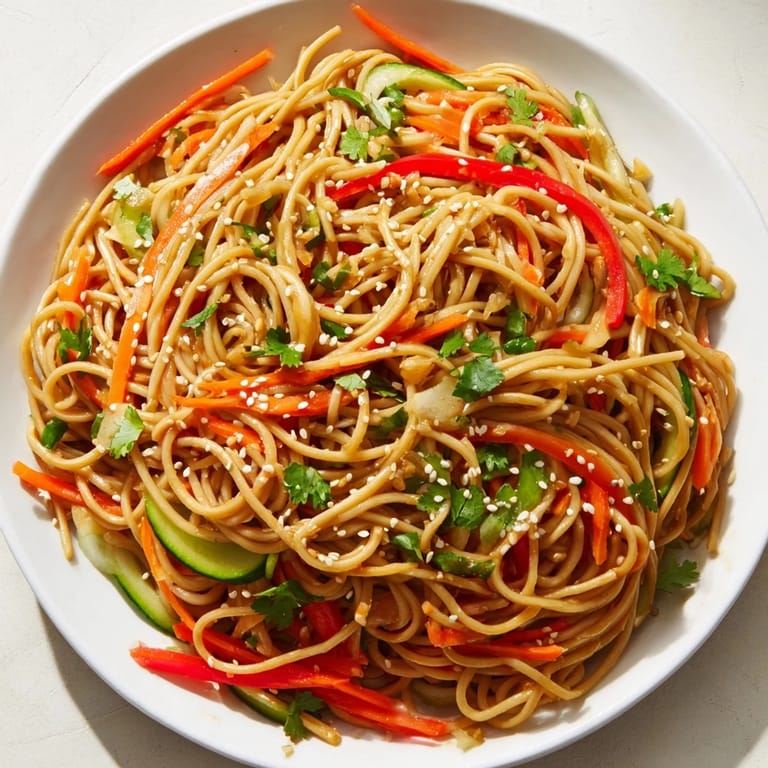
- 1 cup carrots, julienned: Cut them thin so they stay crisp and integrate beautifully with the noodles rather than demanding to be chewed.
- 1 cup red bell pepper: The sweetness balances the savory soy, and the color makes the dish look alive on the plate.
- 1 cup cucumber, deseeded and julienned: Deseeding prevents watery pockets that dilute the dressing as it sits.
- 2 spring onions: Slice them thin; they add a gentle bite without overwhelming the other flavors.
- 1/2 cup fresh cilantro: Rough chopping preserves the herb's character better than mincing it into submission.
- 3 tbsp soy sauce: Low sodium gives you control over the salt level and lets the other flavors shine.
- 1 tbsp rice vinegar: The acidity brightens everything without making the dish taste obviously vinegary.
- 1 tsp honey or maple syrup: Just enough sweetness to round out the savory and sour notes without tasting like dessert.
- 1/2 tsp chili flakes: Optional, but highly recommended if you like a gentle warmth that builds as you eat.
- 2 tbsp toasted sesame seeds: Toast them yourself if you can—the difference between stale and fresh is remarkable.
Tired of Takeout? 🥡
Get 10 meals you can make faster than delivery arrives. Seriously.
One email. No spam. Unsubscribe anytime.
Instructions
- Cook and cool the noodles:
- Boil your noodles according to the package timing, then immediately drain and rinse under cold running water until they're completely chilled. This stops the cooking process and prevents them from clumping together as they sit.
- Build the garlic oil:
- Heat your neutral oil over medium-low heat and add the minced garlic slowly, listening for a gentle sizzle rather than an aggressive one. When the garlic turns pale golden and the kitchen smells impossibly good (usually 2 to 3 minutes), remove the pan from heat and stir in the sesame oil while it's still hot so the flavors marry together.
- Prepare the dressing:
- Whisk together the soy sauce, rice vinegar, honey, chili flakes if you're using them, and black pepper in a small bowl until the honey dissolves completely. This mixture is the backbone of the entire dish, so taste it and adjust to your preference before it meets the noodles.
- Combine noodles and dressing:
- Pour the cooled garlic oil and dressing over your cold noodles and toss thoroughly, making sure every strand gets coated and nothing sits in a clump at the bottom. Take your time here—proper tossing distributes flavor evenly.
- Add the vegetables:
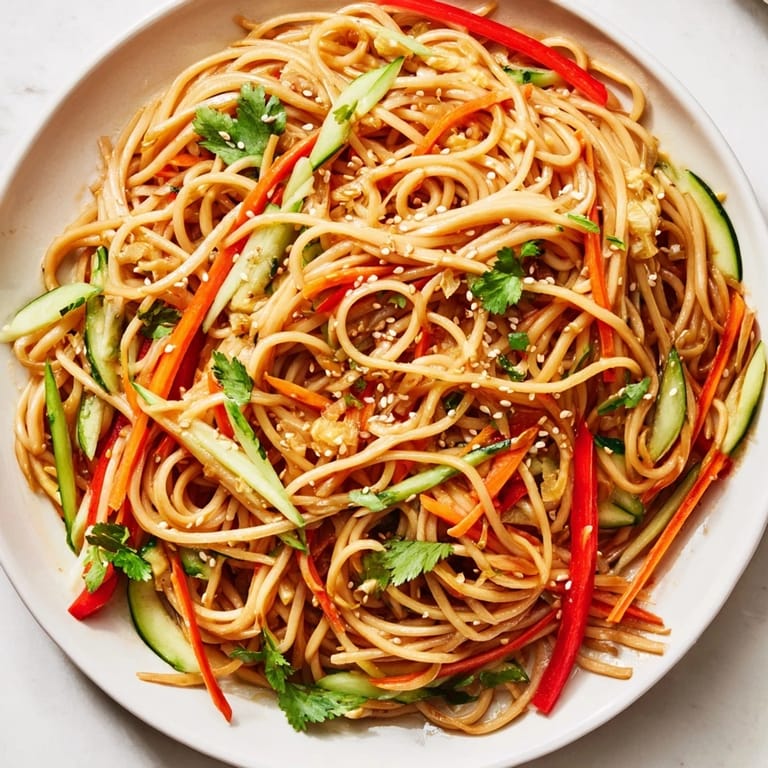
- Toss in all your julienned vegetables and cilantro gently but thoroughly so they're evenly distributed without bruising the delicate cucumber or cilantro. The vegetables should still have their snap when you taste them.
- Serve and garnish:
- Transfer everything to a serving platter or individual bowls and scatter the toasted sesame seeds across the top just before serving. Lime wedges on the side let people add brightness according to their taste.
 Save to Pinterest
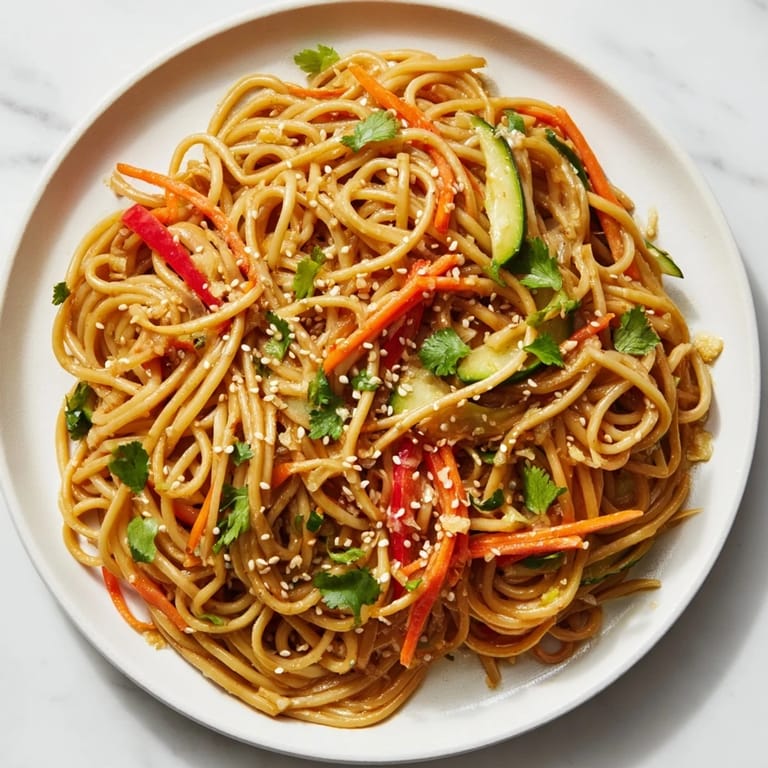
 The real moment this dish became precious to me was when my six-year-old nephew, who normally picks vegetables out of everything, asked for thirds and then wanted to help me make it the next time. There's something about the way the garlic oil coats everything and the noodles stay silky rather than dry that appeals to everyone, regardless of their usual preferences.
Variations and Protein Options
While this salad is entirely satisfying as a vegetarian main, it transforms beautifully with additions that turn it into something more substantial. I've had great success adding shredded rotisserie chicken for protein, or crumbling crispy tofu if I'm cooking for vegan friends and want something with real substance. Edamame works wonderfully too and adds a pop of bright green that makes the whole bowl look more festive.
Vegetable Flexibility
One of my favorite aspects of this recipe is how forgiving it is with vegetable substitutions based on what's seasonal or what's hiding in your crisper drawer. I've made it with shredded cabbage for extra crunch, thin slices of radish for peppery bite, and snap peas when I want something with more substance. The only real rule is that vegetables should be cut thin enough to integrate with the noodles rather than remain separate little chunks demanding individual attention.
Storage and Make-Ahead Tips
This salad actually improves slightly after spending a night in the refrigerator, as the flavors continue to meld and the noodles absorb the dressing more completely. I often make a double batch on Sunday and portion it into containers for grab-and-go lunches throughout the week. However, if you're serving it to guests, assemble it within a couple of hours and store any extra separately so the noodles don't continue absorbing moisture and become overly soft.
- Keep the sesame seed garnish separate until just before serving so they remain toasty and crisp rather than turning soft and chewy.
- If you're doubling the recipe, the dressing ratios stay the same—resist the urge to double it, as you need less liquid relative to noodles as the quantity increases.
- Leftover salad keeps beautifully for up to two days in an airtight container, making it one of those rare dishes that tastes just as good cold from the fridge.
 Save to Pinterest
 This recipe has become my go-to when I need something that feels both nourishing and indulgent without any of the heaviness. It's the kind of dish that reminds you why simple food, made with attention to quality ingredients and proper technique, often tastes better than anything complicated.
Recipe Q&A
- → What type of noodles work best for this dish?
Dried wheat noodles like lo mein, spaghetti, or soba provide the ideal texture, but gluten-free alternatives can be used for dietary preferences.
- → How is the garlic oil prepared?
Garlic is gently cooked in neutral oil until golden and fragrant, then mixed with toasted sesame oil to create a flavorful coating for the noodles.
- → Can the dish be served warm or only cold?
It’s traditionally served cold or at room temperature, making it especially refreshing on warm days or as a light side.
- → What vegetables complement the noodles best?
Crisp julienned carrots, bell peppers, cucumber, thinly sliced spring onions, and fresh cilantro add refreshing crunch and color.
- → How can I add protein to this noodle salad?
For extra protein, add shredded cooked chicken, tofu, or edamame to enhance the dish’s heartiness and nutrition.
- → Are there any allergen considerations?
This contains wheat, soy, and sesame. Gluten-free noodles and tamari can substitute where necessary to accommodate allergies.