 Save to Pinterest
 I still remember the first time I visited a small bistro near the Seine in Paris, tucked away on a narrow street where the smell of fresh bread and aged cheese seemed to drift from every doorway. The way the owner arranged a simple cheese board that evening—with such care and intention—taught me that elegance isn't about complexity, it's about knowing which beautiful things deserve to share space together. That board, with its carefully fanned cheeses and warm baguette slices, became my template for creating moments of quiet sophistication at home.
I made this platter for my neighbor's impromptu dinner party last spring, and what struck me most wasn't the compliments—it was watching people slow down around it. They lingered, they talked more, they actually tasted each bite instead of rushing through. That's when I realized this simple arrangement had unlocked something about how we want to gather and eat together.
Ingredients
- 2 long fresh French baguettes: Look for ones with a crispy exterior and tender crumb—this is your foundation. A good baguette should sound hollow when you tap it. Slice diagonally to catch the light beautifully and create surfaces that hold butter and cheese just right.
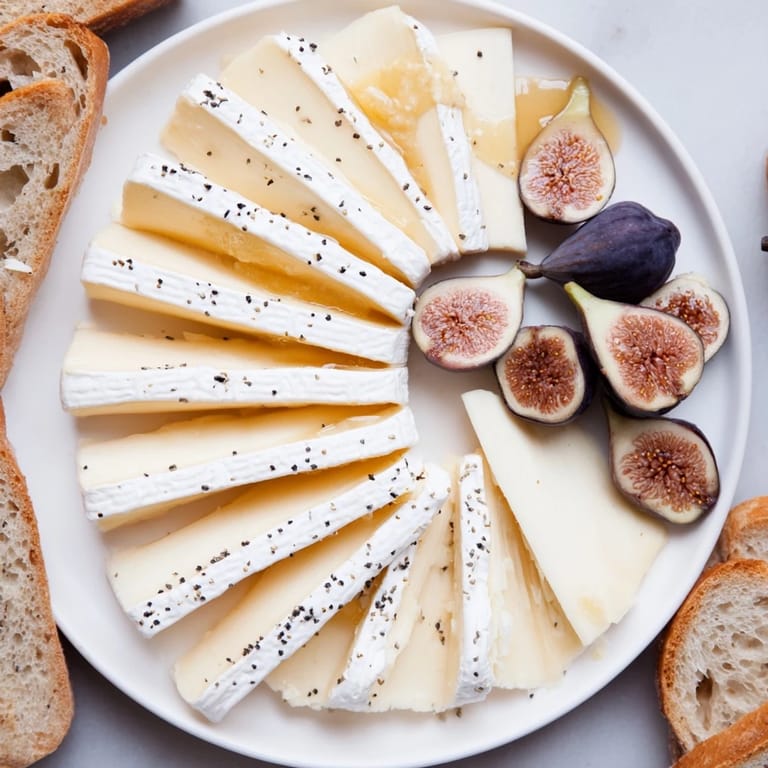
- 150 g Brie cheese, sliced and fanned: Buy it whole and slice it yourself just before serving—this prevents that sad, sweating look. The soft, creamy center against crispy bread is basically textbook comfort.
- 150 g Comté cheese, sliced and fanned: This aged beauty brings a nutty sweetness that balances everything. Its firm texture makes it easier to fan than softer cheeses, creating those elegant overlapping rows.
- 100 g Chèvre (goat cheese), sliced: The tangy contrast here is non-negotiable. It wakes up your palate between bites and adds that authentic bistro quality.
- 12 fresh figs or grapes: These aren't decoration—they're the sweet counterpoint that makes savory flavors sing. Fresh figs especially carry a luxury that guests immediately recognize.
- 50 g unsalted butter, softened: This needs to be soft enough to spread but cold enough to hold its shape. It bridges the gap between bread, cheese, and fruit like a secret handshake.
- 2 tbsp high-quality honey: Don't skimp here. Truly good honey tastes like sunshine and wildflowers. It transforms from sweetener into an experience on its own.
- 1 tbsp whole grain Dijon mustard: The mustard seeds give you texture and brightness. It's the element that makes people pause and say 'what is that?'
- Flaky sea salt, to taste: Use it sparingly—it should enhance, not dominate. The larger crystals let people taste the salt itself, not just saltiness.
- Freshly ground black pepper, to taste: Grind it just before serving. The aroma alone says 'someone cared about this.'
Tired of Takeout? 🥡
Get 10 meals you can make faster than delivery arrives. Seriously.
One email. No spam. Unsubscribe anytime.
Instructions
- Slice your baguette with intention:
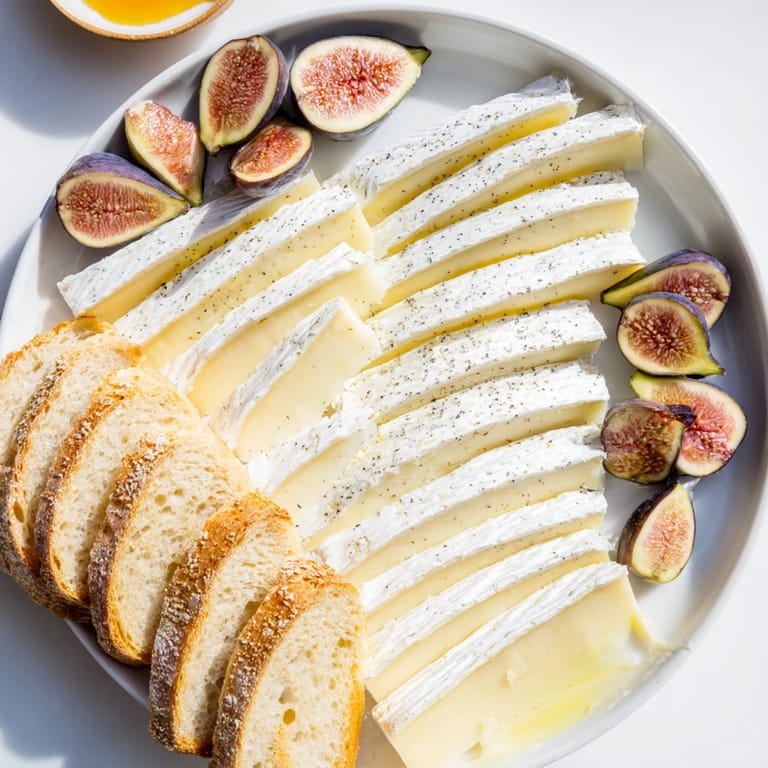
- Using a sharp bread knife (this matters more than you'd think), cut the baguette on a 45-degree angle into thin, even pieces. Each slice should catch light differently. Arrange them along the edge of your platter like a frame, leaving generous breathing room between pieces. This negative space is what makes it look Parisian instead of crowded.
- Fan your cheeses with confidence:
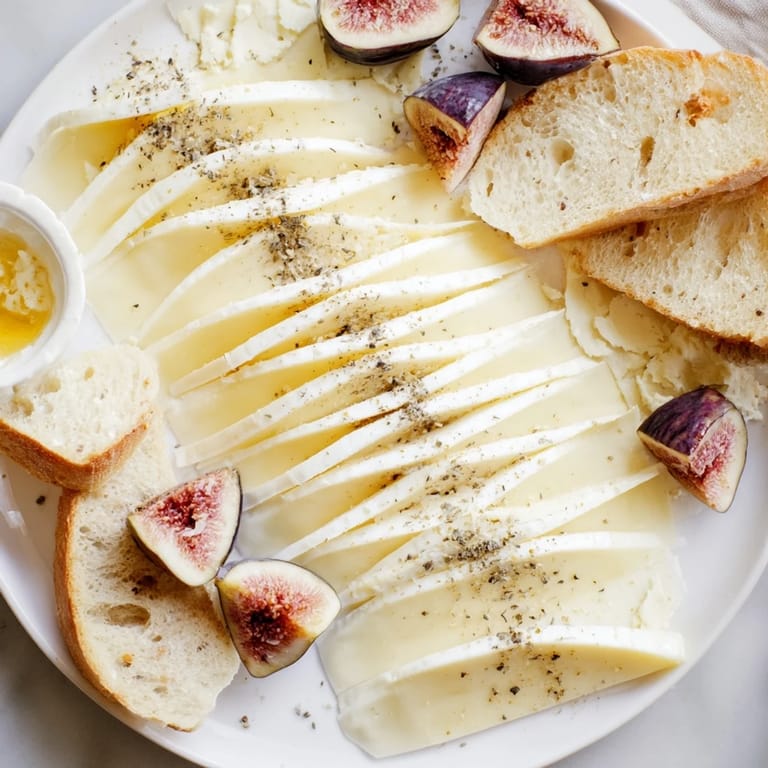
- This is where the magic happens. Slice your Brie and Comté into thin, even slices—you want them delicate enough to be elegant but sturdy enough to handle. Overlap them in gentle rows, each variety in its own section. Think of it like arranging flower petals, not tiles. The fanned pattern isn't just pretty; it shows off the beautiful colors and textures of each cheese.
- Scatter your fresh fruits like punctuation:
- Place small clusters of figs or grapes in the negative spaces you've created. They should look like they happened naturally, not like you overthought it. Group them in odd numbers—three or four together—rather than scattering them individually.
- Position your condiments artfully:
- If using ramekins, place them at anchor points around the board—think 12 o'clock, 4 o'clock, 8 o'clock. Or dot small, generous spoonfuls directly onto the platter itself. These touches of gold (honey), pale yellow (mustard), and cream (butter) should feel like intentional punctuation marks.
- Season and finish:
- Just before serving, sprinkle flaky sea salt and freshly cracked black pepper lightly across the cheeses. Taste one bite yourself first—this isn't just about flavor, it's about confidence. If you taste it, you can speak about it honestly.
- Invite people to build their own story:
- Set it on the table and step back. The beauty of this platter is that each person creates their own combination. Some will pair brie with honey, others will go for the sharp mustard and goat cheese. You've created a conversation starter that happens on the plate.
 Save to Pinterest
 I'll never forget my daughter asking why I 'made so much cheese' when she came home from school and saw the board. When I explained it was for a dinner party, she said, 'But it looks like art.' That's when I knew I'd gotten something right—when food becomes something people want to look at before they eat it, when presentation isn't pretension but rather a form of respect.
The Art of Negative Space
In French design, what you leave empty is as important as what you fill. I learned this watching a chef in Lyon arrange a cheese course, and it completely changed how I think about hosting. That empty space isn't waste—it's breathing room. It lets each element shine without competition. When you look at your finished platter, you should see individual characters on a stage, not a crowd. This is what separates 'nice snack board' from 'bistro moment.' The emptiness is the sophistication.
Choosing Your Cheeses with Intention
Every cheese tells a story about where it comes from and how long it's been loved. Brie is the soft whisper—approachable and familiar but still elegant. Comté is the seasoned conversation—complex, with layers that unfold the longer you know it. Chèvre is the sharp wit—a little surprising, full of character. Together on one board, they're not just dairy; they're a narrative about France itself. Visit a proper cheese counter if you can. Talk to whoever's there. They'll steer you right, and they'll probably have something new to show you.
Wine and Conversation
A chilled glass of Sancerre doesn't just pair with this board—it's part of the whole experience. The minerality of the wine echoes the floral notes of good honey. Champagne works if you're feeling celebratory. But honestly, what matters most is that you have something to sip while people gather. The pairing isn't about impressing anyone; it's about creating small moments of pause throughout the evening. These boards are designed for lingering, for conversation that goes somewhere unexpected. The wine is just permission to sit a little longer.
- Pour the wine just before guests arrive so it reaches perfect coldness
- Give people time to explore the board unhurried—this isn't fast food, it's a destination
- Consider cutting some baguette in advance and leaving some whole, offering people choice about how engaged they want to be
 Save to Pinterest
 This platter is my proof that you don't need complicated recipes or hours in the kitchen to create something that feels meaningful. Some of the best meals I've ever had took fifteen minutes to arrange and a lifetime to appreciate.
Recipe Q&A
- → What cheese varieties are featured?
Brie, Comté, and chèvre provide a mix of creamy, nutty, and tangy flavors ideal for this platter.
- → How should the baguette be prepared?
Slice the baguette diagonally into thin, even pieces to create elegant edges and easy-to-handle bites.
- → Can I substitute the figs?
Yes, sliced pears or apples can replace figs while maintaining a fresh, sweet contrast.
- → What accompaniments enhance the platter?
Softened butter, high-quality honey, and whole grain Dijon mustard add richness and subtle complexity.
- → How to season the cheeses?
Lightly sprinkle flaky sea salt and freshly ground black pepper over the cheeses to elevate their natural flavors.