 Save to Pinterest
 There's something about the way carrots transform when they meet coconut milk that stopped me in my tracks the first time I tasted it. My neighbor brought over a container of this soup on a gray Tuesday, and I remember being skeptical—carrots and coconut sounded like an odd pairing to me then. But one spoonful changed that entirely, and now I make it whenever I need something that feels both grounding and a little bit special.
I made this for my sister when she was going through a rough patch with her digestion, and watching her relax after a bowl told me everything I needed to know about food's quieter powers. She asked for the recipe that same evening, and now she texts me photos of her versions with different garnishes. It became our thing without us planning it that way.
Ingredients
- Olive oil: Just enough to get the onions moving without drowning them—this is where the flavor foundation gets built.
- Medium onion, chopped: The sweeter they become as they soften, the better your broth will taste later.
- Garlic cloves, minced: Fresh garlic is non-negotiable here; it adds a sharpness that balances the soup's natural sweetness.
- Carrots (about 5 medium), peeled and sliced: The star of the show—look for ones that are firm and deeply orange, as paler ones tend to be less flavorful.
- Small potato, peeled and diced: This adds body and helps create that velvety texture without cream.
- Vegetable broth: Use the kind you'd actually drink on its own; mediocre broth makes mediocre soup.
- Full-fat coconut milk (1 can): The full-fat version is crucial for richness—don't reach for lite unless you're adjusting the recipe on purpose.
- Ground ginger: Warm and slightly peppery, it plays beautifully with the natural sweetness of carrots.
- Ground coriander: Subtle and citrusy, it lifts the whole thing without announcing itself.
- Ground cumin: A whisper of earthiness that ties everything together.
- Chili flakes (optional): Just a pinch if you want a gentle heat that lingers at the back of your throat.
- Salt and pepper: Always taste as you go; you'll need more than you think.
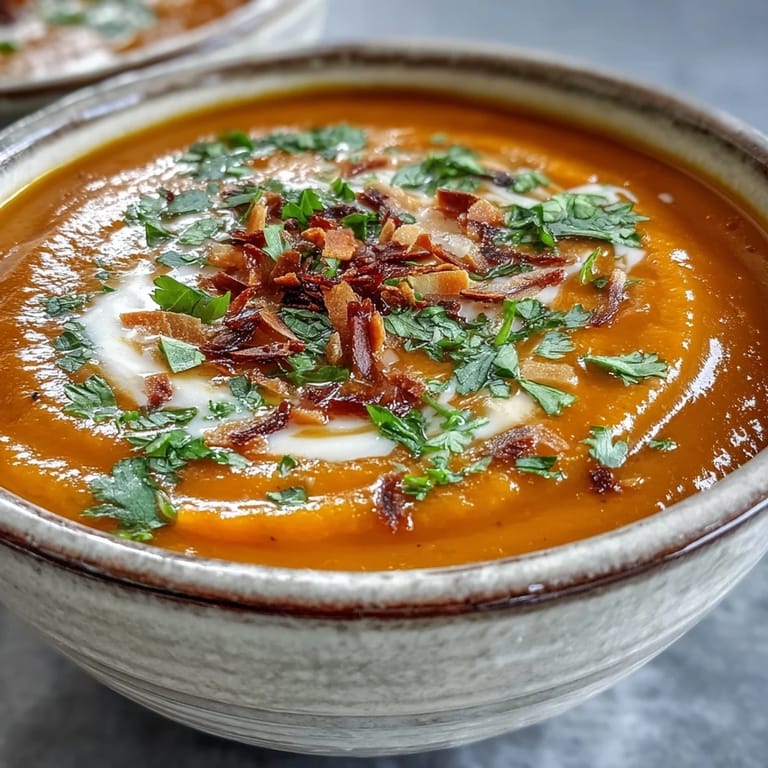
- Cilantro or parsley, fresh lime juice, toasted coconut flakes: These garnishes aren't extras—they're what turns a good soup into an experience.
Tired of Takeout? 🥡
Get 10 meals you can make faster than delivery arrives. Seriously.
One email. No spam. Unsubscribe anytime.
Instructions
- Warm the oil and soften your onions:
- Heat olive oil over medium and add the chopped onion, letting it sit undisturbed for a minute or so before stirring—you want gentle caramelization, not a rush. After about 3 to 4 minutes, it should look almost glassy and smell sweet enough to make you pause.
- Build the aromatics:
- Add the minced garlic and ginger, stirring constantly for just one minute until the kitchen fills with that warm, peppery scent that tells you everything is happening right. Don't let it sit too long or the garlic will brown and turn bitter.
- Toast the vegetables briefly:
- Stir in your carrot slices and diced potato, letting them cook in the oil for 2 to 3 minutes so they pick up all those aromatic flavors. You're not cooking them through yet—just waking them up.
- Add the spices:
- Sprinkle in the coriander, cumin, and chili flakes if you're using them, stirring until every piece of vegetable gets coated. The spices will bloom and smell almost nutty, which is exactly what you want.
- Simmer until tender:
- Pour in your vegetable broth and bring it to a boil, then lower the heat, cover the pot, and let it bubble gently for about 20 minutes until the carrots are so soft they fall apart at the gentlest nudge. This is when you can step away and do something else.
- Introduce the coconut milk:
- Stir in the coconut milk slowly and let it warm through for 2 to 3 minutes—this is important, so don't let it boil or the milk can separate slightly. You'll notice the soup turn from bright orange to a creamy peachy-gold, which is beautiful.
- Blend to smoothness:
- Remove from heat and use an immersion blender to purée the soup right in the pot, moving it around in gentle circles until you reach the texture you want. If you prefer, carefully transfer batches to a countertop blender instead.
- Taste and adjust:
- Add salt, pepper, and a squeeze of lime juice to bring everything into focus—the lime especially makes the flavors pop in ways you won't expect.
- Serve with intention:
- Ladle into bowls and finish with whatever garnish calls to you—cilantro adds brightness, toasted coconut brings texture, and extra chili flakes give warning to anyone who likes heat.
 Save to Pinterest
 My mother made this for me after I got home from something difficult, and she didn't make a fuss about it—just left a pot on the stove and told me to help myself. That simple kindness in a bowl of soup taught me something about feeding people that recipes don't quite capture.
Why This Soup Works Every Single Time
The beauty of this recipe is that it doesn't require any special techniques or ingredients you can't find at a regular market. Carrots are humble and forgiving, and when you combine them with coconut and spices that have been used together for centuries across different cuisines, something almost inevitably good happens. Even when I've made small swaps—using sweet potato instead of regular, or adding a touch of turmeric on a whim—the soup has never disappointed.
Making It Your Own
This is the kind of recipe that invites you to improvise rather than stick rigidly to instructions. I've added roasted carrots for deeper caramel notes, dropped in a chopped apple for subtle sweetness, and once even stirred in some red curry paste because I was curious. The base is stable enough to handle your experiments, and that's when cooking stops feeling like following orders and starts feeling like play.
Serving and Storage Wisdom
This soup is best served warm within a few hours of making it, but it stores beautifully in the refrigerator for up to four days and actually tastes better the next day when the flavors have had time to settle into each other. You can also freeze it for a month if you want to have a bowl of comfort on hand for an unexpected difficult day. A squeeze of fresh lime juice right before serving brings it back to life if it's been sitting, and crusty bread or steamed jasmine rice on the side transforms it from a light starter into a full meal.
- Let it cool completely before refrigerating so it doesn't steam your fridge into a sauna.
- When reheating, do it gently over low heat and don't let it boil, since the coconut milk can separate if treated roughly.
- Make a double batch on purpose so you have leftovers waiting for you on a morning when you don't have energy to cook.
 Save to Pinterest
 This soup has become my answer to almost every occasion that calls for something warm and nourishing. Make it once, and it'll become yours too.
Recipe Q&A
- → Can I make this soup ahead of time?
Absolutely. This soup actually develops deeper flavors when made a day ahead. Store in an airtight container in the refrigerator for up to 4 days. Reheat gently over medium-low heat, adding a splash of broth or coconut milk if needed to restore consistency.
- → Is this soup freezer-friendly?
Yes, it freezes beautifully. Cool completely before transferring to freezer-safe containers. Leave about an inch of space at the top as liquids expand when frozen. Store for up to 3 months. Thaw overnight in the refrigerator before reheating.
- → Can I use light coconut milk instead?
You can, though the texture will be less velvety and the overall richness will decrease. For the creamiest result, full-fat coconut milk is recommended. If using light, you might want to add an extra half-potato during simmering to maintain body.
- → What can I serve with this soup?
Crusty bread or warm naan makes excellent dipping. Steamed jasmine rice creates a hearty bowl. For a complete meal, pair with a simple green salad dressed with citrus vinaigrette. The soup also works well alongside grilled vegetables or roasted chickpeas.
- → How do I adjust the spice level?
The chili flakes provide gentle warmth. Omit them entirely for a mild version, or increase to ½ teaspoon for more heat. Fresh ginger can be reduced or increased to taste. Always start with less spice—you can always add more, but can't take it away.
- → Why add potato to carrot soup?
The potato acts as a natural thickener and adds extra creaminess without dairy. Its neutral flavor lets the carrots and coconut shine while contributing to that luxurious, velvety texture. You can leave it out, but the soup will be slightly thinner.