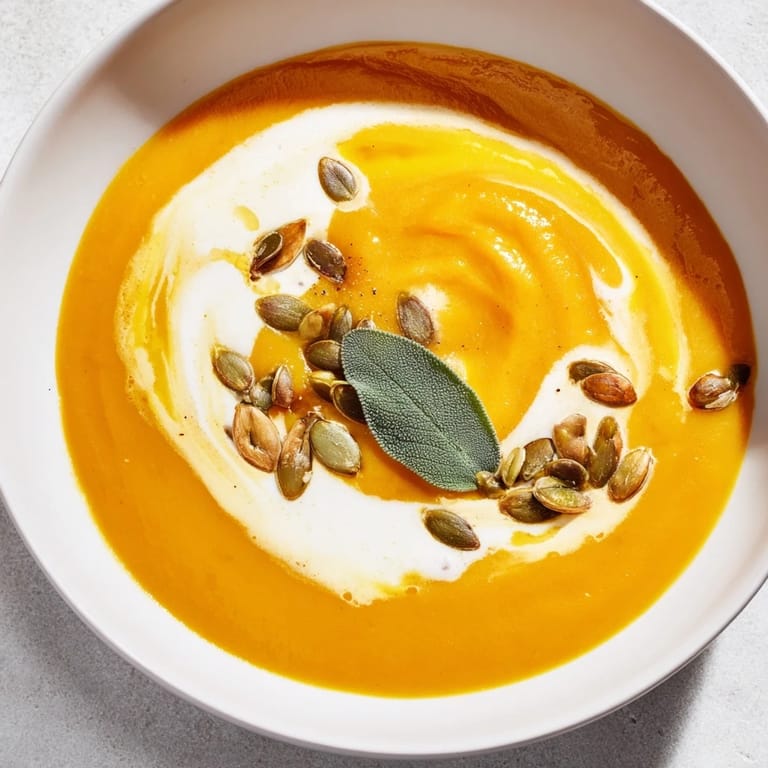
 Save to Pinterest
 There's something about autumn that makes you crave soup, and this butternut squash version became my go-to after a farmer's market visit on a crisp October afternoon. I'd grabbed a squash almost as big as my head, uncertain what to do with it, until I remembered my neighbor mentioning how she roasted hers. That one conversation sparked an experiment that turned into the silkiest, most comforting bowl I'd made in years.
I made this for my partner on a night when the kitchen was too cold and we needed something warm to hold onto. Watching them take that first spoonful and smile without saying anything told me I'd nailed it somehow, even though I'd been nervous about overseasoning the sage.
Ingredients
- 1 large butternut squash (about 2.5 lbs), peeled, seeded, and cubed: The star of this soup—roasting it brings out honeyed flavors that broth alone can't achieve.
- 1 medium yellow onion, chopped: It melts into the background and sweetens everything, the unsung foundation.
- 2 cloves garlic, minced: Just enough to whisper in the background, not shout.
- 4 cups vegetable broth: Use quality broth if you can; it makes a real difference in the final sip.
- 2 tbsp olive oil: One tablespoon for roasting, one for sautéing—this split keeps flavors bright.
- 1 tsp sea salt: Add this to the roasting pan where it helps caramelize the squash.
- 1/4 tsp ground black pepper: Fresh cracked is noticeably better here.
- 1/2 tsp ground nutmeg: This spice is the secret that makes people ask what's in your soup.
- 1 tsp dried sage or 1 tbsp fresh sage, chopped: Fresh sage is magical if you have it, but dried won't disappoint you.
- 1/4 cup heavy cream or coconut milk (for swirling): Optional but absolutely worth it for that final flourish.
- Roasted pumpkin seeds and fresh sage leaves: These turn a simple soup into something that looks like you tried.
Tired of Takeout? 🥡
Get 10 meals you can make faster than delivery arrives. Seriously.
One email. No spam. Unsubscribe anytime.
Instructions
- Heat your oven:
- Preheat to 400°F (200°C) and give it five minutes to reach temperature so your squash roasts evenly.
- Season the squash for roasting:
- Toss your cubed squash with 1 tbsp olive oil, 1/2 tsp salt, and a pinch of pepper on a parchment-lined baking sheet. The oil helps it caramelize, not steam.
- Roast until golden:
- Spread the squash in a single layer and roast for 30–35 minutes, stirring halfway through. You're looking for tender insides and caramelized, slightly browned edges—this is where the flavor magic happens.
- Build your flavor base:
- While squash roasts, heat the remaining 1 tbsp olive oil in a large pot over medium heat. Sauté the chopped onion for 4–5 minutes until it turns translucent and softens, then add the garlic and cook for just 1 minute more until fragrant.
- Combine everything:
- Add your roasted squash to the pot, stir in the sage and nutmeg, and pour in the vegetable broth. Bring it to a boil, then reduce heat and let it simmer gently for 10 minutes so flavors meld together.
- Blend until silky:
- Remove the pot from heat and use an immersion blender to blend the soup until completely smooth—if using a countertop blender, work in batches and be careful with hot liquid. The result should feel like velvet on your tongue.
- Taste and adjust:
- This is crucial—taste your soup and adjust salt and pepper to your preference. You might find you want a tiny bit more nutmeg too.
- Serve with style:
- Ladle into bowls and top with a swirl of cream or coconut milk, a scatter of roasted pumpkin seeds, and a few fresh sage leaves if you're feeling fancy.
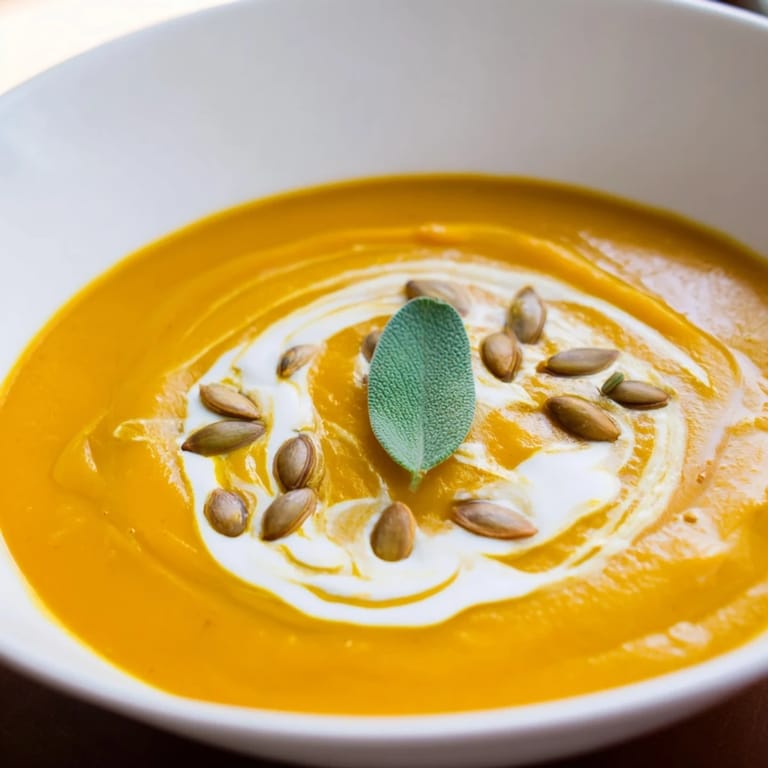 Save to Pinterest
 The first time someone told me they'd made this soup at home and thought of me, I realized that recipes are really just conversations between friends across time. This one became that for me.
Why Roasting Changes Everything
Boiling squash in broth gives you soup, but roasting it first gives you something with depth and warmth. The oven's dry heat caramelizes the natural sugars in the squash, creating notes that taste almost toasted and nutty. It's the difference between a recipe you follow and a dish you actually crave.
Making It Your Own
This soup is forgiving in the way the best dishes are. Add a pinch of cayenne if you want heat to cut through the sweetness, or a splash of apple cider vinegar if it feels flat. Coconut milk swirled in transforms it into something dairy-free and tropical. Some nights I blend it completely smooth; other nights I leave it slightly chunky because I like texture.
Pairing and Serving
Serve this soup in a bowl you love holding, with good bread on the side for soaking up the last spoonful. It pairs beautifully with a crisp white wine like Sauvignon Blanc if you're eating with others, or solo with a grilled cheese sandwich if the day calls for comfort. It's the kind of soup that tastes even better the next day, when flavors have time to know each other.
- Make a double batch and freeze half for a tired weeknight later.
- Leftovers keep in the refrigerator for four days and reheat gently on the stovetop.
- If you have fresh sage growing, harvest it just before serving for a bright, final flourish.
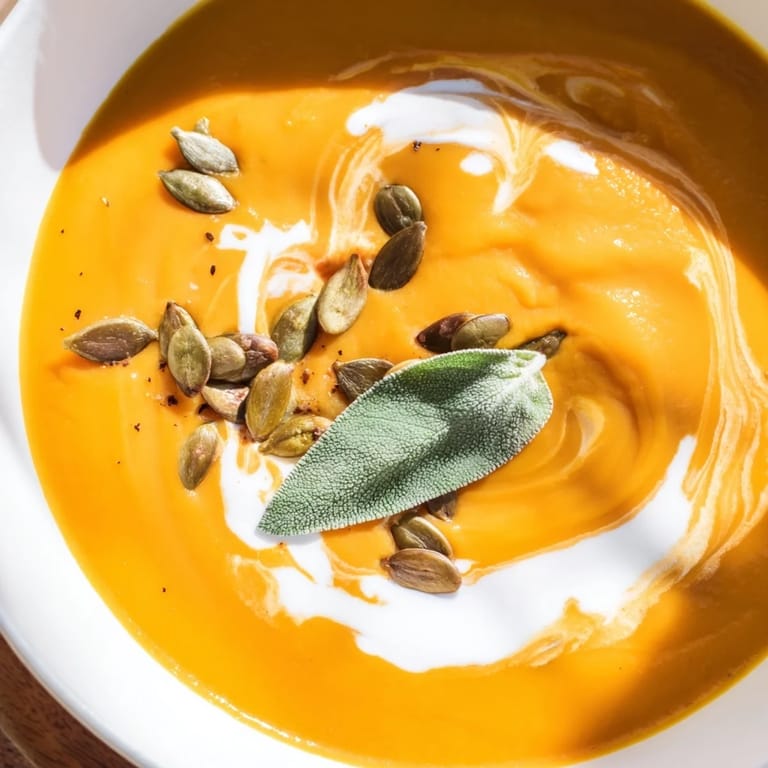 Save to Pinterest
 This soup reminds me that the simplest recipes, made with care, feed people in ways that matter. It's worth making, and worth sharing.
Recipe Q&A
- → How do I roast butternut squash evenly?
Cut the squash into uniform cubes and toss with olive oil, salt, and pepper before spreading on a parchment-lined baking sheet. Roast at 400°F (200°C) for 30–35 minutes, turning halfway to ensure even caramelization.
- → Can I use fresh sage instead of dried?
Yes, fresh sage can be used; substitute one tablespoon of fresh chopped sage for one teaspoon of dried. Add it during the simmering step to release its fragrance.
- → What are good alternatives to heavy cream in this dish?
Coconut milk works well as a dairy-free substitute, adding creaminess without overpowering the dish’s delicate flavors.
- → How can I make this dish spicier?
Add a pinch of cayenne pepper or crushed red pepper flakes during the simmering stage to introduce a gentle heat that complements the squash and spices.
- → What kitchen tools are essential for preparation?
A chef’s knife and cutting board for prepping vegetables, a baking sheet for roasting, a large pot for simmering, and an immersion or countertop blender for pureeing smooth.
- → Is this dish suitable for gluten-free diets?
Yes, this dish contains no gluten ingredients, especially when vegetable broth and garnishes are checked for gluten-free status.